



Published on October 29, 2025
Learn best practices for digital whiteboards in manufacturing. Discover how Poka’s Huddle Boards digitize meetings, improve visibility and drive operational excellence.

Key Takeaways
- Digital whiteboards turn traditional meetings into dynamic, data-driven decision hubs.
- Cloud computing enables real-time dashboards and seamless integration of data for digital whiteboards.
- Real-time dashboards improve visibility, alignment and accountability across all tiers of operations.
- Automated data integration reduces meeting prep time by up to 68%, freeing leaders to focus on action.
- Escalating and resolving issues digitally drives a 20–40% faster response time.
- Integrating KPIs across Safety, Quality, Delivery, Cost & People (SQDCP) fuels continuous improvement.
Introduction: Why Digital Whiteboards Are the Future of Manufacturing Meetings
In manufacturing, every meeting is an opportunity to drive performance – yet traditional whiteboards and paper reports often do the opposite. Static data, manual updates and limited visibility slow teams down – leaving critical issues unresolved and decisions delayed.
Enter the era of digital visual management. Digital whiteboards or Huddle Boards, transform meetings into smart, actionable experiences where real-time data drives every conversation. The integration of digital technology and new technologies such as IoT and AI is revolutionizing manufacturing meetings, enabling automation, enhanced customer experience and operational efficiency. Whether on the shop floor or in the executive boardroom, these tools bring clarity, speed and engagement to daily operations.
According to research from the National Institute of Standards and Technology (NIST), manufacturers who leverage real-time digital visibility see significant improvements in agility, safety, and productivity.
Poka’s Digital Huddle Boards, part of the IFS ecosystem, embody this transformation – helping teams digitize tiered meetings, streamline communication and fuel frontline success. Digital whiteboards also provide easy access to essential information and resources, improving efficiency and supporting faster, more informed decision-making.
This article explores the best practices for implementing digital whiteboards in manufacturing including how they improve visibility, accountability and cross-shift collaboration while supporting a culture of continuous improvement.
Best Practices for Implementing Digital Whiteboards
1. Drive Operational Performance with Real-Time Insights
In many factories, meetings still rely on printed reports or manually updated charts – a process that consumes hours of preparation time and risks outdated data by the time the meeting starts.
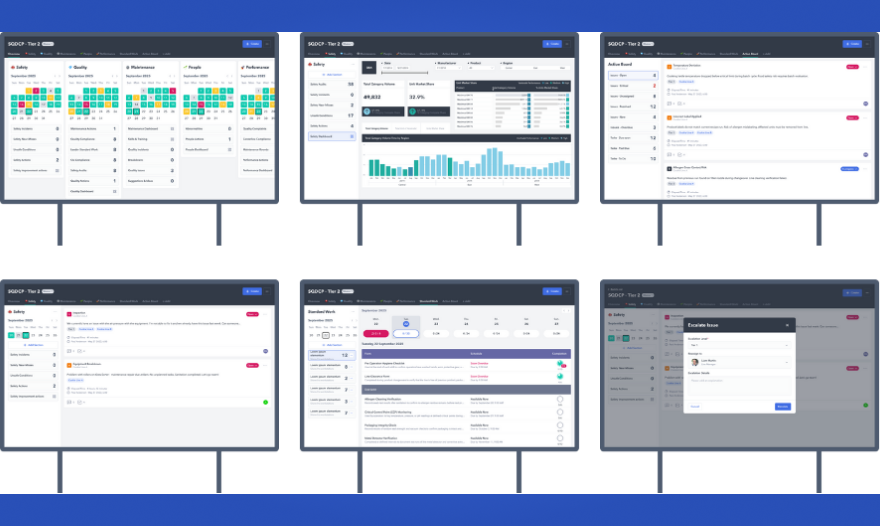
Poka’s Huddle Boards eliminate those inefficiencies by integrating live data directly from the production floor. Cloud computing enables seamless integration of live data from the production floor, supporting real-time visibility and decision-making. Teams can track and discuss KPIs across:
- Safety – incidents, near-misses and corrective actions.
- Quality – defect rates, audits and compliance metrics.
- Delivery – on-time performance, throughput and bottlenecks.
- Cost – material usage, scrap rates and productivity.
- People – absenteeism, training completion and engagement.
With visual dashboards that update automatically, Poka reduces meeting prep time by up to 68% – allowing leaders to focus on analysis and action rather than data collection.
“Digital whiteboards turn every huddle into a performance accelerator. Teams move from reporting what happened to collaborating on what’s next.”
By centralizing key metrics, manufacturers can identify trends faster, drive accountability and create a consistent rhythm of improvement across all levels of the organization. These practices contribute to overall productivity by streamlining workflows, improving resource management and enhancing team performance.
2. Improve Alignment and Accountability with Cross-Shift Visibility
Manufacturing operations never stop – but communication often does. Critical updates can be lost between shifts, leading to repeated errors, inefficiencies and frustration.
Digital Huddle Boards provide a shared, always-up-to-date view of performance by shift, department or management tier. This ensures everyone – from morning crews to night operators – stays aligned around the same data and priorities. Different management levels use digital whiteboards to maintain alignment and ensure information flows efficiently across the organization.
- Cross-shift visibility ensures seamless handovers.
- Role-based dashboards surface the most relevant insights to each team.
- Standardized meeting structures keep discussions consistent and actionable.
To ensure accountability across shifts, it is important to assign owners to action items discussed during meetings – making responsibilities and deadlines clear.
When each shift can see what was discussed and decided previously, surprises disappear and accountability strengthens. Frontline managers play a key role in facilitating communication and coordination between shifts using digital whiteboards. This alignment not only improves collaboration but also accelerates decision-making throughout the factory.
3. Track, Escalate, and Resolve Issues Faster
Every factory faces issues – from equipment downtime to material shortages – but how quickly those issues are resolved defines operational performance.
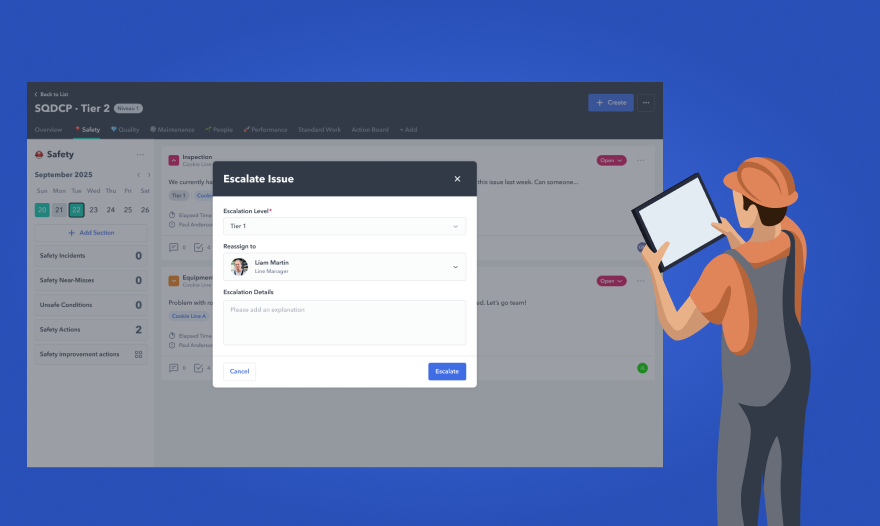
With Poka’s Action Board, teams can capture, assign and escalate issues in real time:
- Assign ownership and deadlines for follow-up.
- Automatically update issue status and prepare for the next meeting to ensure continuity.
- Link issues directly to relevant KPIs or assets for traceability.
This structured digital workflow reduces ambiguity and ensures problems are addressed – not just discussed. Manufacturers using Poka report resolving issues 20–40% faster, directly impacting productivity and Overall Equipment Effectiveness (OEE).
By turning discussions into data-driven action plans, digital whiteboards close the loop between meetings and measurable outcomes. Maintaining data accuracy is crucial for effective issue resolution and follow-up, ensuring that all actions are based on reliable information.
4. Improve Compliance and Standard Work Completion
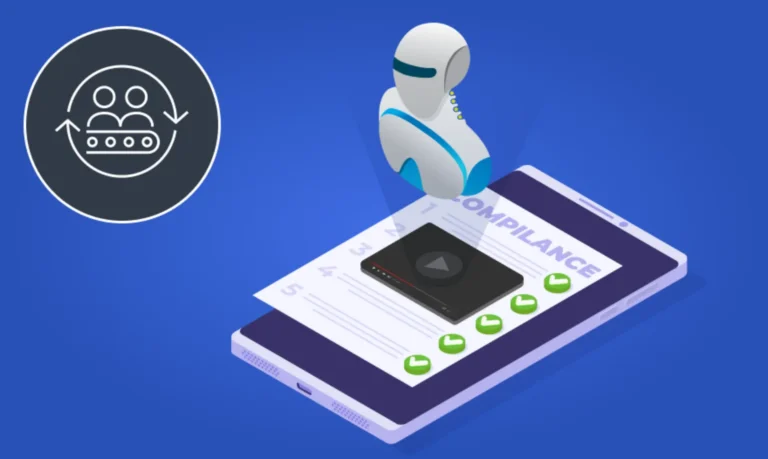
Compliance and safety depend on consistency – and traditional paper checklists make it difficult to track adherence in real time. Digital whiteboards help enforce standard operating procedures – ensuring teams consistently follow compliance guidelines. Digital Huddle Boards integrate directly with Poka Forms, allowing teams to:
- Schedule and monitor standard work, safety checks and audits.
- Automatically track completion rates and overdue actions.
- Maintain digital records for audits and inspections.
- Track and address quality defects through digital checklists and audits.
This visibility drives a 20–40% increase in checklist and form completion, keeping teams audit-ready and operations compliant.
When combined with Poka’s Factory Feed™ and Knowledge Library, these workflows also strengthen communication and reinforce a culture of continuous improvement.
5. Integrate Data Systems for Smarter Decision-Making
Data is only powerful when it’s accessible. Before integrating data systems, it is crucial to assess existing processes to identify inefficiencies and ensure a smooth transition. Many manufacturers struggle with siloed systems – MES, ERP, QMS, or CMMS – that each hold pieces of the truth.
Poka bridges these gaps by creating a single, actionable data hub that integrates information from multiple systems and visualizes it directly on the Huddle Board. This integration allows teams to:
- See the full operational picture in one place.
- Correlate production performance with maintenance and quality data.
- Make faster, data-driven decisions during meetings.
By enriching meetings with live, contextualized data, manufacturers move beyond static reports and toward proactive performance management – where every insight fuels action. Software development enables the customization and integration of digital whiteboards with other systems, ensuring seamless data flow and tailored solutions.
6. Foster Engagement Through Visual and Interactive Meetings
Long, monotonous meetings kill engagement. Digital whiteboards reinvigorate the daily huddle by making it visual, interactive and collaborative – which significantly boosts employee engagement by making meetings more interactive and motivating for everyone involved.
With dynamic charts, color-coded alerts and drill-down views, Poka’s interface keeps everyone involved and focused. Operators can share feedback directly from the floor, and supervisors can update actions live during the meeting.
The result? Meetings that are shorter, smarter and far more productive.
- Visual storytelling enhances understanding and retention.
- Interactive updates encourage participation from all levels.
- Real-time feedback loops turn meetings into learning opportunities.
When every meeting adds value, teams look forward to them – and the factory culture becomes more open, accountable and performance-driven. Improved communication is a key outcome of these visual and interactive meetings, ensuring feedback and issues are addressed efficiently.
7. Simplify Adoption: Start Small, Scale Strategically
Digitizing tiered meetings doesn’t have to be overwhelming. The most successful implementations begin with one area – such as safety or production – and expand gradually. In fact, most companies start with a pilot area before scaling digital whiteboards across the organization.
Best practices include:
- Start with core KPIs that matter most to your operation.
- Standardize templates for meetings and escalation workflows.
- Train team leaders to facilitate digital huddles effectively.
- Review adoption metrics and celebrate early wins.
Once the foundation is established, scaling across departments or sites becomes seamless. With Poka’s flexible configuration and global deployment capabilities, manufacturers can standardize visual management company-wide – while adapting to local needs and languages. Visual management takes many forms and digital whiteboards are one of the most versatile options available.
Production Meeting Best Practices
Production meetings are the backbone of effective manufacturing operations, providing a structured forum for teams to align on goals, review progress and drive continuous improvement. To maximize their impact, it’s essential to leverage visual management tools that make key metrics and production status visible to everyone. By using digital tools and connected worker technology, teams can access real-time visibility into the production process, making it easier to identify areas for improvement and respond quickly to changing conditions.
Best practices for production meetings include setting clear objectives, using visual management boards to track key performance indicators and encouraging open discussion of challenges and successes. Regularly scheduled meetings create a rhythm for continuous improvement initiatives – allowing teams to assign action items, monitor follow-up and celebrate wins. Digital solutions streamline communication, reduce manual reporting and ensure that all team members are working with the most up-to-date information.
By implementing these best practices, manufacturing teams can boost efficiency, reduce waste and enhance overall operational performance. The result is a more agile, responsive operation where every team member is empowered to contribute to ongoing improvement.
Daily Huddles and Team Meetings
Daily huddles and team meetings are vital for maintaining momentum and ensuring that everyone on the shop floor is moving in the same direction. These brief, focused gatherings use visual aids – such as digital whiteboards or visual management boards – to display key performance metrics and highlight progress toward production targets. This approach keeps the team’s attention on what matters most and provides immediate visual cues for areas needing attention.
Team leaders play a crucial role in facilitating these meetings, encouraging participation from all team members and fostering a culture of open communication. By assigning owners to specific action items and tracking progress in real time, daily huddles help teams quickly identify areas for improvement and ensure accountability. This structure not only supports the achievement of production targets but also strengthens collaboration and engagement across shifts.
Consistent daily huddles ensure that issues are addressed promptly, team members remain aligned, and continuous improvement becomes part of the daily routine.
Meeting Follow-Up and Evaluation
Effective meetings don’t end when the discussion wraps up – follow-up and evaluation are essential to ensure that decisions lead to action. Assigning owners to each action item, setting clear due dates and tracking progress are key steps in maintaining momentum. Distributing meeting minutes to all team members provides a clear summary of discussions, decisions and next steps – ensuring everyone has a shared understanding of priorities.
Leveraging digital tools to manage meeting minutes and action items streamlines the follow-up process, reduces administrative overhead and improves communication. Regularly evaluating the effectiveness of meetings helps teams identify areas for improvement, stay focused on high-priority tasks and drive continuous improvement. This disciplined approach supports operational excellence by ensuring that meetings remain productive, actionable and aligned with organizational goals.
Digital Whiteboard Security and Accessibility

As digital whiteboards become central to visual management in manufacturing, ensuring their security and accessibility is paramount. Protecting sensitive operational data requires robust security measures, including encryption and role-based access controls, to safeguard information while enabling efficient information flow.
Accessibility is equally important – cloud-based digital whiteboards allow team members to access meeting minutes, action items and visual controls from any location, using mobile devices or computers. This flexibility supports collaboration across shifts and sites – ensuring that everyone can contribute to continuous improvement initiatives regardless of where they are on the shop floor or in the plant.
By prioritizing both security and accessibility, manufacturers can maximize the benefits of digital whiteboards, driving operational efficiency, supporting real-time decision making and fostering a culture of continuous improvement throughout the organization.
Common Pitfalls to Avoid
Digital whiteboards deliver exceptional results, but only when used strategically. Avoid these common mistakes:
- Treating digital boards as digital posters instead of interactive tools.
- Overloading dashboards with too much data or too many KPIs.
- Failing to link actions to owners or follow-up workflows.
- Ignoring cultural adoption and training.
- Underestimating the importance of visual clarity and structure.
- Neglecting to use digital whiteboards as a tool for structured problem solving.
The goal is to make meetings simpler and smarter, not more complex. Focus on clarity, consistency and continuous improvement.
Measuring Success: Key Metrics for Digital Visual Management
To evaluate the effectiveness of digital whiteboards, track measurable outcomes across:
- Meeting preparation time (target: up to 68 % reduction).
- Issue resolution time (20–40 % faster).
- Checklist and form completion rates (+20–40 %).
- OEE and downtime reduction.
- Team engagement (attendance, participation and feedback).
Beyond numbers, success also shows in culture – how engaged workers feel, how accountable teams become and how quickly decisions turn into action.
Future of Digital Meetings: From Visualization to Intelligence
The next evolution of tiered meetings will combine AI, automation, and advanced analytics to transform how factories operate. Future innovations could include:
- Predictive dashboards that anticipate issues before they occur.
- AI-driven insights that recommend actions based on data trends.
- Augmented reality (AR) visual overlays for real-time training or maintenance guidance.
- Voice-enabled updates and smart notifications for hands-free collaboration.
These advancements align with the principles of Industry 5.0, where technology enhances – not replaces – human decision-making. Digital whiteboards will continue to evolve as the nerve center of smart factories, connecting people, data and machines in a single digital ecosystem. As digital whiteboard technology advances, manufacturers will be better equipped to respond quickly and effectively to evolving customer demand – ensuring they stay competitive and meet changing market needs.
Additionally, advanced analytics and AI will empower teams to address complex problems by providing deeper insights and innovative solutions, further enhancing productivity and collaboration.
Conclusion: From Meetings to Momentum
Digital whiteboards redefine how manufacturers manage performance and empower their teams. With Poka, factories can:
- Bring data, people and insights together in real time.
- Reduce prep time and accelerate problem resolution.
- Strengthen accountability and cross-shift collaboration.
- Improve compliance, engagement and visibility across sites.
A clear understanding of digital whiteboard best practices empowers teams to drive measurable progress. The result is a connected, agile, and high-performing organization – where every meeting drives measurable progress.
Ready to see how digital whiteboards can transform your factory?
Book a 30-minute demo and discover how Poka helps you digitize team and tiered meetings to achieve operational excellence.
FAQs on Digital Whiteboards in Manufacturing
A digital whiteboard or Huddle Board is an interactive, real-time dashboard used during tiered meetings to visualize KPIs, track issues and drive action. Digital whiteboards are used throughout the manufacturing plant to support daily operations – providing a central platform for team communication and workflow management.
Line operators use digital whiteboards to monitor workflow and production stages, ensuring clarity and early detection of issues. Visual indicators on digital whiteboards help teams track progress and identify problems in real time. Visual control is achieved through charts, graphs and alerts displayed on the boards – making it easier to manage production flow and maintain safety. Visual management boards also provide real-time feedback and transparency – displaying key information to keep everyone aligned and accountable.
By automatically integrating live data from connected systems and visualizing it instantly – saving up to 68 % of the time spent preparing reports.
Yes. Poka’s digital forms and workflows ensure safety checks, audits and standard work are completed, tracked and stored digitally for audit readiness.
Issues can be logged, assigned, and escalated in real time – reducing resolution time by 20–40 %.
Manufacturers using Poka report faster decision-making, improved accountability, higher form completion rates and stronger alignment across shifts and sites.