



Published on September 22, 2025
Discover how huddle boards optimize manufacturing operations, enhance teamwork, and foster continuous improvement on the factory floor through effective daily management systems.
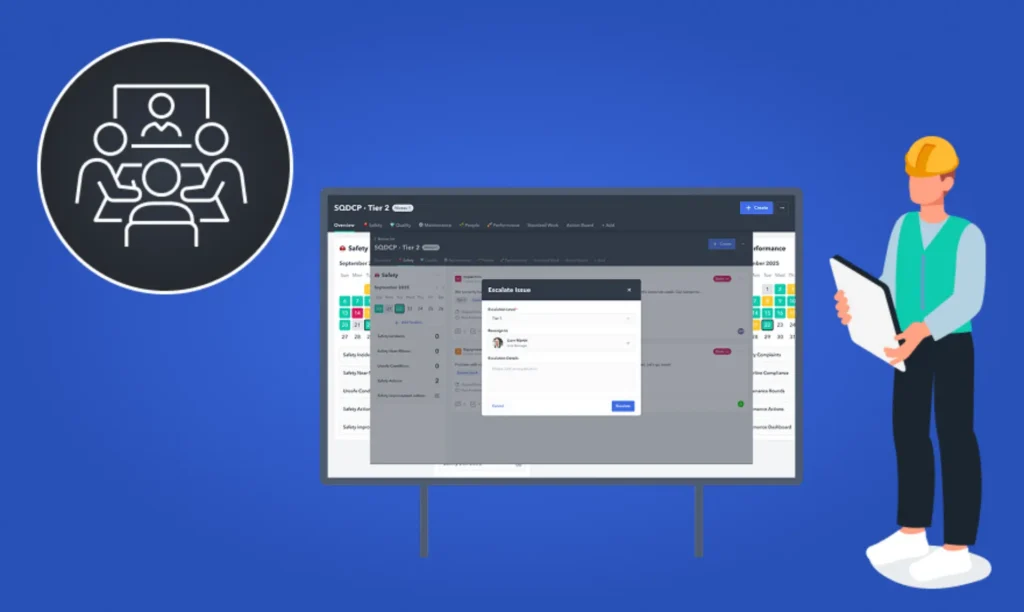
Key Takeaways
- Huddle boards drive alignment by ensuring teams start each shift with clear priorities, shared data and a unified focus.
- They enhance communication and accountability, giving operators, supervisors and leaders a single source of truth.
- Digital huddle boards outperform physical boards, enabling real-time updates, cross-shift visibility and historical traceability.
- Tiered meeting structures strengthen problem escalation, ensuring issues move quickly from the frontline to leadership.
- Poka Huddle Boards boost efficiency and OEE, delivering faster resolutions, reduced prep time and stronger engagement on the factory floor.
Defining Huddle Boards
In the dynamic landscape of modern manufacturing, maintaining alignment and communication is essential – not just occasionally, but throughout every shift. That alignment begins the moment the day starts, during team huddles. Huddle boards — also known as factory huddle boards or tier boards — serve as crucial tools for facilitating brief, focused team meetings, known as huddles, to enhance collaboration, reinforce daily priorities and set the tone for clear communication across shifts.
A factory huddle board is a visual tool that showcases key performance indicators (KPIs), safety measures, quality concerns, production targets and actionable items. Teams convene around the board at the beginning of a shift or workday to assess progress, address concerns, and synchronize priorities, driving operational efficiency.
At its essence, the huddle board fosters transparency, accountability, and collaboration. It makes performance data accessible and creates a shared environment where challenges are promptly identified, escalated, and resolved collectively, enhancing the manufacturing process.
The Evolution of Huddle Boards in Manufacturing
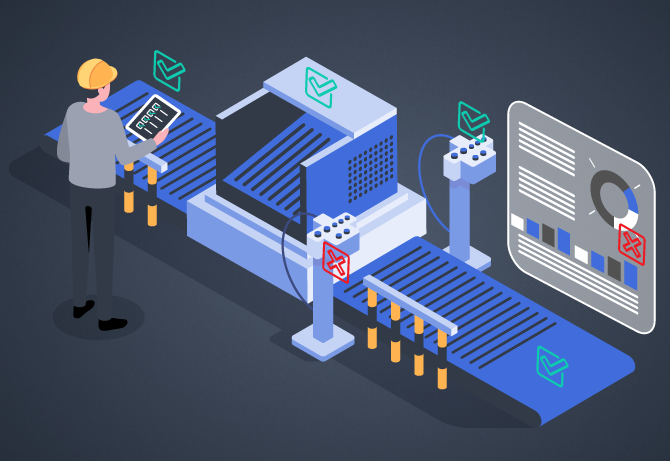
The idea of the huddle board originates from Lean manufacturing principles and continuous improvement methods, particularly from Toyota’s production framework. The fundamental concept is straightforward:
- Conduct meetings that are brief and goal-oriented to boost team effectiveness.
- Visually present the most critical metrics to improve performance tracking.
- Employ standardized formats for consistent alignment across teams, ensuring operational coherence.
Initially, huddle boards consisted of physical whiteboards located on the factory floor, with supervisors manually updating them using charts, sticky notes, or magnets. These simple tools quickly became integral to daily management systems (DMS), promoting a culture of continuous improvement.
The Importance of Huddle Boards in Factories
1. Enhanced Communication
Huddle boards facilitate seamless information flow between the shop floor and management. Operators, supervisors and managers access the same data, establishing a unified source of truth that supports effective decision-making.
2. Increased Team Alignment
At the start of each shift, employees are informed about their objectives, roles and potential challenges. Leaders emphasize priorities while operators can express concerns or propose enhancements – leading to improved workplace efficiency.
3. Accelerated Issue Escalation
When issues or safety concerns arise, they can be documented on the huddle board, initiating an escalation process to prevent delays or oversights, ensuring timely resolutions.
4. Engagement and Empowerment
A manufacturing huddle board empowers frontline workers by involving them in decision-making. By visualizing challenges and successes, it fosters accountability and boosts morale, enhancing employee engagement.
5. Commitment to Continuous Improvement
Monitoring recurring issues on huddle boards enables the identification of trends and root causes. Over time, this leads to streamlined processes, reduced defects, and improved overall performance, reinforcing a culture of excellence.
Key Components of an Effective Huddle Board
An effective huddle board in manufacturing typically includes these essential components:
- Safety: Tracking incidents, near misses and compliance with safety checks to ensure a safe working environment.
- Quality: Monitoring defects, complaints and rework rates to uphold high standards.
- Delivery: Assessing production output, adherence to schedules and downtime to optimize workflow.
- Cost: Evaluating waste reduction, tracking overtime and efficiency initiatives to maintain profitability.
- People: Monitoring attendance, skill coverage and recognizing team achievements to enhance workforce morale.
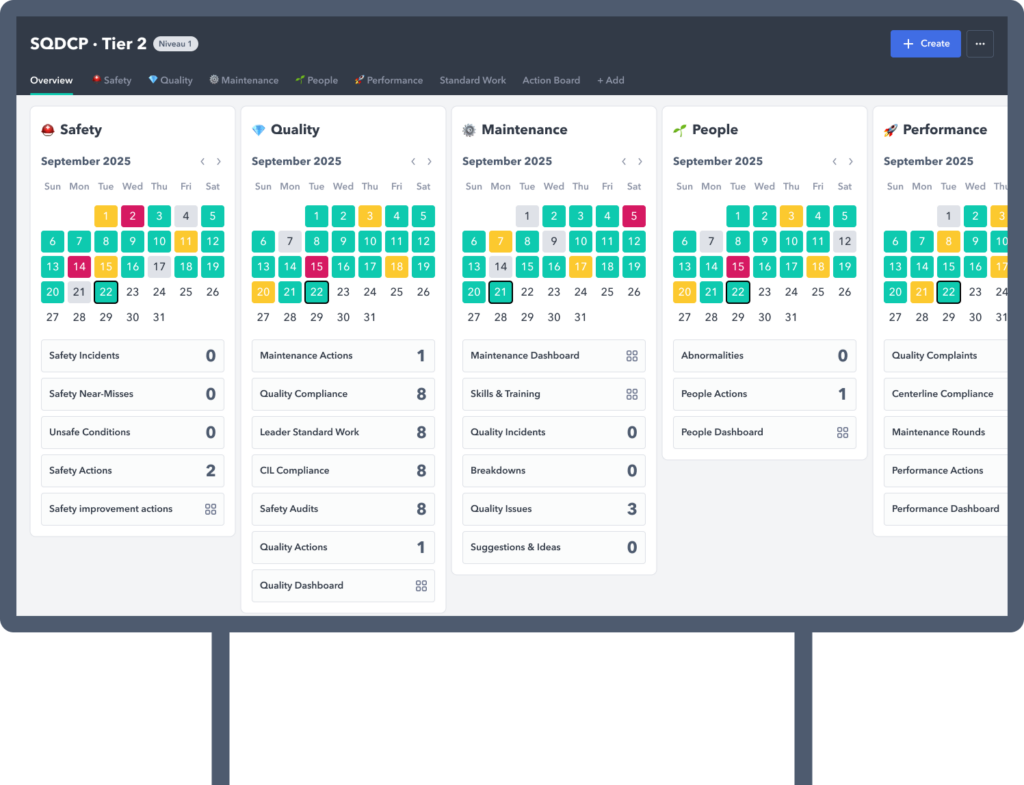
This framework is often referred to as SQDCP (Safety, Quality, Delivery, Cost, People), ensuring a comprehensive review of all critical performance dimensions on a daily basis, vital for manufacturing success.
Comparing Physical and Digital Huddle Boards
Physical Huddle Boards
Traditional boards are cost-effective, easy to access and customizable. However, they have some drawbacks:
- Updating can be time-consuming, hindering real-time decision-making.
- Potential for errors or outdated information, impacting operational reliability.
- Lack of historical records or audit trails, complicating compliance efforts.
- Information silos may occur between shifts or teams, disrupting communication.
Digital Huddle Boards
As factories embrace Industry 4.0 and 5.0 practices, there is a growing shift towards digital visual huddle boards. Key advantages include:
- Real-time data integration from MES and ERP systems to improve data accuracy.
- Remote access through tablets, monitors or laptops, facilitating flexible work environments.
- Historical data tracking for performance insights that drive strategic decisions.
- Automated notifications for metrics that exceed thresholds, ensuring timely interventions.
This transition reflects the broader digital transformation in manufacturing: shifting from manual, disjointed systems to cohesive, data-centric operations – enhancing overall productivity.
Utilizing Huddle Boards in Tiered Meeting Structures
Huddle boards are particularly effective in tiered daily management meetings:
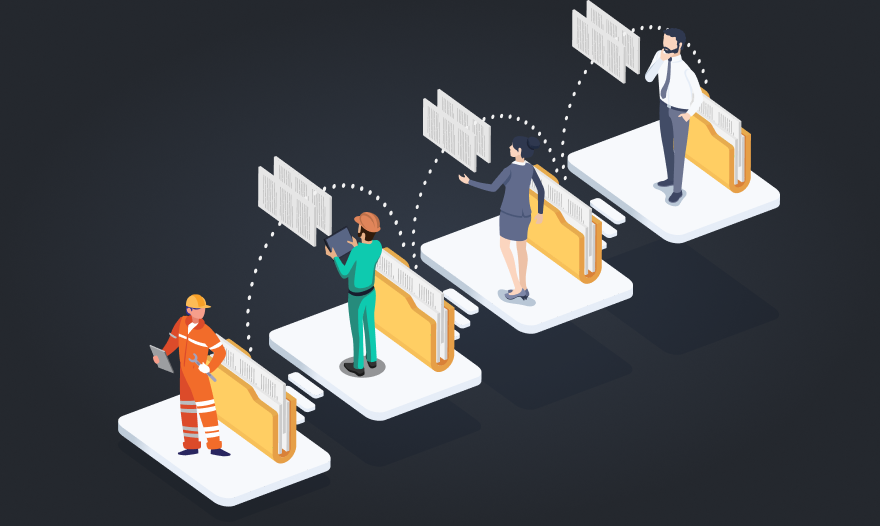
- Tier 1: Operators and line leaders discuss immediate goals and challenges – enhancing team dynamics.
- Tier 2: Supervisors bring unresolved issues to department leads – ensuring effective escalation.
- Tier 3: Plant leadership evaluates plant-wide KPIs, trends and strategic challenges – driving continuous improvement.
This structure guarantees efficient information flow throughout the organization. Problems identified at the line level are escalated to leadership with full context, ensuring visibility and action – promoting organizational agility.
Tangible Benefits of Huddle Boards
Manufacturers utilizing huddle boards effectively report:
- More efficient meetings — less time spent on reporting and more on problem-solving, enhancing team productivity.
- Increased issue resolution rates — ensuring problems are tracked until resolved, improving operational effectiveness.
- Enhanced safety and quality outcomes — proactive visibility of leading indicators that promote workplace safety.
- Improved OEE (Overall Equipment Effectiveness) — reducing downtime and boosting throughput, essential for manufacturing efficiency.
- Enhanced communication across shifts — information continuity during shift changes, ensuring operational continuity.
The Shift to Smart Huddle Boards
Transitioning from conventional whiteboards to digital huddle boards signifies a substantial advancement in manufacturing productivity. With digital systems, teams can:
- Incorporate dashboards from business intelligence tools like PowerBI or Looker, enhancing data visualization.
- Merge downtime and performance data from production systems, driving operational insights.
- Monitor issues, tasks and actions with clear accountability, boosting team ownership.
- Utilize standardized agendas and attendance records for meetings, ensuring process consistency.
- Access information from anywhere — the factory floor or remote locations, enhancing flexibility.
This evolution means that huddle boards have transformed into central hubs for operational success, driving manufacturing excellence.
Introducing Poka Huddle Boards
While this article explores the general concept of huddle boards, it’s essential to highlight how digital platforms like Poka Huddle Boards are advancing this concept. They digitize and streamline daily management, providing a comprehensive solution tailored for manufacturing, enhancing operational workflows.
Key Features of Poka Huddle Boards
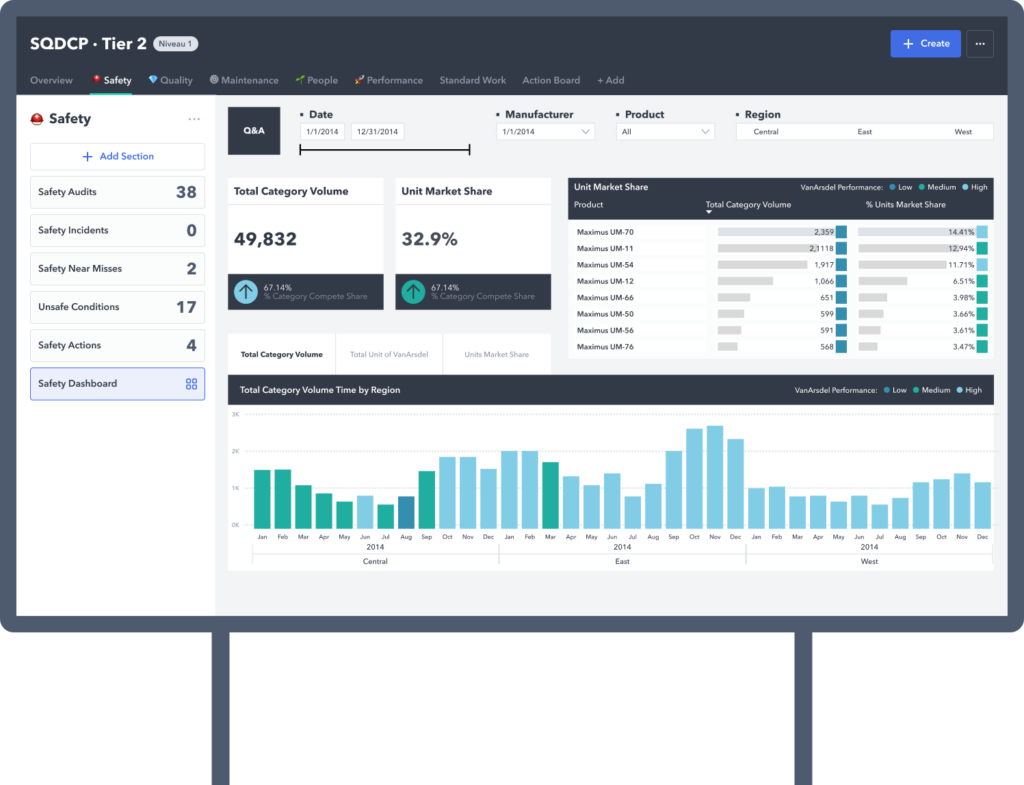
- Integrated Dashboard: Merges KPIs, issues, actions, and standard work into a single view for improved performance oversight.
- Customizable Sections: Adapt boards to specific plant priorities like SQDCP, tailoring performance tracking.
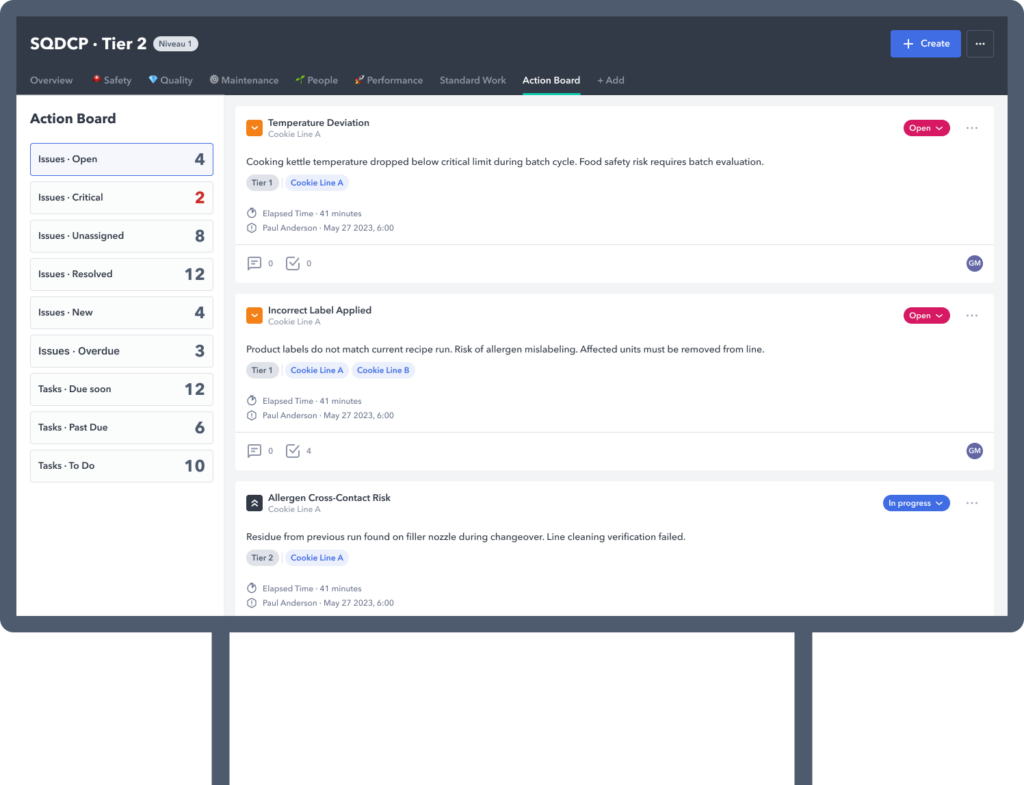
- Structured Escalation: Implement tiered workflows for quicker problem resolution, enhancing issue management.
- Real-Time Connectivity: Links to MES/ERP or BI dashboards for live insights, ensuring timely information access.
- Accountability Features: Monitor attendance, actions, and results across tiers, promoting team responsibility.
- Cross-Shift Synchronization: Ensures seamless information flow between shifts, supporting continuous operations.
Manufacturer Benefits
- Decreased preparation time (up to 68% less time spent on data collection), enhancing operational efficiency.
- Improved Data Accuracy – Real-time data updates ensure teams are acting on the most recent information available.
- Quicker issue resolution (20–40% faster with digital escalation), improving response times
- Enhanced OEE (3–8% improvements from increased visibility and accountability), critical for productivity gains.
- Audit readiness with comprehensive history and traceability, ensuring regulatory compliance.
- Increased employee engagement by providing operators with visibility into priorities and recognition, fostering a positive work culture.
By integrating daily huddles directly into Poka, factories transition from fragmented whiteboard systems to cohesive, data-driven operations that thrive every shift, enhancing manufacturing effectiveness.
Conclusion: The Essential Role of Huddle Boards in Factories
In manufacturing, success hinges on the speed at which teams can align, communicate, and take action. Huddle boards — whether physical or digital — provide the framework necessary to achieve this. They elevate daily management from reactive responses to proactive strategies, driving operational excellence.
For factories still utilizing whiteboards, transitioning to digital huddle boards presents a significant opportunity. By consolidating performance metrics, streamlining meetings, and ensuring ongoing visibility, huddle boards become the lifeblood of the contemporary factory, enhancing manufacturing capabilities.
With solutions like Poka Huddle Boards, manufacturers can transcend mere visualization to achieve real-time collaboration, faster problem resolutions, and quantifiable performance enhancements, ensuring a competitive edge.
In 2025, a factory huddle board will not simply be a tool – it will be a critical competitive asset, driving manufacturing success in a rapidly evolving industry.
Our team is ready to help you transform your daily huddles. Speak with them today to learn more.
FAQs on Huddle Boards
A huddle board is a visual management tool used in daily team meetings to track KPIs, safety, quality and performance – keeping everyone aligned.
They are typically updated daily at the start of each shift to reflect the most current performance data and priorities.
Physical boards are manual and simple, while digital boards provide real-time updates, historical tracking and seamless cross-shift visibility.
They make recurring issues and trends visible – enabling teams to identify root causes and implement long-term solutions.
Poka digitizes the huddle process, integrating KPIs, actions and escalation workflows to improve efficiency, accountability and decision-making.