






Published on January 12, 2026
Learn how food manufacturers strengthen compliance with digital work instructions, skills management, and AI-powered training through Poka.
Key Takeaways
- Food safety training is a critical strategic investment that ensures compliance, reduces risk and protects brand reputation in the food industry.
- The seven HACCP principles provide a systematic approach to identifying and controlling food safety hazards throughout the production process.
- Traditional training methods like shadowing and paper-based SOPs are insufficient for modern food manufacturing demands due to inconsistency and lack of traceability.
- Digital, connected, and agentic AI-powered training platforms enable standardized, accessible and continuous learning that enhances operational efficiency and compliance.
- Leading manufacturers leveraging advanced food safety training technologies report significant improvements in safety culture, audit readiness, and production performance.
Food manufacturers across the globe are under extraordinary pressure. Regulatory expectations continue to tighten. Consumer scrutiny intensifies with every recall. Workforce turnover challenges operational stability. And production complexity grows as companies expand portfolios, diversify ingredients and accelerate changeovers.
In this landscape, food safety training is not simply a compliance requirement – it is a strategic lever for ensuring consistency, reducing risk, protecting brand equity and maintaining consumer trust. Integrating food safety into overall business operations optimizes compliance and efficiency.
Yet, too often, the systems designed to support frontline training and knowledge transfer remain stuck in a previous era: paper binders, classroom lectures, job shadowing and scattered digital documents. These approaches cannot keep pace with modern manufacturing environments where speed, accuracy, traceability and standardization are essential. Automation streamlines workflows and supports digital transformation in food manufacturing.
Leading food manufacturers like Danone and Nestlé have demonstrated that digitizing training and empowering frontline workers with connected worker platforms significantly improves food safety performance. By leveraging tools such as Poka’s Learning & Development suite, including Digital Work Instructions, Skills Management, Knowledge Management, and Industrial AI, companies are strengthening compliance, standardizing operations and building more resilient labor models. Artificial intelligence is leveraged in knowledge management systems to automate responses, improve information retrieval and enhance operational efficiency.
The Strategic Importance of Food Safety Training

Food safety failures carry severe human, financial, and reputational consequences. The global data is unambiguous:
- Foodborne illness affects 600 million people each year (WHO).
- In the U.S., these illnesses lead to 128,000 hospitalizations and 3,000 deaths annually (CDC).
- The average cost of a food recall is $10 million, excluding long-term brand impact (GMA).
- 76% of consumers say they will avoid a brand for months after a recall.
These statistics reinforce a fundamental truth: training is one of the highest-leverage investments food manufacturers can make.
Training determines:
- How sanitation procedures are executed
- How allergen changeovers are completed
- How CCPs (Critical Control Points) are monitored
- How deviations are addressed
- How quality checks are conducted
- How safety culture is reinforced daily
Key components of a strong food safety culture include effective training, clear communication and staff appreciation – all of which help address obstacles such as staffing and resource issues.
Regulatory bodies – including the FDA, CFIA, EFSA, and GFSI-benchmarked certification programs – expect manufacturers to:
- Document training
- Validate competency
- Maintain audit-ready records
- Ensure consistency across shifts and sites
- Refresh training when processes change
- Provide multilingual access to critical instructions
Having adequate resources is essential to support training, communication, and operational support, ensuring compliance with regulatory expectations.
The question is no longer whether training matters. It is whether traditional training methods are still capable of meeting modern compliance and operational demands.
Understanding HACCP Principles
Hazard Analysis and Critical Control Points (HACCP) is the gold standard management system for ensuring food safety across the food industry. Rooted in a systematic approach, HACCP principles help organizations identify, evaluate, and control food safety hazards throughout the entire food chain – from sourcing raw materials to delivering safe food to consumers.
Understanding and applying the seven HACCP principles is essential for any food operation aiming to achieve regulatory compliance, enhance efficiency and protect against foodborne illness. These principles form the backbone of an effective HACCP plan and are recognized by regulatory agencies and global food code standards.
The Seven Principles of HACCP:
- Conduct a Hazard Analysis: The first step is to identify and assess potential hazards – biological, chemical, or physical – that could compromise food safety at any stage of the production process. This hazard analysis requires specific knowledge of ingredients, processing methods, and potential sources of contamination such as metal contaminants or unsafe operating conditions. Training efforts must ensure that teams can recognize and evaluate these risks accurately.
- Determine Critical Control Points (CCPs): Critical control points are the stages in the process where controls can be applied to prevent, eliminate or reduce food safety hazards to an acceptable level. Examples include thermal processing for low acid canned foods or metal detection to prevent physical hazards. Identifying CCPs is a key component of a robust food safety management system and requires decision-making tools like flow diagrams and decision trees.
- Establish Critical Limits: For each CCP, it’s essential to define measurable criteria – such as temperature, time, pH, or other physical parameters – that must be met to ensure food safety. These critical limits are based on scientific data and regulatory requirements and must be clearly documented and communicated to all relevant personnel.
- Establish Monitoring Procedures: Effective monitoring procedures are necessary to ensure that each CCP stays within its critical limits. This may involve real-time data analysis, automated sensors or manual checks – all of which should be integrated into standard operating procedures. Consistent monitoring supports both quality assurance and rapid response to deviations.
- Establish Corrective Actions: When monitoring indicates a deviation from a critical limit, immediate corrective action is required to restore control and prevent unsafe food from reaching consumers. Training must empower frontline workers and maintenance personnel to recognize deviations and implement corrective actions swiftly – minimizing risk and maintaining compliance.
- Establish Verification Procedures: Verification ensures that the HACCP plan is functioning as intended. This includes activities like reviewing records, testing ingredients, and conducting internal audits. Advanced technologies such as cloud computing, machine learning and predictive maintenance can enhance verification by providing deeper insights and supporting continuous improvement.
- Establish Documentation and Record-Keeping Procedures: Comprehensive documentation is vital for demonstrating compliance to regulatory agencies and supporting traceability throughout the food chain. Digital tools streamline data collection, record-keeping and reporting – making it easier to maintain audit-ready records and respond to state and local regulations.
By embedding HACCP principles into training programs and leveraging digital solutions, food facilities can ensure that every team member – from operators to quality control and pest control staff – understands their role in maintaining food safety. This systematic approach not only supports compliance with local regulations and the food code but also drives operational efficiency, reduces the risk of foodborne illness and strengthens the organization’s ability to deliver safe food every day.
Where Traditional Training Methods Fall Short

For decades, food manufacturers depended on a training model based heavily on shadowing, one-time onboarding and binder-based SOPs. While historically functional, these systems do not scale effectively in today’s environment.
Below are the most significant limitations.
1. Shadowing Creates Inconsistent Interpretation and Execution
Shadowing relies on experienced operators to pass down knowledge to new hires. But this knowledge transfer varies based on:
- Personal habits
- Time constraints
- Communication style
- Availability
Danone discovered exactly this through internal assessment: five trainers produced five versions of the same procedure. For food safety compliance, where consistency is mandatory, this variability introduces unacceptable risk.
2. Written SOPs Are Often Hard to Access – and Even Harder to Use
Binders, PDFs, and shared drives introduce operational friction:
- SOPs are buried, outdated or hard to navigate
- Written text is difficult to interpret during fast-moving production
- Instructions do not reflect real-world nuance
- Paper-based systems lack version control
- Workers seldom reference them due to accessibility barriers
For food safety-critical tasks like sanitation, allergen changeovers, CCP verification or equipment cleaning, this creates avoidable inconsistencies.
3. High Workforce Turnover Disrupts Knowledge Transfer
The manufacturing labor market continues to see unprecedented disruption:
- Many food manufacturers experience 30 – 40% annual turnover
- Experienced workers are retiring, taking tribal knowledge with them
- Hiring pipelines increasingly include candidates with no manufacturing experience
Manufacturers cannot rely on informal knowledge transfer when the workforce is constantly changing – especially for regulated tasks.
4. Memory Fades Quickly Without Reinforcement
Cognitive science demonstrates that traditional training does not stick. The Ebbinghaus Forgetting Curve shows:
- Workers forget 50% of new information within one hour
- 70% within 24 hours
- 80% within 30 days
Infrequently performed tasks – deep cleaning, allergen switchovers, CCP responses – are the most vulnerable to memory gaps, resulting in errors or deviations.
5. Spreadsheets and Paper Tracking Cannot Meet Regulatory Expectations
Food safety audits require demonstrable proof of:
- Training completion
- Competency validation
- Refresher cycles
- Role-specific qualification
- Line-specific requirements
- Real-time compliance status
Manual systems cannot provide the level of visibility needed by auditors or leadership teams.
The New Reality: Food Safety Training Must Be Digital, Connected and Continuous
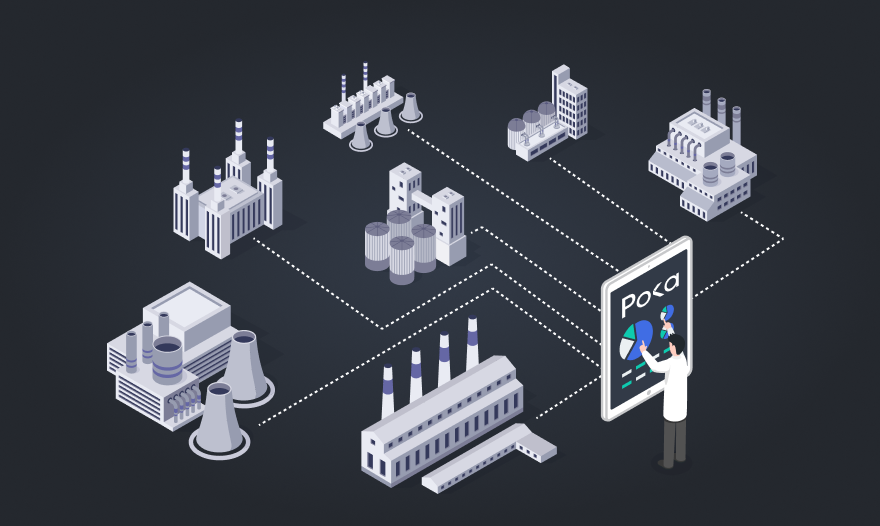
Modern manufacturers are transforming food safety training from a one-time onboarding event to a continuous, on-the-job learning ecosystem. This shift is driven by connected worker technologies that make critical knowledge:
- Accessible
- Standardized
- Searchable
- Visual
- Traceable
- AI-powered
- Continuous
Additionally, virtual assistants powered by AI can automate tasks, improve access to information and support frontline workers in real time within knowledge management systems.
This is where Poka’s platform stands out. It brings together the people, processes, technology, and data needed to ensure consistent food safety performance.
How Poka Strengthens Food Safety Training and Compliance
Below are the core capabilities that make Poka an essential enabler for food manufacturers.
1. Digital Work Instructions Bring Standardization to the Factory Floor
Poka replaces static SOPs with:
- Video micro-lessons
- Step-by-step visual workflows
- Annotated images
- Voiceovers
- Embedded safety checkpoints
- Role-based access
Workers access instructions via QR codes directly at the workstation – a crucial advantage in time-sensitive environments.
This ensures consistent execution of:
- Allergen cleanings
- CCP monitoring
- Sanitation processes
- Equipment swabbing
- Foreign material checks
- Line clearance procedures
Digital work instructions reduce ambiguity and reinforce the exact steps needed for compliance.
2. Poka’s Knowledge Management Centralizes and Scales Operational Expertise
Food manufacturers lose significant expertise due to turnover and retirements. Poka prevents this loss by capturing:
- Best practices
- Troubleshooting sequences
- Root-cause insights
- Safety risks
- Process learnings
- Improvement suggestions
- Equipment nuances
Danone, for example, used Poka to standardize training across sites and cut shadowing time by 40%. This demonstrates the strategic value of scalable knowledge assets.
3. Skills Management Ensures Competency, Not Just Training Attendance
Skills Management is one of the most powerful enablers of food safety compliance. Poka provides:
- Role-based training pathways
- Digital endorsements
- Competency validation
- Automatic retraining alerts
- Skills gap reporting
- Audit-ready records
- Line-level visibility
Nestlé leveraged Poka’s skills tracking to align training with operational priorities and reduce unplanned stops associated with skill gaps.
4. Training Content & Exams Reinforce Accountability
Poka integrates training, testing and evaluation into one platform using:
- Micro-exams
- Knowledge checks
- In-app quizzes
- Task demonstrations
- Supervisor sign-offs
This ensures that operators are not merely given training – they demonstrate mastery. This distinction is vital for food safety regulatory compliance.
5. Autonomous Learning Reduces Dependency on Shadowing
By empowering workers to learn independently through structured digital lessons, manufacturers achieve:
- Faster onboarding
- Reduced reliance on senior operators
- Standardized learning across shifts
- Improved knowledge retention
- Greater workforce flexibility
Poka supports workers at their pace, on the factory floor, without pulling multiple employees away from production for prolonged shadowing.
6. Communication Tools Strengthen Safety Culture
A strong food safety culture is proactive, not reactive. Poka gives workers the ability to report:
- Near misses
- Food safety risks
- Quality concerns
- Contamination hazards
- Idea submissions
- Corrective actions
Manufacturers using connected platforms have documented significant increases in issue reporting, reflecting improved transparency and engagement.
The Role of Industrial AI in the Future of Food Safety Training
The next frontier of food safety is AI-driven. AI-driven knowledge management tools contribute to increased productivity by automating routine tasks and streamlining workflows. Poka’s Industrial AI accelerates digital transformation and frontline learning by:
1. Automatically Converting Legacy SOPs into Digital Instructions
AI can convert:
- PDFs
- Manuals
- Handwritten instructions
- PowerPoints
- Word documents
…into structured, digital, visual workflows in minutes, not weeks.
This alleviates documentation bottlenecks and ensures updated procedures are delivered faster.
2. Enabling Natural-Language Search with Poka’s AI Assistant
Workers can speak or type questions like:
- “How do I perform a CCP check on Line 5?”
- “What is the allergen cleaning procedure?”
- “What do I do if sanitizer concentration is out of spec?”
Poka’s AI Assistant retrieves the correct, approved instruction instantly.
3. Reducing Language Barriers
Industrial AI auto-translates:
- Work instructions
- Videos
- Subtitles
- Training content
This supports a multilingual workforce and reduces risks of misinterpretation.
4. Delivering Operational Intelligence
AI analyzes training, skills, and operational data to detect:
- Skills gaps linked to deviations
- High-risk tasks needing reinforcement
- Sites falling behind on training
- Patterns in safety incidents
- Outdated or unclear procedures
This enables leaders to proactively improve food safety programs before issues escalate.
Real Business Impact: How Modern Training Improves Compliance and Performance
Manufacturers using Poka consistently report:
- 40% reduction in shadowing time (Danone)
- 50% faster creation of training content
- Accelerated onboarding times
- Higher first-time-right execution
- Reduced unplanned stops caused by skill gaps (Nestlé)
- Full traceability of training & skills
- Greater workforce confidence
- Improved audit performance
These improvements demonstrate that food safety training is not only a regulatory requirement – it is a core operational advantage.
Conclusion: Food Safety Training Is a Strategic Imperative – and Technology Is Now Essential
Food safety demands consistency. Consistency demands clarity. Clarity demands access. And access demands technology.
Manufacturers that modernize food safety training through connected worker technologies and AI gain:
- Stronger compliance systems
- Higher-performing frontline teams
- Faster onboarding
- Better audit readiness
- Reduced risk
- Improved culture
- Greater operational agility
Poka provides the digital infrastructure modern food manufacturers need to protect their brands, empower their people and build resilient operations that can withstand the pressures of today – and tomorrow.
See how modern food manufacturers build safer, more resilient operations with Poka by booking a demo today.
FAQs About Food Safety Training
Food safety training ensures compliance with regulations, reduces risks of foodborne illness, and protects brand reputation by standardizing safe practices.
They include hazard analysis, determining critical control points, establishing critical limits, monitoring procedures, corrective actions, verification procedures, and documentation.
Traditional methods like shadowing and paper SOPs lack consistency, traceability, and fail to keep up with modern manufacturing demands and workforce turnover.
Digital platforms provide standardized, accessible, and traceable training with real-time updates, enhancing knowledge retention and operational efficiency.
AI automates documentation, enables natural language search, reduces language barriers, and delivers operational insights to proactively improve training and compliance.