



Published on January 27, 2026
Learn what Industrial AI is, why connected workers are essential, and how manufacturers use Industrial AI to close the AI value gap on the factory floor.
Key Takeaways
- Industrial AI is designed for the factory floor: It embeds intelligence directly into frontline workflows to support connected workers with real-time decisions and execution.
- Connected workers are essential to Industrial AI success: A connected worker foundation provides the context, adoption and feedback AI needs to deliver value.
- Most manufacturers are still stuck in the AI value gap: Industrial AI helps close this gap by focusing on execution, not experimentation.
- Agentic AI supports workers as a digital co-worker: It proactively recommends actions while keeping humans firmly in control.
- Poka brings Industrial AI to life in daily operations: Built on a connected worker platform, Poka accelerates time-to-value on the factory floor.
Artificial intelligence is no longer theoretical in manufacturing. AI pilots are running, proof-of-concepts are common and investment continues to rise. Yet for many manufacturers, the results remain underwhelming.
Boston Consulting Group’s 2025 research, The Widening AI Value Gap, reveals a striking divide. Only 5% of companies worldwide are considered “AI future-built,” generating five times greater revenue impact and three times higher cost reductions from AI. Meanwhile, 60% of organizations report little to no material value, despite substantial AI investment.
The issue isn’t ambition or access to technology. It’s execution.
For manufacturers, the companies pulling ahead are those adopting Industrial AI – AI designed specifically for the factory floor and built on a connected worker foundation, where real work happens and real value is created.
What Is Industrial AI?
Industrial AI is artificial intelligence purpose-built for industrial environments, designed to improve decision-making, execution and continuous improvement directly within manufacturing operations.
Unlike general enterprise AI or consumer AI, Industrial AI must function under conditions that are uniquely demanding:
- Real-time operational constraints
- Imperfect, unstructured and contextual data
- Strict safety, quality and compliance requirements
- Clear human accountability for outcomes
At its core, Industrial AI is not about replacing people or automating everything. Instead, it focuses on augmenting frontline workers – operators, supervisors, and plant leaders – with intelligence embedded directly into their daily workflows.
This distinction matters. BCG’s research shows that AI creates value when it drives better decisions and faster actions inside core processes, not when it remains confined to analytics dashboards or disconnected systems. Industrial AI brings intelligence to the point of work – the factory floor.
Why Traditional AI Falls Short in Manufacturing
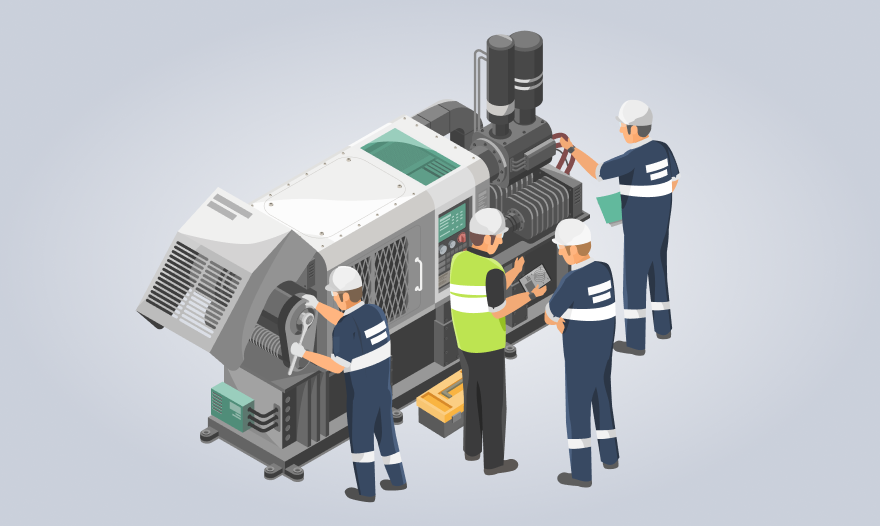
Many manufacturers have invested heavily in AI, yet struggle to translate those investments into operational results. The reasons are consistent across organizations.
Traditional AI approaches often:
- Sit within IT or data science teams, far from frontline execution
- Focus on insights and predictions without enabling action
- Require manual interpretation by already-overloaded teams
In manufacturing, this gap becomes obvious when AI insights fail to reach the people running shifts, performing tasks or managing quality. If AI does not change how work is done on the factory floor, it struggles to deliver meaningful value.
Industrial AI for connected workers addresses this challenge by embedding intelligence directly into frontline workflows – where decisions are made minute by minute.
Industrial AI Requires a Connected Worker Foundation
Industrial AI does not work in isolation. It depends on connected workers.
A connected worker platform digitizes how work is:
- Created (instructions, procedures, standards)
- Executed (tasks, checklists, observations)
- Improved (issues, feedback, continuous improvement)
This connected worker foundation provides Industrial AI with the context, data and feedback loops it needs to learn, improve and deliver value.
Without connected workers:
- AI lacks real operational context
- Adoption stalls on the shop floor
- Trust erodes
- Value remains theoretical
BCG’s future-built companies succeed because they strengthen people and process capabilities alongside AI. In manufacturing, the connected worker is the mechanism that makes Industrial AI operational.
Industrial AI for the Factory Floor: From Concept to Execution
Industrial AI delivers value when it reaches the factory floor. This is where Poka’s Industrial AI Factory solution brings Industrial AI to life.
Built on a connected worker platform, Poka embeds artificial intelligence directly into frontline workflows – helping manufacturers achieve optimal agility, efficiency and time-to-value with an AI-powered workforce.
Rather than adding complexity, Poka focuses on practical, execution-driven Industrial AI that supports workers exactly when and where they need it.
Accelerating Content Creation and Consumption with Industrial AI
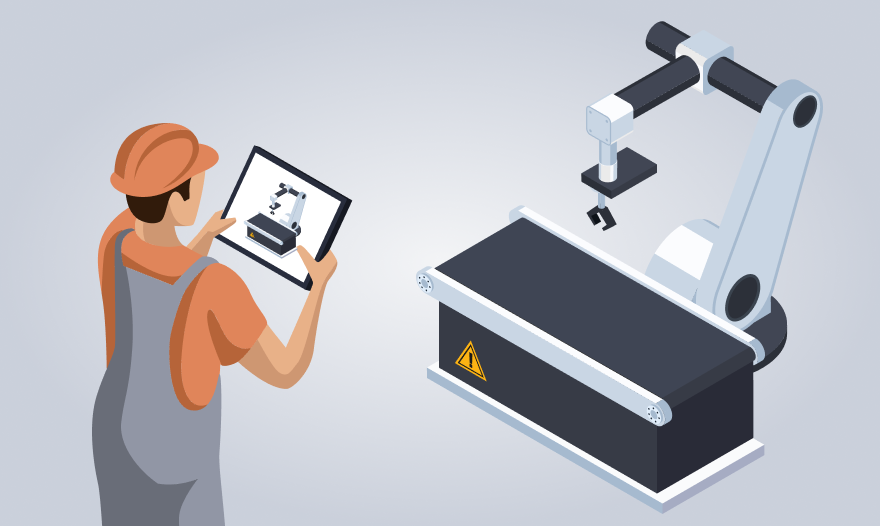
One of the biggest barriers to operational excellence is the time it takes to create, update and consume manufacturing content. Poka’s Industrial AI Factory solution removes this bottleneck.
Eliminating time-consuming manual document entry
Poka AI automatically converts standard operating procedures from PDF into standardized digital work instructions in minutes. Manufacturers can accelerate the digitalization of decades of knowledge by up to 78%, dramatically reducing deployment time and speeding time-to-value.
Automatically converting video into written instructions
Captured videos are intelligently transformed into step-by-step work instructions. Poka’s Industrial AI interprets both video and audio, converting them into structured content in the worker’s language of choice. This reduces content creation time, supports compliance, and enables workers to access the exact step they need at the moment of work.
Eliminating manual transcription of paper-based procedures, handwritten instructions, SOPs and checklists are automatically converted into standardized digital formats. The result is simplified access, improved readability, easier update management and faster rollout across teams and sites.
These capabilities show how Industrial AI accelerates not only insight – but execution.
From Generative AI to Agentic AI in Manufacturing
Industrial AI is evolving rapidly. Over the past two years, Generative AI has helped manufacturers accelerate content creation, improve search and break down language barriers.
The next phase is already here: Agentic AI.
BCG’s research shows that agentic AI already represents approximately 17% of total AI value in 2025, and is expected to reach 29% by 2028, widening the gap between AI leaders and those lagging behind.
Agentic AI systems are goal-directed. They can:
- Interpret intent
- Coordinate tools and tasks
- Recommend actions
- Learn from outcomes
In manufacturing, this allows Industrial AI to move from passive assistance to active collaboration.
Work Smarter, Not Harder: The Role of the Poka AI Assistant
This evolution comes to life through the Poka AI Assistant.
The Poka AI Assistant delivers intelligent, conversational, agentic AI support directly within frontline workflows. It works continuously in the background to help operators, supervisors and leaders:
- Search for answers using semantic, context-aware search
- Access best practices instantly
- Troubleshoot issues with guided support
- Uncover insights hidden in operational data
By guiding teams toward faster, more accurate decisions, the Poka AI Assistant improves consistency, autonomy and daily execution – without removing human control.
This is Industrial AI acting as a digital co-worker, not an overseer.
Human-in-the-Loop: Trust Is Non-Negotiable in Industrial AI
Manufacturing is a high-stakes environment. Safety, quality and compliance demand accountability.
That’s why human-in-the-loop AI is essential.
In Industrial AI systems:
- AI prepares, suggests and supports
- Humans maintain final approval
- Guardrails prevent unsafe or unintended actions
BCG consistently emphasizes that trust, transparency, and explainability are prerequisites for scaling AI. Industrial AI earns trust by augmenting human judgment – not replacing it.
This distinction between autonomy and being autonomous is what allows AI to scale responsibly on the factory floor.
Connecting and Empowering Workers Worldwide with Industrial AI
Industrial AI must work across global, diverse workforces. Poka’s Industrial AI Factory solution addresses this directly.
AI-powered multilingual transcription
Poka automatically translates audio in videos into subtitles in the language of choice, breaking down language barriers and improving safety, quality, and collaboration.
AI-powered text enhancement
Poka AI eliminates spelling and grammar errors, improving clarity and comprehension with a simple tap – reducing miscommunication and improving execution.
With over 1,000 global rollout success stories, Poka demonstrates how Industrial AI connects and empowers workers worldwide.
A Human-Centered Vision for Industrial AI
As Antoine Bisson, CTO of Poka (an IFS company), explains:
“We believe in a future where humans matter, where optimal manufacturing performance can be achieved by the seamless augmentation of frontline workers with cutting-edge AI capabilities into their daily workflows.”
This vision aligns directly with BCG’s definition of future-built organizations. AI succeeds when it empowers people to perform at their best.
Conclusion: Industrial AI Is How Manufacturers Build for the Future
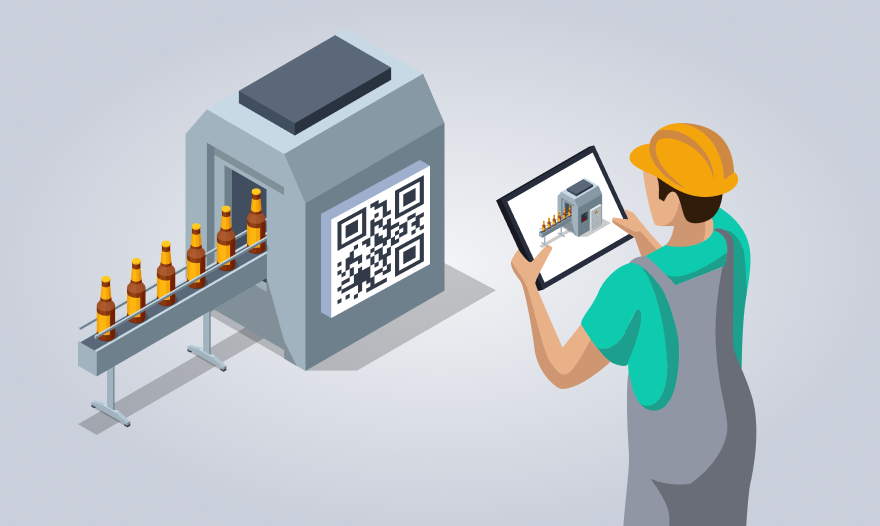
Industrial AI is no longer optional – it is foundational.
Manufacturers that succeed with AI will be those that:
- Build on a connected worker foundation
- Embed AI into frontline workflows
- Design for trust, adoption, and execution
In an era where the AI value gap is widening, Industrial AI – brought to life through connected workers and practical execution – is how manufacturers close the gap, accelerate time-to-value, and build for the future.
Book a demo with Poka to see how Industrial AI comes to life on the shop floor.
FAQs About Industrial AI
Industrial AI is artificial intelligence built specifically for manufacturing and industrial environments. It embeds AI into factory-floor workflows to help frontline workers make better decisions, execute tasks more efficiently, and continuously improve operations.
Traditional AI in manufacturing often focuses on analytics and dashboards. Industrial AI operates directly on the factory floor, using real-time context, frontline data, and human-in-the-loop design to drive faster actions and measurable operational results.
Industrial AI relies on connected workers to provide real-time context, adoption, and feedback. A connected worker platform ensures AI is embedded into daily work, making insights actionable and enabling AI to scale across manufacturing operations.
Agentic AI is a form of AI that can interpret intent, recommend actions, and proactively support decision-making. In manufacturing, agentic AI acts as a digital co-worker – augmenting frontline workers while humans retain final control.
Poka’s Industrial AI Factory solution brings Industrial AI to life by combining AI-powered content creation, semantic search, multilingual transcription, and human-in-the-loop AI within a connected worker platform – delivering faster time-to-value on the factory floor.