



Published on October 4, 2022
Discover what a connected worker is and explore the connected worker definition to empower your workforce with AI-driven insights and support.
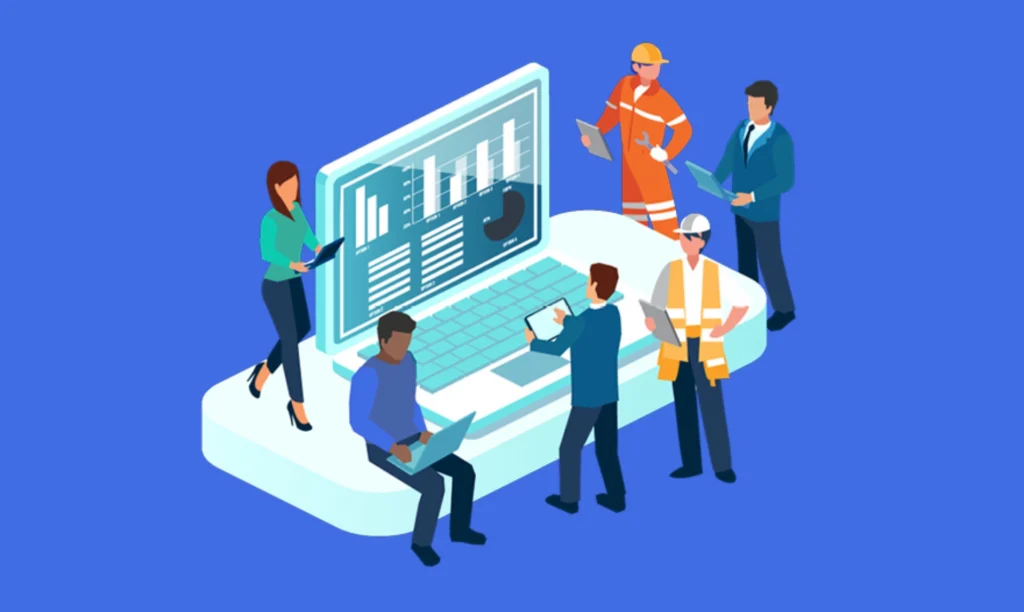
Throughout the years, digital transformation initiatives in the manufacturing industry have concentrated on equipment – leveraging information from smart connected devices to improve crucial operational areas. But the current labor crisis and need for operational agility have brought us to a fork in the road. Solutions for Connected Workers or smart manufacturing have now become essential for handling the crucial People Pillar – building a motivated, empowered, and flexible workforce by offering training delivery, operational knowledge management and collaboration.
What is a Connected Worker?
A linked worker possesses digital access to all the necessary information, tools, and knowledge required to safely and consistently execute tasks to standard – ultimately leading to enhancements in safety, quality and productivity. The connected factory worker is more engaged, versatile and empowered to solve problems autonomously.
The concept of digitally connecting production workers with their environment has been evolving for years. In the early days, this connectivity was little more than a human-machine interface (HMI) giving workers the ability to adjust production settings and control machine systems. However, the characteristics of industrial labor have transformed and there has been a consistent advancement in the implementation of Connected Worker technologies.
The Connected Worker Journey
| Disconnected | Connected to Machines | Connected to People | Connected to Insights |
| Workers are siloed and tasks are manual – leaving workers on their own, or reliant on team leads to solve problems, make decisions and improve operations. | Automation has freed up workers to oversee a broader scope of production. They are able to control and monitor machine systems, and perform simple data entry. | Workers are connected to each other – across the entire value stream, bridging shifts and departments. This unlocks a multi-directional flow of data, information and collaboration. | Context-specific data and insight are available at the time and point of need – empowering and prescribing workers to take autonomous action. |
Interaction between humans and machines is just the beginning and has limited benefits. The next phase in the Connected Worker journey allows production staff to use productivity and communication tools, which are akin to those utilized by office workers. However, these tools are specifically designed for the factory floor.
Connected Factory Workers can utilize mobile devices to effortlessly obtain digital work instructions, finish checklists, disseminate knowledge and crucial production news, and collaborate to tackle issues. With this puzzle piece in place, there is an opportunity for unprecedented visibility and collective operational knowledge.
Companies that have been investing in their connected workforce for some time now, are progressing to advanced use cases. By utilizing the comprehensive data and insights from across the Smart Connected Factory, they can predict issues and assure quicker responses from workers – even proactively. This may include automatically setting a centerline check when an indicator of a Critical Control Point is not within specifications or automatically suggesting a troubleshooting video when a particular problem is identified.
The aim of this initiative is not merely to link employees with machinery and colleagues, but to invest in individuals that form part of the complete production process. Today, learning and development for manufacturing are equal parts process improvement and skills evolution. It’s no longer a binary choice between business improvement objectives. The technology of Connected Worker is a component of a nimble production system, enhancing human skills while assisting in monitoring ongoing enhancements and performance accomplishments for the enterprise’s operational system.
Connected Worker Features
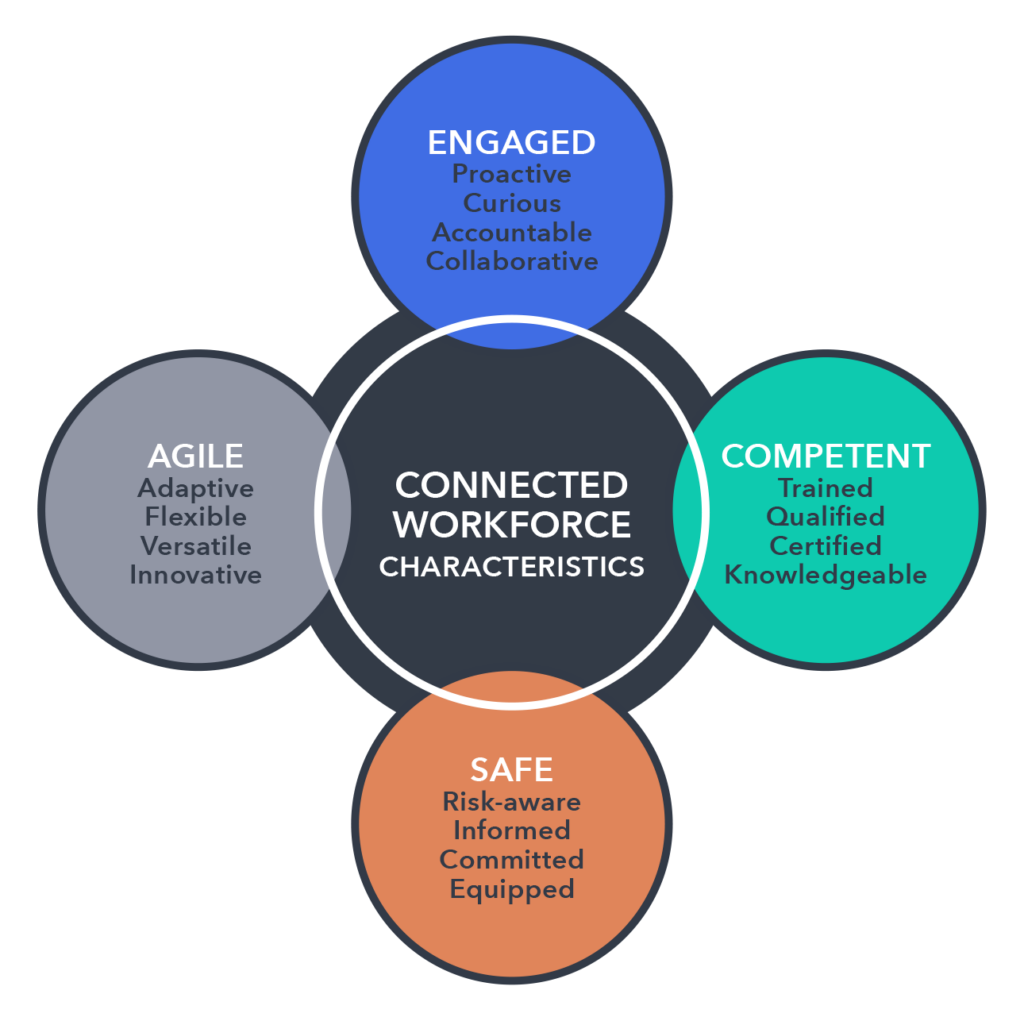
Source: LNS Research
The prominent analyst firm LNS Research, specializing in Industrial Transformation, aptly summarizes it by saying a connected worker solution leads to “frontline workforce that’s more involved, forward-thinking, and equipped with data-driven insights to make quicker, superior decisions.”
Connected Worker Explained
A Connected Factory Worker integrates into the manufacturing environment via mobile devices or workstations, combining communication, learning, and management tools into one platform to enhance manufacturing excellence. This approach allows both frontline workers and leadership to access critical information, improving decision-making throughout the value chain.
As the market for Connected Worker technologies expands, future trends point towards greater use of AI for predictive insights, enhanced AR and VR for immersive training, and an increased number of IoT devices connecting workers to their environment. Emphasizing cybersecurity and data privacy will be crucial as these solutions proliferate.
While digitalization has transformed factory operations, human expertise remains vital. Industry 5.0 highlights the collaboration between humans and machines, focusing on worker experience and the need for investment in employee well-being. The Connected Factory Worker model supports this by enabling a skilled and digitally savvy workforce to take ownership of their responsibilities, fostering a culture of continuous improvement in safety, quality and productivity.
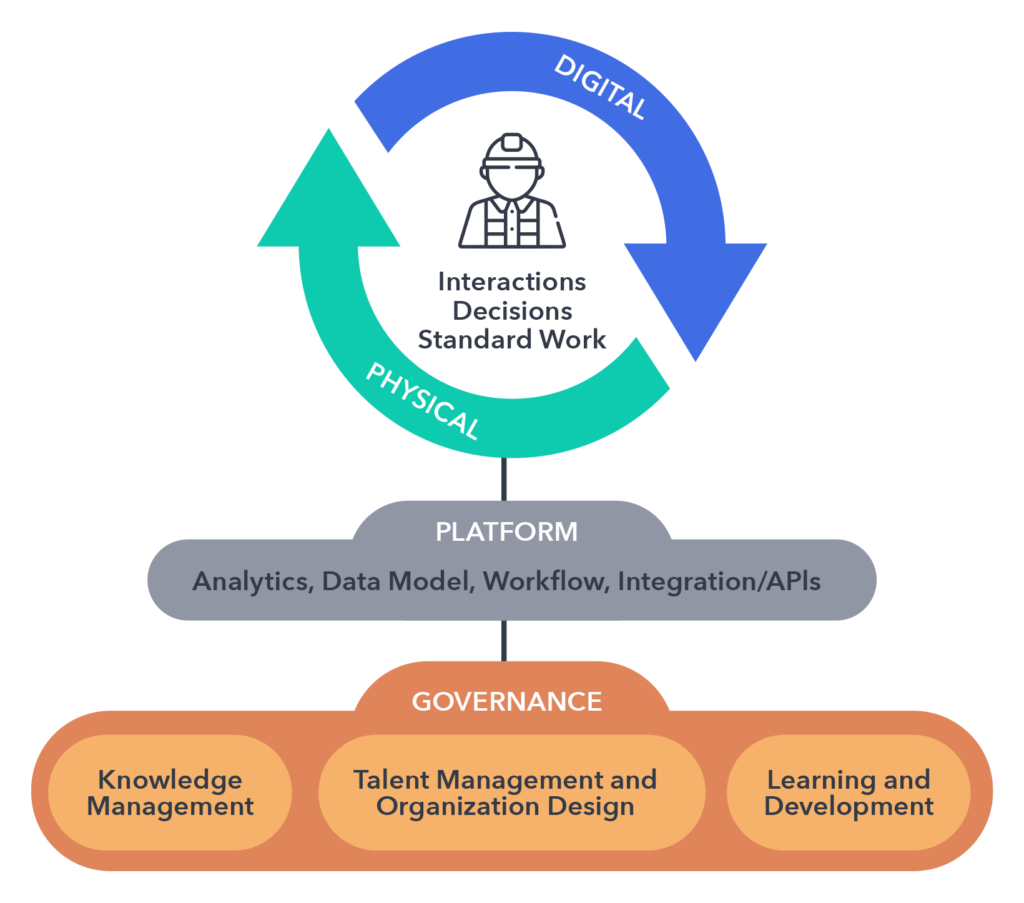
Connected Factory Worker Framework
Source: Gartner
You might see several different “apps” included under the umbrella of Connected Worker – AR, mobility, EHS solutions. For a Connected Worker system to truly make a difference, it must serve as a comprehensive resource where workers can find everything necessary to perform their tasks. This isn’t just another productivity or communication app to add to the list of factory floor tools. It directly impacts the bottom line. High-margin manufacturers are more likely to have implemented Connected Factory Worker solutions than low margin ones, hinting at just one of the reasons you should include Connected Worker as part of your digital transformation strategy. There are various networking technologies that can serve as the interface for the Connected Worker, yet Poka opts for a straightforward approach with a cloud-based application tailored for frontline workers’ convenience. You can access this application from a computer workstation or an iOS device. Using a tablet, users reap the benefits of QR code scanning, photos, video and digital signatures.
Despite the term “Connected Worker” being used for this application, one must remember that the advantages of a tool like this on the factory floor are enjoyed at all levels.
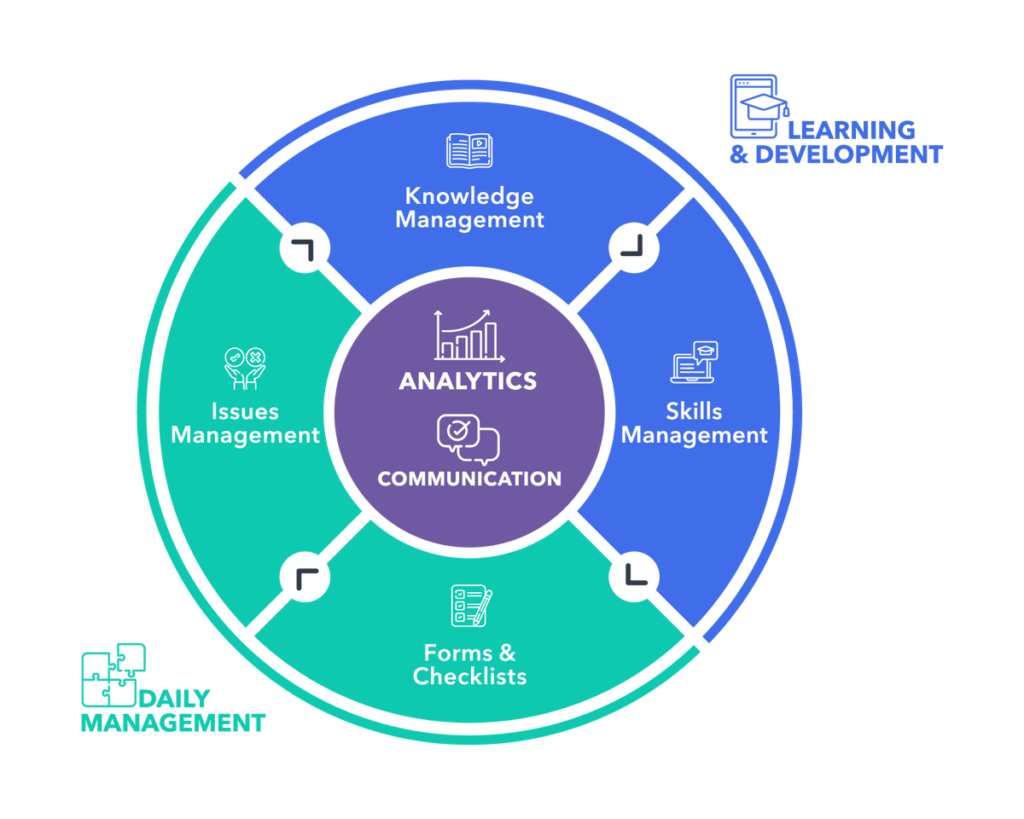
Core Features for Frontline Workers & Management
1. Knowledge Management: Provides centralized access to digital work instructions, training materials, and standard operating procedures on a mobile device. This ensures workers have the critical information they need on the factory floor, promoting continuous learning, supporting standard work and reducing search time for documents.
2. Skills Management: Tracks and manages worker skills, helping assign tasks appropriately, identify areas needing further training, and ensure every shift is staffed with the right operators. Includes tools for skills assessment, training tracking and certification management.
3. Communication: Poka’s Factory Feed facilitates communication across shifts and departments, allowing workers to share updates, collaborate, report issues and exchange insights in real-time.
4. Forms & Checklists: Digital forms and checklists streamline routine tasks, ensuring compliance with safety and operational protocols. This standardization improves productivity and ensures the consistent execution of processes.
5. Issues Management: Real-time issue reporting and resolution tools allow workers to report problems immediately, ensuring rapid response. Poka’s digital Kanban board helps monitor issue resolution, contributing to reduced downtime and improved overall performance.
6. Reporting & Analytics: Provides in-depth visibility into daily operations through comprehensive reporting and analytics tools. Managers can make data-driven decisions and pinpoint areas for improvement using Poka’s powerful analytics engine.
7. Industrial AI: Leverages artificial intelligence to transform SOPs and checklists into digital work instructions and automatically translate content into various languages. This helps optimize workflows, enhance productivity and improve time-to-value across operations.
Empowering the Future Workforce: Bridging Knowledge, Skills and Innovation
The Human Resource Pillar is encountering a fresh series of challenges. Firstly, there’s a gradual decay in skills and knowledge as an era of employees retires. Support role workers with specialized salaries are frequently working from remote locations, not as readily available to onsite employees as before. Lastly, it’s expected that frontline worker roles will experience additional automation.
This rise in human-machine interaction will require the upcoming workforce to possess broadened skills for managing increasingly intricate technologies and processes in a flexible production environment. The Connected Factory Worker introduces a novel mode of operation: one that links machines, individuals, knowledge and insights.
Connected Worker does more than preserve knowledge and help expand skills. The concept is founded on the belief that frontline workers have the deepest understanding of what can lead to gains in speed, efficiency, or productivity. It helps turn their knowledge, creativity and experience directly into process improvements. Ultimately, innovation arises when workers are given the opportunity to share their insights.
Transform Your Workforce Today!
Ready to elevate your manufacturing game? Join us for a personalized demo of our Connected Worker solution and discover how to empower your team, enhance productivity, and foster innovation on the factory floor. See the impact for yourself – your path to operational excellence starts here!