








Defining Connected Worker Solutions in the Age of Industry 5.0.
Welcome to Connected Worker 101
In this extensive guide, we explore what it means to adopt a connected worker solution and how it can optimize your manufacturing operations. You'll gain insights into the essential components of a successful platform, from streamlining communication to enhancing workforce collaboration and boosting productivity. Through actionable strategies, this guide will help you understand how a connected worker solution can address key industry challenges and empower your frontline workers for the future of manufacturing.
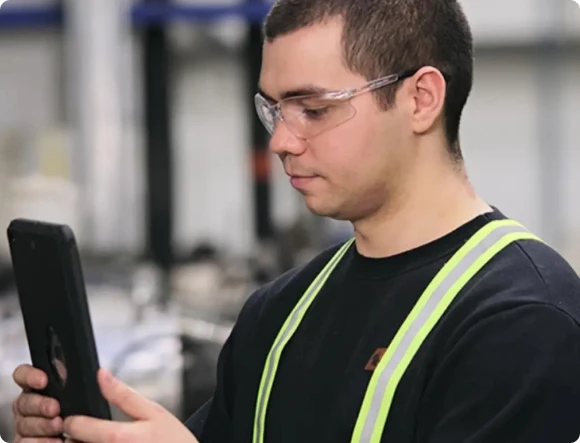
Table of Contents
What is a Connected Worker?
What to Look for in a Connected Worker Solution
Use Cases of Connected Worker Platforms
Selecting the Right Solution
Where to Start with a Connected Worker App
Next Steps in Your Connected Worker Journey
Additional Resources
Frequently Asked Questions
1. What is a Connected Worker?
In the current context of Industry 5.0, the concept of the ‘Connected Worker’ has emerged as a key pillar in modern manufacturing. A connected worker leverages advanced digital tools and mobile devices to seamlessly integrate with manufacturing machinery, processes and other workers, facilitating standard work, enhanced communication and improved operational efficiency.
Defining the Connected Worker in Manufacturing
Connected workers are equipped with software applications like Poka that provide access to the knowledge, skills and support they need to perform tasks safely and to standard—right on the factory floor.
The integration of connected workers into the manufacturing ecosystem is more than a technological advancement; it represents a paradigm shift in how work is performed and managed.
As manufacturers continue to evolve, connected workers play a crucial role in bridging the gap between traditional processes and the digital future. They are the linchpins of smart factories, driving continuous improvement and operational excellence through their ability to blend human ingenuity with technological efficiency.
The importance of connected workers is underscored by their ability to adapt to rapidly changing environments, analyze and respond to data and contribute to continuous improvement initiatives.
Evolution of the Connected Worker
In the early days of manufacturing, labor was predominantly manual, with workers relying on physical strength and rudimentary tools. The first Industrial Revolution introduced mechanization, which significantly enhanced productivity but still required substantial human intervention.
The advent of the digital age marked a pivotal shift, as computers and automation began to take over repetitive tasks, allowing workers to focus on a broader scope of production and more complex and value-added activities. This is when Industry 4.0 laid the foundation for the connected worker by integrating cyber-physical systems, the Internet of Things (IoT) and big data analytics into manufacturing processes.
The digitalization of the factory floor revolutionized manufacturing. With automation, IoT sensors, robotics and data analytics, manufacturers connected machines and streamlined processes, delivering massive productivity gains and gaining unprecedented visibility into production data.
Yet, even with these advancements, humans remain essential on the factory floor. Manufacturers need a workforce that is more skilled than ever - one that is digitally savvy and ready to thrive in this new landscape.
After connecting the "things" in factories during Industry 4.0, manufacturers needed to connect the people who keep everything running. With the right support, frontline workers can go beyond simply operating machines—they can be engaged and have a sense of ownership to become ‘managers’ of their area of responsibility.
That’s why Industry 5.0 emphasizes the collaboration between humans and machines, focusing on human-centric innovation. This approach highlights the value of worker experience and the importance of investing in worker well-being and development. Lean and Six Sigma methodologies have long recognized the Gemba as the place where value is created. The Connected Factory Worker brings the benefits of digital transformation to this fundamental belief of world class manufacturing.
Desk workers have reaped the rewards of advances in mobile devices and information technology since the 1980s, and now it's time for their deskless counterparts—who make up 80% of the global workforce—to experience the same level of connectivity and paperless efficiency.
By combining human expertise and ingenuity with modern digital and mechanical technology, we can optimize safety, quality and productivity, while ensuring both machines and people are performing at their peak.
Connected Worker - Enabling Technologies
Several technological advancements have been instrumental in the rise of the connected worker, each contributing to more integrated and efficient production processes. While many of these enabling technologies are important, it’s important to understand how each part fits into an overall solution.
Connected Worker Applications:
This is a broad category of software applications that a worker uses to perform tasks. Gartner Research first used this term to define the solution category back in the 2019 Manufacturing Operations Strategy Hype Cycle. According to Gartner, connected workers “leverage digital tools and data management techniques to improve and integrate their interactions with both physical and virtual surroundings. This improves decision accuracy, proliferates knowledge and reduces variability—improving engagement, satisfaction and retention.” In fact, Poka is one of only two connected worker platforms to be mentioned as a noteworthy vendor every year since this definition was introduced.
Connected worker applications should not be confused with traditional factory software used to control or monitor equipment like HMI, SCADA and MES. Instead, connected worker applications focus on workforce efficiency, knowledge management, task management, collaboration and learning. By connecting workers with information, tools and each other, connected worker platforms like Poka power real-time communication, efficient workflows, standard work and enhanced decision-making on the factory floor.
Mobile Devices:
The proliferation of smartphones and tablets has revolutionized the way workers access information and communicate on the factory floor. Instead of leaving the shopfloor to reference documentation in binders or on corporate networks, mobile devices provide on-the-floor access to critical information enabling workers to make informed decisions, work safely and collaborate effectively. Native features of mobile devices offer additional value to frontline workers like photos, videos and QR code scanning.
AR & VR:
Augmented Reality (AR) and Virtual Reality (VR) technologies have opened new avenues for training, maintenance and troubleshooting. Workers can visualize complex procedures, receive step-by-step instructions and simulate scenarios, enhancing their skills and reducing error rates.
Wearable Technology:
Wearables, such as smart glasses and wristbands, allow workers to receive real-time alerts, monitor their health and stay connected with their teams. These devices can enhance safety and productivity by providing critical information on the go.
Artificial Intelligence (AI):
AI is becoming a key enabler of connected worker applications helping to reduce the time and effort to realize value. Generative AI features can help streamline content production and management, automate translations and clarify search inaccuracies, helping to support standard work, global collaboration and productivity.
Benefits of a Connected Workforce
There are a wide variety of benefits to having connected workers on the factory floor. Key among these are increased productivity, enhanced safety, seamless communication and collaboration, continuous learning and development and improved quality and efficiency.
Continuous Learning & Development
The 70:20:10 rule emphasizes that 70% of learning comes from on-the-job experiences, 20% from interactions with others and only 10% from formal education. Connected worker apps like Poka support this model by facilitating autonomous learning on the factory floor, allowing workers to access training materials and gain skills independently. This reduces the reliance on inefficient shadowing and accelerates the onboarding process, making training more effective and efficient.
Increased Productivity
Connected workers are skilled workers. They consistently follow standard work, and they also contribute to improving standard work. In a connected factory with connected workers, production leaders gain unprecedented visibility into issues, enabling them to quickly take corrective action and make informed decisions. This ultimately reduces downtime and operational performance. By leveraging digital tools like Poka, they can identify issues and implement solutions more effectively and independently.
Enhanced Safety
A connected worker app like Poka provides instant access to digital work instructions, forms and checklists where they’re needed most—on the factory floor (not inside a paper binder in a faraway storage room). This makes it easier to find and follow standard operating procedures and find training content to prevent accidents and maintain a safe working environment. But over and above their practical applications, connected worker apps help build and maintain safety culture maturity, where safety is a top priority across the organization.
Better Communication and Collaboration
Connected worker solutions facilitate communication and collaboration among workers, regardless of their physical location. Imagine a third shift team member is able to reach out in real-time to a subject matter expert in a different time zone to help solve a problem they encounter. WIth communication tools like Poka’s Factory Feed, information can be shared line, factory and enterprise wide, leading to improved coordination and teamwork.
Improved Quality and Efficiency
With instant access to work instructions, forms and checklists and more, connected workers can monitor and maintain quality standards more effectively. This leads to higher efficiency in production processes and ensures that final products meet the highest quality benchmarks.
Attract & Retain Valuable Workers
In today's competitive job market, attracting and retaining skilled workers is more critical than ever, especially in the face of a skilled labor crisis and the high cost of turnover. A strong Employee Value Proposition (EVP) goes beyond just competitive salaries—it includes a commitment to workforce development. By investing in connected worker technology, manufacturers can dispel the perception of manufacturing as dull, dirty and dangerous, showcasing a modern, dynamic and innovative work environment that appeals to top talent.
Key Considerations When Looking to Build a Connected Workforce
As with any digital strategy, it is important to start with a solid foundation, including a plan to address these success criteria.
Building a Business Case
It’s vital to develop a robust business case that outlines the benefits, costs and return on investment of adopting connected worker technologies. This helps to secure buy-in from stakeholders and justify the investment.
Allocate the Right Project Resources
One of the biggest challenges manufacturers face is a lack of resources, both in terms of personnel and time, to implement connected worker solutions. Identifying and allocating the necessary resources is critical for a successful implementation.
Have a Change Management Plan
Implementing connected worker solutions requires careful management of technological change over time. This includes involving stakeholders early, articulating the “what’s in it for me” story, training the workforce, integrating the new systems with existing processes and ensuring smooth transitions.
While there are a variety of challenges to address, the benefits of increased productivity, enhanced safety and continuous improvement make connected worker solutions a key competitive strategy for manufacturers. Defining and embracing the concept of the connected worker is fundamental to achieving the goals of Industry 5.0.
2. What to Look for in a Connected Worker Solution
To truly transform manufacturing operations to drive excellence and productivity, an ideal connected worker solution needs to be comprehensive, have seamlessly integrated features, be easy to use and built specifically for the factory floor. Let’s dive deeper into each of these components.
1. One Comprehensive Solution
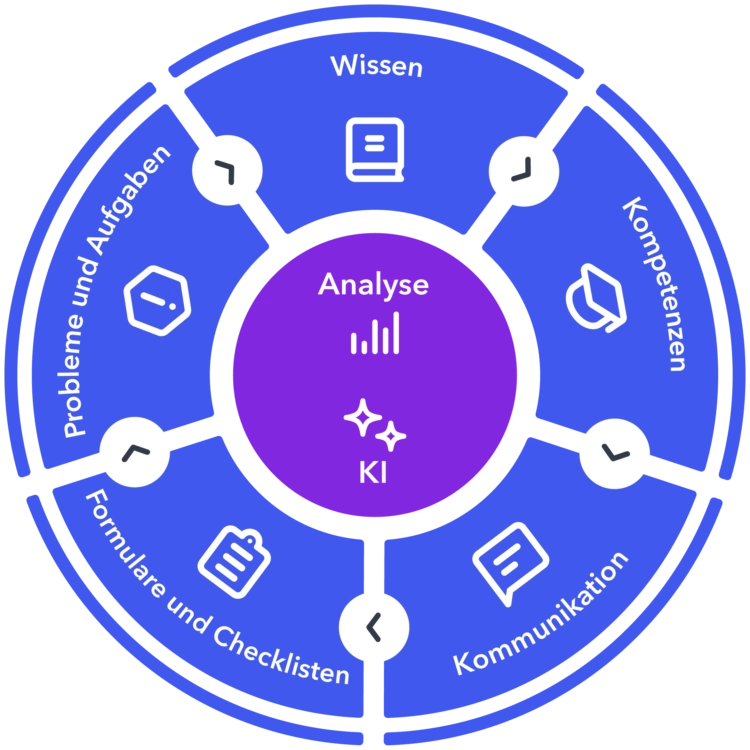
A comprehensive connected worker solution should offer a “single pane of glass” experience, where all necessary functionalities are accessible through one integrated platform. This includes:
Knowledge Management
Centralized access to digital work instructions, training content and standard operating procedures via an on-the-floor mobile device ensures that workers have the information they need, where they need it most. This fosters continuous learning, supports standard work and reduces the time spent searching for crucial documentation.
Skills Management
Tracking and managing worker skills is essential for assigning tasks appropriately, identifying areas for further training and making sure every shift has the operators needed for production. A robust connected worker platform provides tools for skills assessment, training tracking and certification management.
Communication
Communication channels, such as Poka’s Factory Feed, enable workers to share information across shifts, report & resolve issues, collaborate, share insights and more.
Forms & Checklists
Digital forms and checklists streamline routine tasks and ensure compliance with safety and operational protocols. This helps to standardize operations and improve workforce productivity.
Issues Management
Real-time issue tracking and resolution tools enable workers to report problems immediately, ensuring swift action and continuous improvement. Poka's issue posts, task center and digital kanban board make it faster and easier to identify deviations and solve problems, leading to improvements in downtime, productivity, quality and more.
Reporting & Analytics
Access to comprehensive reporting and analytics provide unprecedented visibility into daily operations, helping managers make data-driven decisions and identify areas for improvement. Poka Analytics is a powerful reporting and analytics engine at the heart of the platform that unlocks insights into your connected worker data.
[H5] Industrial AI: Leveraging artificial intelligence to convert SOPs and checklists into standardized digital work instructions and automatically translate content into your language of choice helps to optimize time to value with new levels of efficiency.
2. A Seamless Platform in Support of Continuous Improvement
A comprehensive connected worker platform that checks the boxes above is not enough to deliver maximum value.
You want the capabilities of your connected worker platform to be seamlessly integrated such that the whole is greater than the sum of the parts. This will drive greater adoption, and support a more organic and sustainable CI culture.
Integrated Features
The individual features of a connected worker platform should not act like standalone modules. Work instructions should form the basis of skills/training programs. Checklists should act as job-aids to ensure work instructions are followed to standard. Problems identified while performing a task should automatically trigger notifications and be logged as issues. And once issues are resolved, the documented problem and solution should become part of the knowledgebase and updated work instruction if applicable.
Many connected worker platforms offer these features in isolation, but miss out on the exponential benefits of having them work in seamless unity. That’s why Poka is built as an integrated solution from the ground up, as seen below.
Continuous Improvement
Standard work and tapping into the expertise of the Gemba are two core tenants of any continuous improvement methodology. A connected worker platform that seamlessly integrates standards, training, task management and issues management in a way that engages frontline workers will make it easier to identify and prioritize opportunities for improvement, while capturing the organizational knowledge and best practices that benefit everyone across the organization.
3. Supports Your Existing Digital Factory Ecosystem
Integrates with Existing Hardware & Software
A connected worker solution isn't meant to replace your existing systems of record, but to close data gaps that exist in your processes. It should work in tandem with the tools and systems already in place to ensure a smooth transition and maximize the value of your existing investments. APIs and integration capabilities are crucial for connecting with enterprise resource planning (ERP) systems, manufacturing execution systems (MES) and other critical platforms.
Integrates with Daily Operations
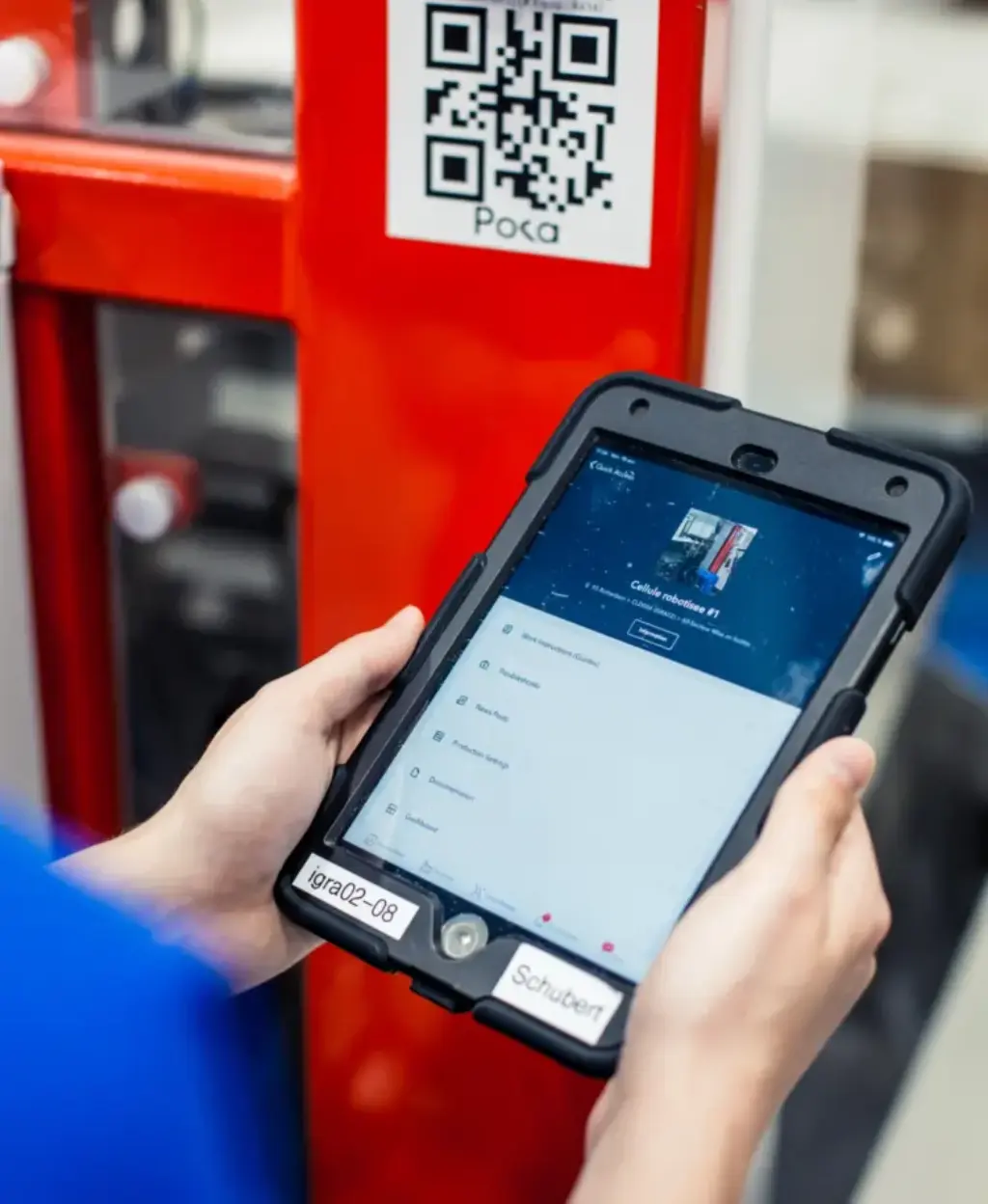
Your chosen connected worker solution needs to fit naturally into the daily workflow of the factory floor, minimizing disruptions and ensuring that workers can adopt it without significant changes to their routine. For instance, tablets housing the application with QR codes affixed to machinery makes it seamless to access critical information at the right moment.
Efficient & Effective Onboarding
Quick and efficient onboarding processes help new users become proficient with the platform swiftly. This includes intuitive tutorials featuring photos and video, user-friendly interfaces and accessible support.
Quick to Value Realizations
The connected worker solution should deliver tangible benefits quickly, demonstrating its value through improved productivity, expanded communication, reduced downtime and enhanced operational efficiency.
4. Easy to Use
User adoption is critical for the success of any technological solution. Therefore, a connected worker app needs to be easy to use and quick to learn.
Intuitive Design
An intuitive, user-friendly interface ensures that workers of all skill levels can navigate the platform effortlessly. An application that takes inspiration from familiar social media tools that most everyone uses in their daily lives is even better. This reduces the learning curve and drives adoption.
Autonomous Use
Workers should be able to access and use the platform independently. This empowers frontline workers to take ownership of their tasks and contributes to a more agile, engaged and responsive workforce.
Easier Than the Status Quo
To truly add value, a connected worker platform must streamline daily tasks, replacing slow, repetitive processes like manual paperwork. With minimal clicks and efficient workflows, the app should focus on getting workers in and out quickly, ensuring they spend more time doing their job and less time navigating the tool.
5. Built for Scale
A connected worker platform needs to be built for scale to ensure it can support the growing needs of global manufacturing operations, enabling seamless content sharing, robust cybersecurity, data privacy and multilingual capabilities across diverse and expanding workforces.
Easy to Share Standards
The knowledge and standards in a connected worker platform are the foundation of a world class manufacturing operation. The platform should therefore make it easy to share content and best practices across sites, reducing content creation efforts while ensuring global standards.
Cybersecurity
As manufacturing processes become more digitized, cybersecurity is an even more significant concern. Protecting sensitive data and maintaining the security of connected devices is paramount to prevent cyber threats.
Data Privacy Compliance
With the exponential growth of data collection and usage, protecting data privacy is crucial. Manufacturers must comply with regulations and implement robust data privacy measures to protect the personal information of their workers.
Multilingual
The industrial workforce is diverse, so a connected worker solution should support multiple languages. This ensures that all workers can access and understand information and communicate effectively, regardless of their language proficiency.
6. Built for the Factory Floor
A connected worker solution should be designed with the unique needs of the factory floor in mind. This includes considerations such as data structure, mobile access, continuous improvement and manufacturing-specific use cases.
Data Structure Mirrors Manufacturing Operations
The platform’s data structure should reflect the operational realities of the manufacturing environment, ensuring that data is organized in a way that makes sense for production processes. That’s why Poka’s backend data is structured to mirror the classic factory setup at the plant, production line, workstation and equipment level.
Mobile-First Approach
Given the dynamic nature of the factory floor, a mobile-first design is essential. Workers should be able to access the platform and perform tasks from their mobile devices, ensuring flexibility and real-time responsiveness.
Designed with Continuous Improvement in Mind
The platform should facilitate the PDCA loop. This starts by empowering the Gemba to participate in the discovery, documentation and standardization of new best practices, in the flow of daily work. This fosters a culture of standardization and continuous improvement.
Manufacturing-Specific Use Cases
An ideal connected worker app should address specific use cases relevant to manufacturing, such as operations, health and safety, maintenance, quality control, continuous improvement and learning and development. Tailoring the platform and offering pre-built templates for these use cases ensures that it meets the unique needs of each industry, company and factory.
Let’s delve into these use cases to see how connected worker solutions like Poka are transforming manufacturing operations and driving the industry towards greater efficiency and innovation.
3. Top Use Cases of Connected Worker Platforms
Connected worker platforms are revolutionizing how work is done in all areas of manufacturing. A comprehensive solution should address use cases across operations, health and safety, maintenance, continuous improvement, quality, and learning and development.
These platforms empower workers with access to crucial data, streamlined processes and by fostering a culture of continuous improvement. Let's explore how connected worker apps are transforming various facets of manufacturing.
Operations Use Cases: Improve OEE and Drive Productivity
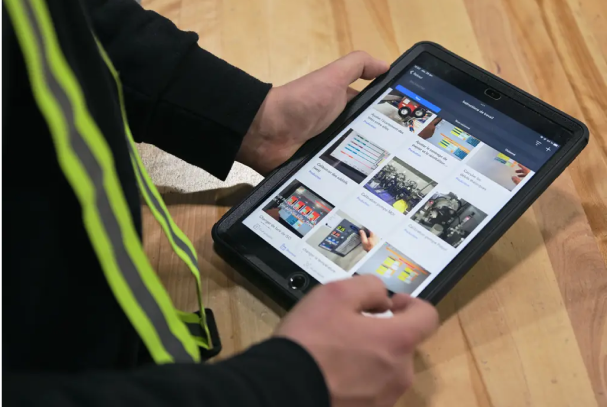
Inefficient operational processes can lead to production delays, compromised product quality and increased safety risks, all of which significantly impact overall business performance. A connected worker app addresses these challenges by streamlining operations and providing real-time insights into workflows.
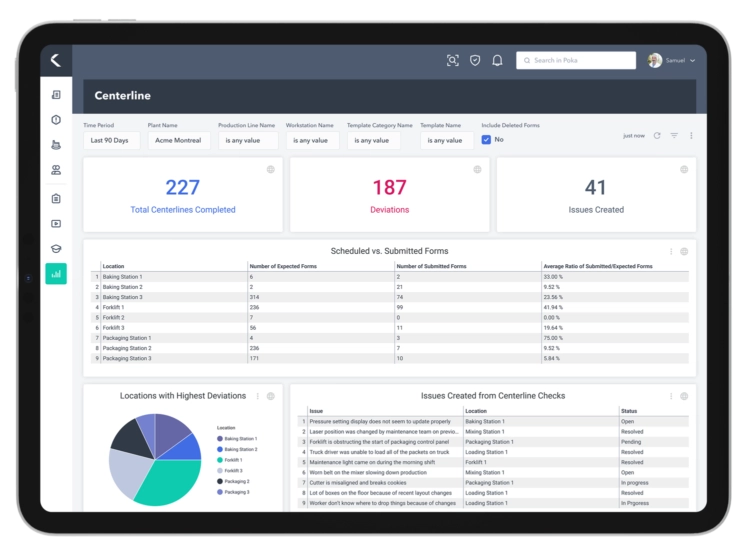
A connected worker solution like Poka can help your operations team:
Improve access to critical operational knowledge
Reduce the time and cost to train and onboard workers
Improve collaboration across shifts, departments and plants
Ensure processes and tasks are followed to standard
Identify and resolve issues faster
Capture, analyze and gain insight from operational data
Streamline the creation, access and communication of operational content with AI
Operations Use Cases
Shift Reports
Streamline handover reporting to ensure continuity and productivity.
Clean, Inspect, Lubricate (CIL)
Increase OEE and reduce equipment downtime.
Centerlining Validations
Ensure optimal operations, quality and machine efficiency.
Changeovers
Increase OEE and changeover efficiency with integrated training, tasks, checklists & analytics.
Start of Production Checks
Streamline production start-up times for improved performance and predictable quality.
End of Production Checks
Streamline end of production times for improved performance and predictable quality.
Cleaning in Place (CIP)
Reduce sanitation cycles and regulatory risk.
Minor Stops
Increase productivity and reduce losses.
Autonomous Maintenance
Empower your operators to effectively perform basic equipment maintenance.
Health & Safety Use Cases: Reduce Safety Risk and Improve Compliance
Safety is everyone's responsibility on the factory floor, and a connected worker app like Poka goes beyond formal safety training to foster safety culture maturity.
By empowering workers with digital work instructions, forms and checklists and on-the-floor, autonomous safety training, you can enable them to actively identify and mitigate risks, ensuring a safer and more productive work environment.
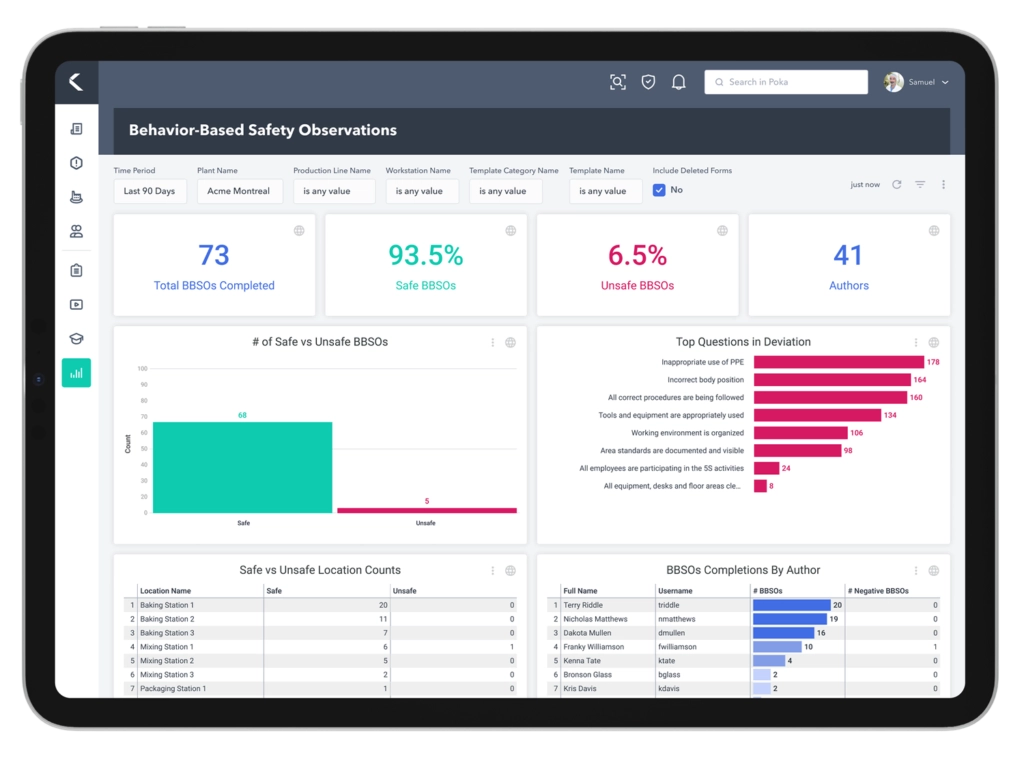
A connected worker solution like Poka can help your organization:
Improve access to critical H&S content
Streamline and standardize safety training and certifications
Keep safety top of mind
Ensure safety standards are followed
Identify and resolve issues faster
Capture, analyze and gain insight from H&S data
Streamline the creation, access and communication of health and safety content with AI
Health & Safety Use Cases
Safety Walk
Identify potential hazards and take corrective actions to mitigate risk and improve safety.
Behavior Based Safety Observations
Identify and correct risks for a safer, more compliant and effective work environment.
Incident Reports
Capture, analyze and implement corrective actions to enhance overall safety and operational efficiency.
Forklift Inspections
Reduce safety risks and improve operational performance associated with lift operations.
Crane and Lift Inspections
Increase operator safety and reduce incidents by ensuring lift inspections are performed to standard.
Near Miss Reporting
Improve safety and prevent future accidents that affect productivity.
Pre-Op Safety Assessments
Reduce incidents that affect productivity by ensuring inspections are scheduled and performed to standard.
Safety Audits
Increase worker safety, efficiency and compliance while minimizing incidents and associated legal risk.
Fire Equipment Inspections
Achieve fire protection inspection and readiness goals while complying with regulatory requirements.
Maintenance Use Cases: Improve Asset Availability and Performance
Optimizing machine uptime and streamlining maintenance processes are essential for achieving efficiency and quality in manufacturing. Connected worker platforms are not replacements to core CMMS or EAM platforms. Instead, they can extend the value of existing maintenance systems by improving communication between maintenance and production around issues, reporting outages and supporting autonomous maintenance. Poka helps ensure peak machinery performance.
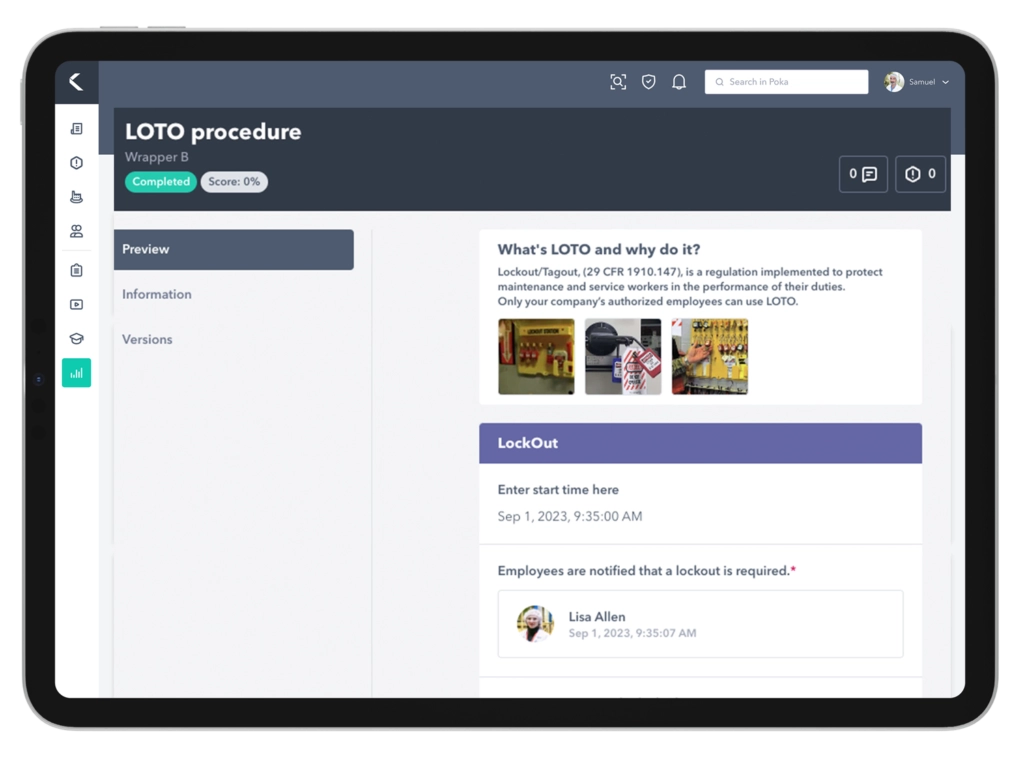
A connected worker solution like Poka can help your organization:
Improve access to critical maintenance-related content
Streamline and standardize maintenance training and certifications
Empower collaboration for optimal team performance
Ensure maintenance processes are followed to standard
Identify and resolve issues faster
Capture, analyze and gain insight from maintenance data
Streamline the creation, access and communication of maintenance content with AI
Maintenance Use Cases
Lock-Out-Tag-Out (LOTO)
Increase worker safety, confidence and compliance.
Preventive Maintenance Rounds
Ensure optimal production uptime, asset lifespan and employee safety.
Condition Monitoring
Avoid costly unplanned downtime while improving asset efficiency and safety.
Equipment Outages
Reduce machine downtime and improve OEE.
Continuous Improvement Use Cases: Turn Issues Into an Opportunity to Learn and Improve
In the face of increasing competition, supply chain complexities and ongoing labour challenges, manufacturers must prioritize continuous improvement to stay competitive. A connected worker app supports this by empowering workers with digital SOPs, data insights, collaborative tools and streamlined processes, fostering a culture of operational excellence.
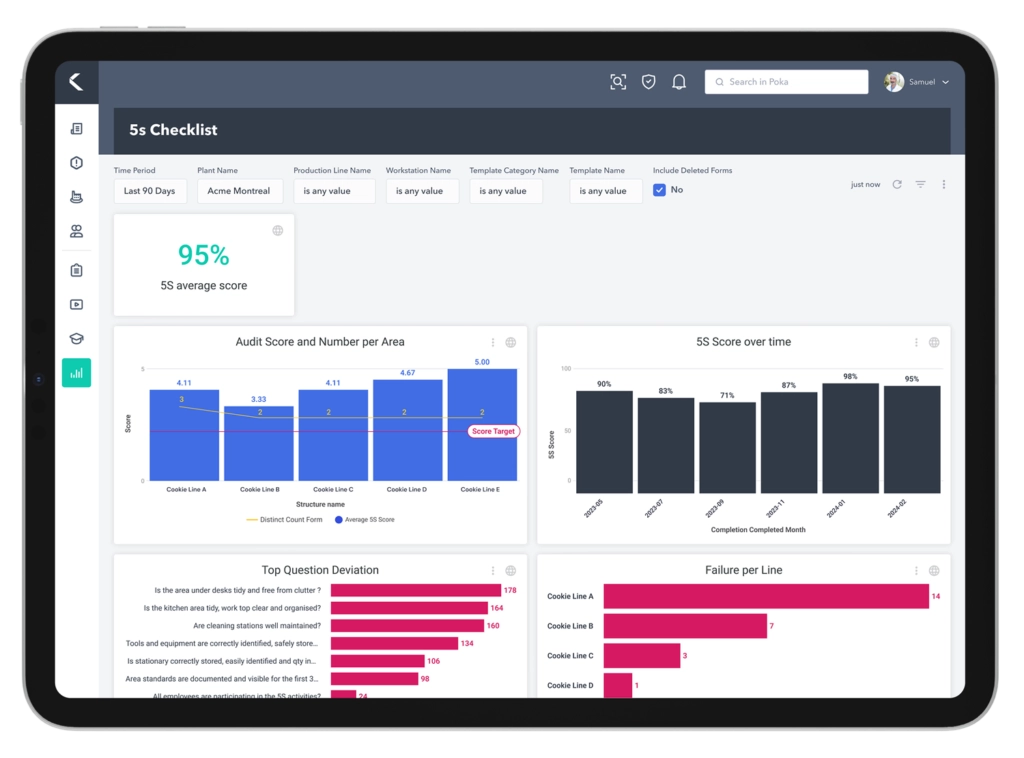
A connected worker solution like Poka can help your organization:
Improve access to CI-related content
Streamline CI training and certifications
Empower collaboration for optimal team performance
Ensure CI standards are followed
Identify and resolve issues faster
Capture, analyze and gain insight from CI data to spot opportunities for improvement
Streamline the creation, access and communication of CI related content with AI
Continuous Improvement Use Cases
5S Checklist
Streamline 5S execution to spot opportunities to drive efficiency, safety, and overall operational excellence.
Leader Standard Work
Enhance productivity, consistency and communication with standardized processes for operational leaders company-wide.
Standard Work Procedures
Simplify and standardize procedures and processes for optimal performance.
Abnormality Reporting
Quickly identify non-conformities in processes, products, safety or quality to reduce abnormalities over time.
Tacit Knowledge Capture
Reduce business risk by capturing the critical knowledge contained within your retiring workforce.
Operational Knowledge Management
Improve employee effectiveness, onboarding and safety.
Quality Use Cases: Reduce Defects, Rework and Waste
Quality is crucial to your organization's brand and product reputation, directly impacting your bottom line. By empowering every worker with the tools and information they need to execute and monitor standardized processes, a connected worker app makes quality a company-wide responsibility, helping to reduce product defects and waste.
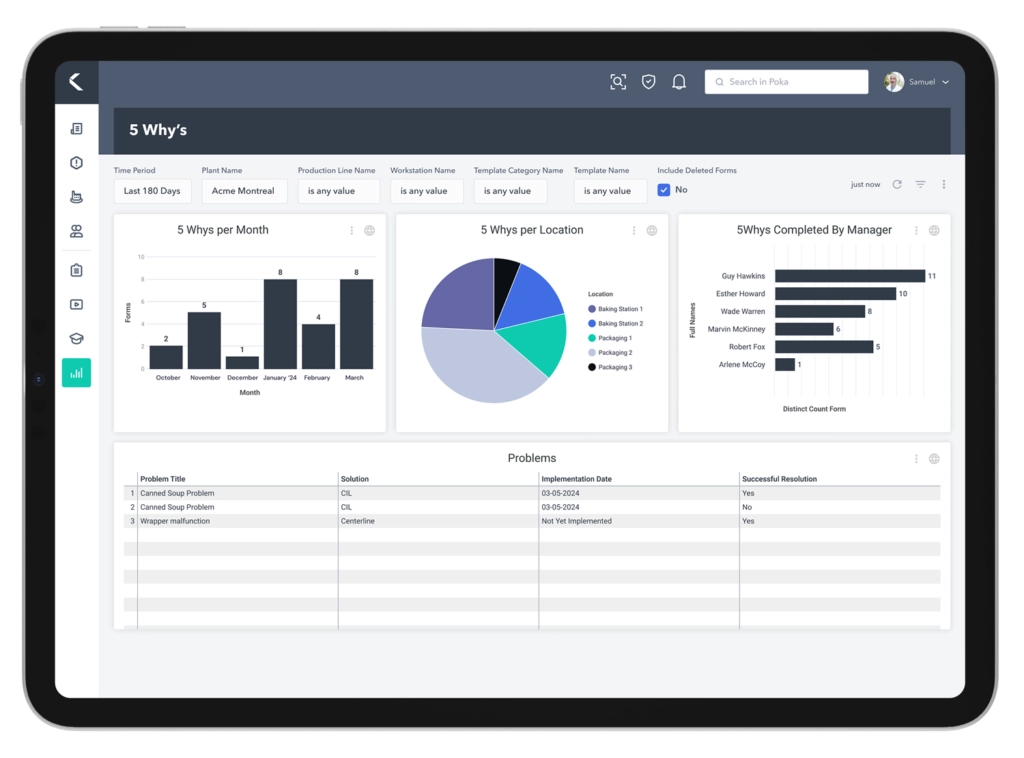
A connected worker solution like Poka can help your organization:
Improve access to quality standards content
Streamline quality-related training and certifications
Empower collaboration for optimal keep quality control top of mind
Ensure quality standards are followed
Make certain observations and issues are captured to standard
Capture, analyze and gain insight from quality data
Streamline the creation, access and communication of quality content with AI
Quality Use Cases
Gemba Walks
Empower management to better optimize CI efforts with standardized scheduling, data collection, analysis and improved collaboration.
5 Whys
Simplify 5 Whys execution to quickly identify and correct problems for improved uptime, processes and quality.
Process Monitoring
Improve process efficiency, safety, and reduce equipment downtime.
Metal Detector Checks
Assure product quality, productivity and reduce recall-related costs by ensuring equipment is inspected and maintained to standard.
Defect Reporting
Ensure product quality and reduce costs by getting to the root cause of defects.
Quality Audits
Schedule, collect, analyze and act on audit data to establish safe, effective and compliant manufacturing processes.
Learning & Development Use Cases: Build Workforce Skills, Confidence And Versatility
Your employees are your most valuable asset, and amid the industrial labour crisis and record-high turnover, efficient and effective training is more critical than ever. A connected worker app like Poka offers robust solutions for delivering role-specific and compliance training, helping to attract, upskill and retain skilled labor.
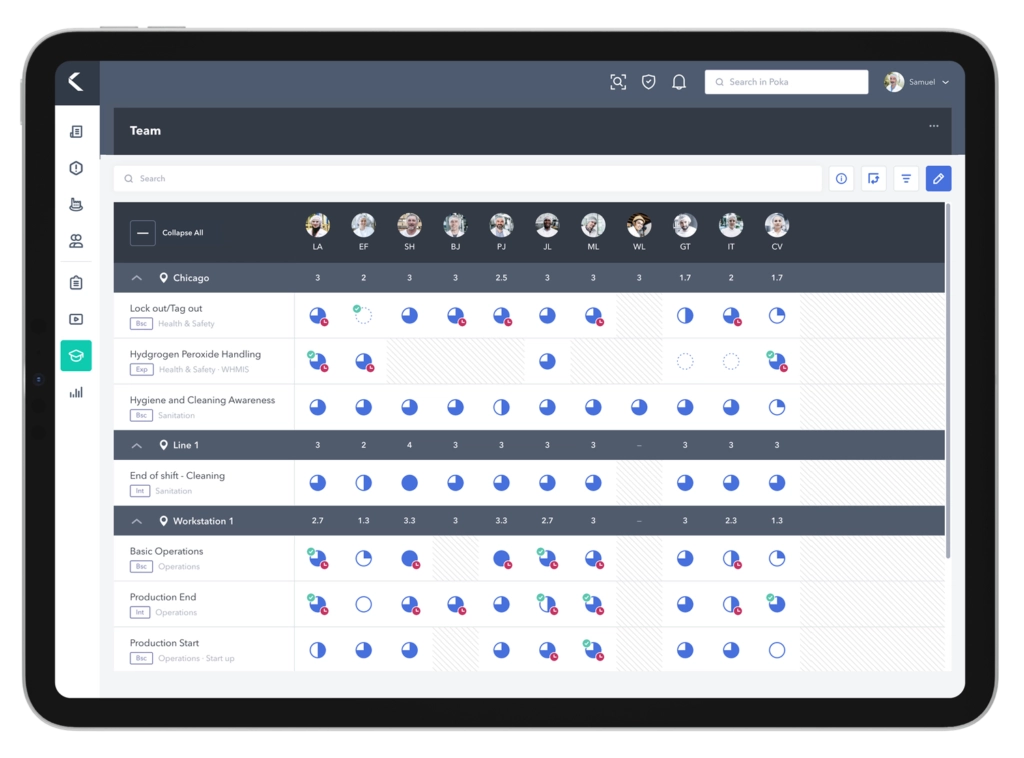
A connected worker solution like Poka can help your organization:
Improve access to critical operational knowledge
Reduce the time and cost to train and onboard workers
Improve collaboration across shifts, departments and plants
Ensure processes and tasks are followed to standard
Identify and resolve issues faster
Capture, analyze and gain insight from operational data
Streamline the creation, access and communication of operational content with AI
Learning & Development Use Cases
New Hire Training
Accelerate the transformation of new hires into competent, confident, productive and safer workers.
Skills Target & Gap Management
Align employee skills with strategic objectives by setting skill targets, managing gaps and tracking progress.
Skills Training Delivery
Develop more competent workers, faster by streamlining training content creation, delivery and skills management.
Training Audit & Compliance Management
Meet your strategic and regulatory training requirements and reinforce a culture of learning with integrated knowledge, skills and task management, analytics and audit ready data.
Revision Training Management
Attract, develop and retain skilled labor by prioritizing and managing skill development and career advancement.
4. Selecting the Right Solution
Choosing the right connected worker solution is a critical first step in your journey toward enhanced operational efficiency and workforce empowerment. A thoughtful selection process will make sure the solution aligns with your organization's immediate needs and long-term goals.
Here’s a condensed guide to help you navigate this important decision. Keep in mind that your vendor should be an active participant in this process to help you succeed.
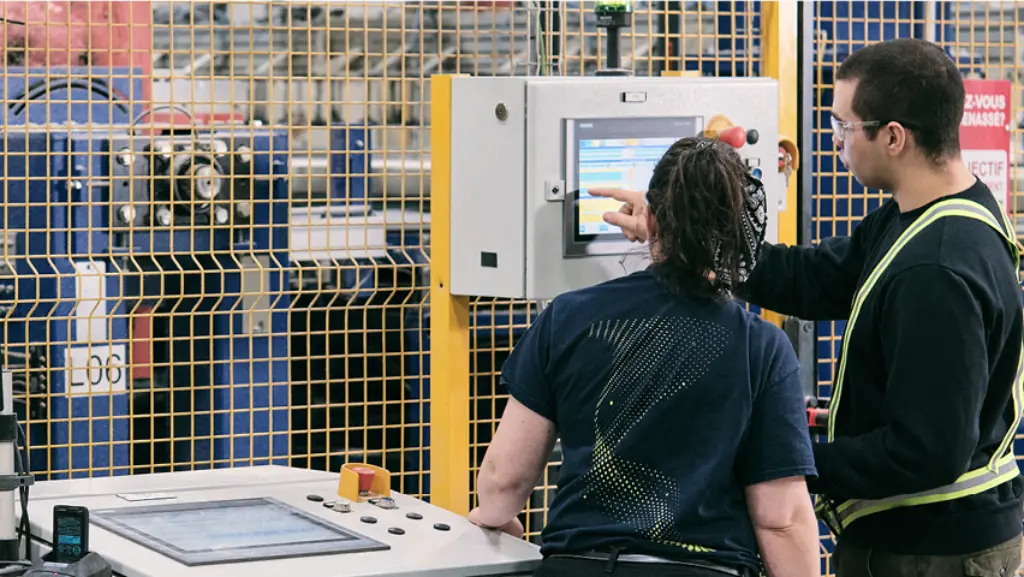
Conduct a Needs Assessment
Before evaluating potential vendors, it’s critical to conduct a comprehensive needs assessment. Identify your organization’s specific goals for implementing a connected worker solution. Consider the following questions:
What challenges are you currently facing in your operations? Determine the pain points that a solution could address, such as improving communication, enhancing training or reducing downtime.
What features and functionalities are necessary to meet these challenges? Create a list of must-have capabilities, such as site-wide communication, enterprise readiness or seamless integration with existing systems.
Who will be using the solution? Understanding the needs of different user groups, such as operators, supervisors and maintenance teams will help you select a solution that meets the diverse requirements of your workforce.
How will your needs evolve over time? While it can be difficult to anticipate the requirements beyond initial priority use cases, educating yourself on the scope of capabilities across vendors and how they differ will help you narrow in on what is important to your organization. A starting point is the section above “What to Look for in a Connected Worker Platform”.
Vendor Evaluation Criteria for Connected Worker Platforms
Once you have a clear understanding of your needs, it’s time to evaluate potential vendors. Beyond validating the vendor’s ability to meet the functional requirements listed above, consider the following criteria during your evaluation:
Experience and Expertise
Look for vendors with a proven track record in the manufacturing industry. Evaluate their experience in implementing connected worker solutions and their understanding of your specific challenges.Support and Training
Assess the level of support and training provided by the vendor. A responsive support team and comprehensive training resources are vital for ensuring successful implementation and user adoption.Scalability
Ensure that the solution can keep up with your organization as it grows and evolves, and scale from line to plant to global enterprise. A data structure built to mirror manufacturing operations, and flexible global/local configuration and permissions are crucial.
Security and Compliance Considerations
In today’s digitally-enabled manufacturing landscape, security and compliance are paramount. When selecting a connected worker solution, evaluate the following:
Data Security: Ensure that the vendor has robust security programs in place that meet the highest industry standards including SOC 2 Type 2 certification. This includes encryption, access controls and regular security audits. Read how Poka keeps customer data secure.
Compliance: Verify that the solution complies with relevant industry regulations and standards. This is especially important for manufacturers in sectors with stringent compliance requirements, such as pharmaceuticals or food production.
Built for Enterprise
Selecting a solution that is built for enterprise use is essential for long-term success. Look for the following “-ilities” that indicate enterprise readiness:
Shareability: The data structure should be designed for global operations, making it easy to share best practices and standards across multiple locations, languages and departments. This ensures standard work is being followed and quality is consistent wherever the product is made.Reliability: The solution should be dependable, with minimal downtime and a solid track record of performance. Like this.
Scalability: As mentioned above, it should be able to scale seamlessly as your organization evolves, accommodating increasing user demands and additional functionalities.
Interoperability: The solution should easily integrate with existing systems and technologies, enhancing overall operational efficiency.
- Flexibility: As technology continues to evolve, it’s vital to select a solution with flexible deployment options that can adapt to your organization’s needs over time. Consider the following:
Multi-Platform Compatibility: Ensure that the solution is compatible with various platforms, such as iOS, Android, and web to accommodate the needs of different users and use cases throughout the organization.
Emerging Technologies: Look for solutions that leverage emerging technologies, such as augmented reality (AR) or devices like Apple VisionPro to enhance training and operational efficiency.
By conducting a thorough needs assessment, evaluating vendors based on critical criteria, and considering security, scalability and deployment options, you can confidently select the right connected worker solution for your organization. Making an informed choice will pave the way for improved productivity, safety and overall success in your manufacturing operations.
5. Where to Start with a Connected Worker App
Embarking on the journey to implement a connected worker solution can be a transformative experience for manufacturing organizations. However, getting started requires careful planning and strategic thinking.
Here’s how to approach this process effectively.

Begin with a Business Value Assessment
The first step is conducting a business value assessment (BVA) to identify the areas where a connected worker solution can deliver the most impact. It’s essential to recognize that while there are countless use cases for connected worker apps across production, attempting to address too many use cases at once can be overwhelming and counterproductive. Instead of boiling the ocean, adopt a focused improvement approach by pinpointing areas with the most significant loss in production.
For instance, if you notice that product changeovers are taking too long on a specific production line, this could be an excellent starting point for your Poka implementation. By reestablishing standards, capturing best practices, training workers and providing job aids or checklists, you can ensure that tasks are performed correctly.
Assessing Your Organization's Readiness
Before diving into implementation, your chosen solution provider should help you understand the requirements that need to be in place to ensure success. You can then assess your organization’s readiness and work in partnership with them to close any gaps. . This involves evaluating the existing infrastructure, technology stack and cultural readiness. Consider the following questions:
Are your current systems compatible? Ensure that your existing hardware and software can integrate with the new solutions.
What is the technological proficiency of your workforce? Understanding the skill level of your employees will help determine the type of training and support they may need.
Is there a culture of continuous improvement in place? A supportive culture that encourages experimentation and learning will significantly enhance the adoption of connected worker solutions.
In our experience, manufacturers find themselves along different levels of maturity both digitally and organizationally. Don’t worry, you do not need to be the most mature in these areas to adopt a connected worker platform, but these are variables which can help improve and speed your implementation. If you are concerned you might be behind in any of these areas, your connected worker vendor should be able to offer assistance and support in getting you prepared.
Steps to Implement Connected Worker Technologies
Once you’ve assessed readiness, you can work with your solution provider to start planning what the implementation process will look like. Here are key steps to consider:
Define Clear Objectives
Establish specific goals for what you want to achieve with your connected worker app implementation, such as reducing downtime or improving training efficiency. Your priorities for how and where you want to get started should be driven by the Business Value Assessment we discussed earlier.Select Initial Use Cases
Based on the outcome priorities from the Business Value Assessment, the use cases should become obvious. Choose one or two focused use cases to start with. This will help you focus your efforts, refine processes and demonstrate value quickly.Engage Stakeholders
Involve key stakeholders from different departments early in the process to ensure buy-in and support throughout the implementation.Provide Training and Resources
Equip employees with the necessary training and resources to effectively use the new technology. This includes hands-on training, access to tutorials and ongoing support.Monitor and Adjust
Regularly track progress and gather feedback from users. Be prepared to make adjustments based on real-world experiences and insights.
Tips for Successful Adoption and Integration
To ensure a smooth adoption and integration of a connected worker solution, consider the following tips:
1. Communicate the Benefits
Clearly communicate the benefits of the solution to employees, emphasizing how it will enhance their work experience and improve overall efficiency.
2. Create a Support Network
Establish a support network where employees can share their experiences, challenges and successes with the new technology.
3. Celebrate Wins
Recognize and celebrate milestones and successes during the implementation process to build momentum and foster a positive attitude toward the changes.
By taking a thoughtful and strategic approach to getting started with a connected worker app, you can unlock significant improvements in efficiency, productivity, employee engagement and overall operational excellence.
6. Conclusion: Next Steps in Your Connected Worker App Journey
In conclusion, as we stand on the cusp of Industry 5.0, the role of the Connected Worker has never been more crucial. The journey from manual labor to a digitally empowered workforce is marked by significant advancements in technology, enabling workers to be more productive, safer and more collaborative than ever before. However, embracing this shift requires thoughtful consideration, strategic planning and the right partner.
Organizations need to understand that the ideal connected worker solution extends beyond hardware; it demands a comprehensive, seamless and user-friendly platform that integrates with existing systems and operations. This solution should not only enhance communication, knowledge management and skills development but also provide data insights and analytics that drive continuous improvement.
As businesses venture into this new era, it is essential to start with a focused approach, addressing specific pain points and scaling up as success is realized. By doing so, companies can unlock the full potential of Connected Worker technologies, driving operational excellence and ensuring that their workforce is equipped to thrive in a rapidly evolving industrial landscape.
The future of work is interconnected, and by selecting the right tools and strategies today, organizations can build a resilient and adaptable workforce ready to meet the challenges and opportunities of tomorrow.
Discover why Poka is the most comprehensive and effective connected worker solution by scheduling a demo with our team today!
7. Additional Connected Worker App Resources
8. Frequently Asked Questions About Connected Worker Solutions
A Connected Worker solution is a digital platform that connects workers to real-time information, tools and communication channels, enhancing productivity, safety and collaboration. It leverages technologies like mobile devices and software to integrate workers with other digital systems, improving decision-making and efficiency.
Connected Worker solutions enhance manufacturing operations by increasing productivity, improving safety and facilitating better communication and collaboration. They also support continuous learning and development, ensure higher quality and efficiency in production and enable real-time access to data for informed decision-making.
Connected Worker solutions are software applications that integrate a range of technologies, including mobile devices, wearable technology, augmented reality (AR), virtual reality (VR) and artificial intelligence (AI). These applications help workers access information, communicate and perform tasks to standard.
The best Connected Worker solutions are designed to integrate seamlessly with existing hardware, software and operations. Poka offers API integrations, allowing it to connect with current systems of record, thereby closing data gaps without replacing existing infrastructure. This ensures a smoother transition and quicker realization of value.
The main challenges include managing technological change, addressing cybersecurity and data privacy concerns, and ensuring that there are adequate resources (both time and personnel) for implementation. Additionally, there may be resistance to change from workers who are accustomed to traditional methods.
Assessing readiness involves evaluating your organization’s current technological infrastructure, workforce capabilities and openness to change. It’s important to identify specific pain points in your operations that Connected Worker solutions can address, and to ensure you have the necessary resources and leadership support for successful adoption.
When selecting a Connected Worker solution, consider factors such as the platform’s ability to integrate with your existing systems, its scalability, security and compliance features, user-friendliness and whether it supports the specific needs of your industry. Also, evaluate the vendor’s experience, support offerings and the flexibility of deployment options.
The implementation timeline can vary depending on the complexity of your operations and the scope of the solution. However, a well-designed Connected Worker solution should offer quick value realization, with some benefits becoming evident within weeks of deployment.
Yes, Poka is highly customizable. It can be tailored to meet the unique requirements of your industry, processes and workforce. This customization may include adapting the platform’s features, user interface and data analytics capabilities to fit your specific use cases.
Future trends include the increasing use of AI and machine learning to provide predictive insights, greater integration of AR/VR for immersive training and support and the expansion of IoT (Internet of Things) devices to further connect workers with their environment. Additionally, there will be a continued focus on enhancing cybersecurity and data privacy as these solutions become more widespread.