





Published on February 4, 2026
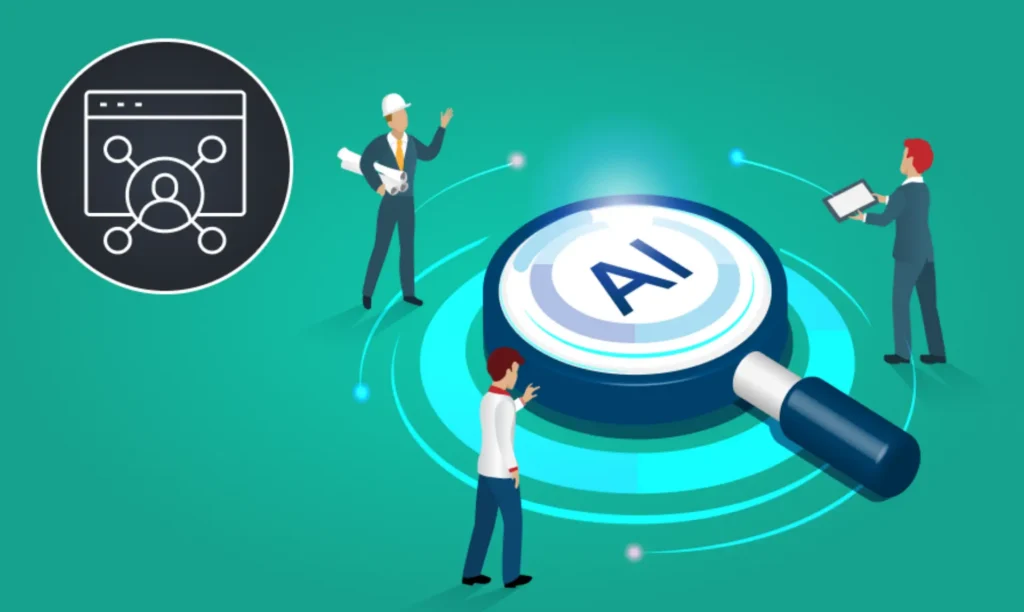
Most manufacturers struggle to realize AI value. Learn how Poka AI Assistant uses agentic AI to help frontline teams solve problems, gain insights, and act faster.
Key Takeaways
- Most manufacturers are investing in AI, but few are capturing real operational value
- The AI value gap is widening, especially for organizations that fail to embed Industrial AI into frontline workflows
- Generic AI tools fall short in manufacturing because they lack operational context
- Poka AI Assistant introduces agentic AI designed specifically for frontline manufacturing
- By combining specialized AI agents with real operational data, Poka helps teams move from answers to action
The AI Paradox in Manufacturing
Manufacturers today are surrounded by AI.
Predictive maintenance models. Quality analytics. Smart dashboards. Generative AI pilots. Executive roadmaps full of promise.
And yet, on the shop floor, many of the same problems persist:
- Operators still struggle to find the right procedure at the right moment
- Troubleshooting still depends heavily on experience and tribal knowledge
- Issues repeat themselves because learnings aren’t easily reused
- Leaders spend hours preparing for meetings instead of acting on insights
This disconnect isn’t just frustrating – it’s costly.
According to Boston Consulting Group’s 2025 report, The Widening AI Value Gap, only about 5% of companies globally are generating significant value from AI at scale, while nearly 60% see little to no tangible impact despite ongoing investment.
In manufacturing, where margins are tight and disruptions are expensive, that gap matters more than ever.
Why AI Value Is So Hard to Capture on the Frontline
The issue isn’t that AI doesn’t work.
It’s that most AI isn’t built for how frontline work actually happens.
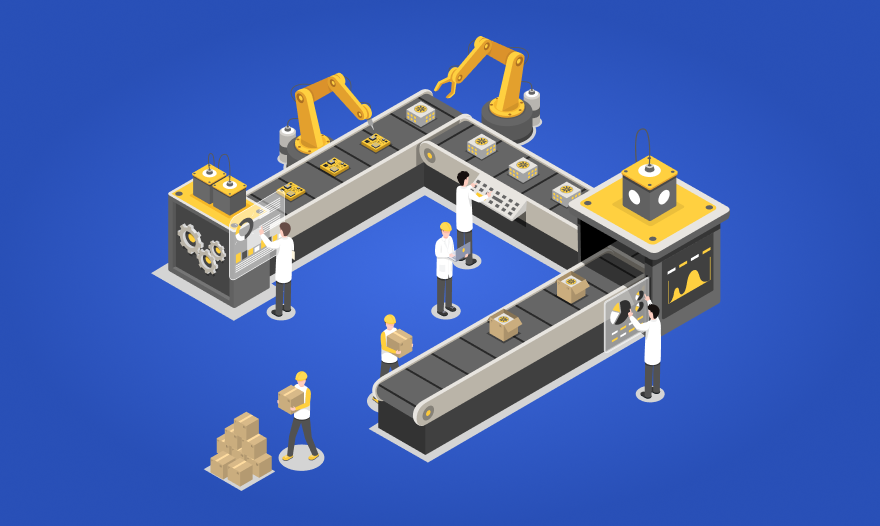
Manufacturing environments are:
- Highly contextual
- Time-critical
- Procedure-driven
- Dependent on human judgment and coordination
Yet many AI tools are designed for analysts, data scientists, or office workflows. They live in dashboards, require structured queries, or depend on users knowing exactly what to ask.
BCG’s research highlights that organizations capturing AI value don’t just deploy technology – they embed AI directly into core operational workflows, where decisions are made every day.
For manufacturers, that means the real opportunity lies on the frontline.
The Frontline: Where AI ROI Is Won or Lost
BCG estimates that roughly 70% of AI’s total potential value sits in core business functions like manufacturing, supply chain, and operations.
Yet this is precisely where AI adoption often stalls.
Why?
- Knowledge is fragmented across systems
- Data is locked behind dashboards few people can interpret
- AI pilots rarely scale beyond isolated use cases
- Frontline teams are expected to adapt to tools that weren’t designed for them
The result is a familiar pattern: AI exists, but it doesn’t meaningfully change day-to-day work.
Closing this gap requires a different approach – one that treats AI as a frontline teammate, not a back-office tool.
Introducing Poka AI Assistant: Built for Where Work Happens
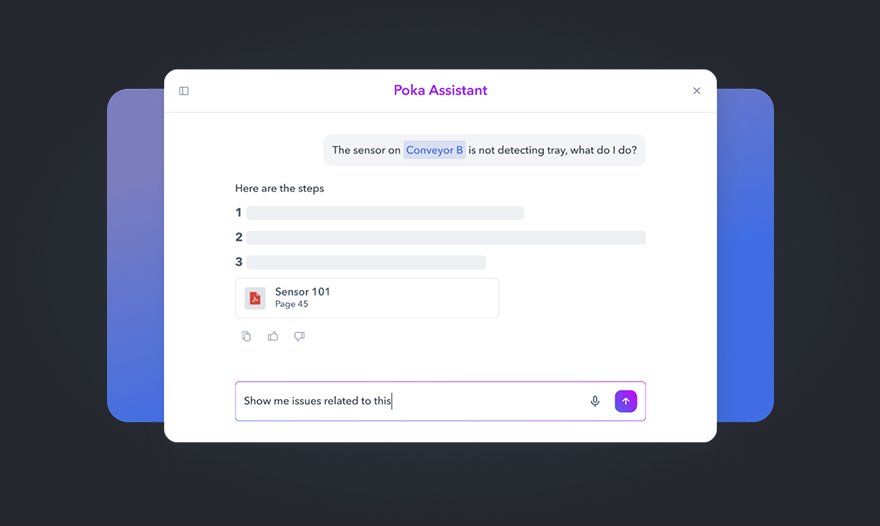
This week, Poka is launching Poka AI Assistant – a major evolution of Ask Poka and a foundational step toward agentic AI for frontline manufacturing.
Poka AI Assistant is embedded directly into the Poka platform and accessible via mobile and web. There’s no new system to learn and no disruption to existing workflows.
What’s new isn’t just where AI lives – it’s how it works.
Poka AI Assistant is designed to understand operational context, connect information across systems, and help users move from questions to decisions.
From Generative AI to agentic AI
Traditional generative AI focuses on responding:
- Answering questions
- Summarizing documents
- Retrieving content
- That’s useful – but incomplete.
Agentic AI goes further by reasoning, guiding, and supporting action. Poka’s agentic AI:
- Understands who the user is and what they’re responsible for
- Interprets vague or incomplete problem descriptions
- Connects digital work instructions, issues, documents and analytics
- Supports multi-step workflows instead of single responses
BCG identifies agentic AI as one of the fastest-growing sources of AI value, already representing about 17% of total AI impact in 2025, with projections rising to nearly 30% by 2028 as organizations move toward autonomous, decision-supporting systems.
This shift is exactly what frontline manufacturing needs.
One Assistant, Many Specialized AI Agents
Rather than forcing one generic chatbot to do everything, Poka AI Assistant brings together three purpose-built AI agents, each designed for a specific operational need – all within a single interface.
Users don’t have to decide where to search. They just ask.
Help Center Agent: Reducing Friction, Increasing Adoption
Even the best platforms fail if users don’t know how to use them.
The Help Center Agent allows frontline workers, supervisors, and admins to ask questions about Poka directly inside the application. It explains features, workflows and best practices conversationally and surfaces relevant help content instantly.
This reduces onboarding friction, lowers support demand, and helps teams get value from the platform faster – a critical factor in scaling any AI initiative.
Problem-Solving Agent: When Every Minute Counts
When something goes wrong on the floor, time matters. But critical troubleshooting knowledge is often scattered across documents, procedures, and historical issues.
The Problem-Solving Agent allows operators to describe a problem in natural language – or by voice – and receive guided support based on validated content and past experience.
Instead of guessing or waiting for an expert, workers are guided step by step toward resolution, helping:
- Reduce downtime
- Prevent repeat issues
- Improve consistency across shifts and sites
This is AI applied directly to the moment of disruption – where value is most tangible.
Analytics Agent: Making Data Useful Again
Manufacturers generate vast amounts of operational data, but access is often limited to specialists.
The Analytics Agent changes that by allowing users with the Analytics Manager role to ask natural-language questions about Issues data:
- “How many open issues do we have right now?”
- “Which production line has the most recurring problems?”
- “What’s our average resolution time by issue type?”
Instead of navigating dashboards or exporting reports, leaders get immediate, actionable answers that support daily decisions.
Faster Data, More Confident Decisions
To make AI insights truly actionable, timing matters.
That’s why Poka now enables data refresh every 15 minutes for customers with the AI Bundle. This ensures answers from the Analytics Agent reflect near real-time operational conditions – not outdated snapshots.
For frontline leaders, that difference can determine whether an issue is prevented or escalates.
Why Poka’s Approach Aligns with AI Leaders
BCG’s research shows that companies closing the AI value gap share common traits:
- They focus on a few high-impact use cases
- They embed AI into real workflows
- They empower people closest to the work
- They reinvest early wins into deeper capabilities
Poka AI Assistant reflects that same philosophy. It doesn’t aim to be everything at once. It focuses on where AI delivers the most value in manufacturing: helping frontline teams solve problems, gain insight, and act faster.
Why This Matters Now
The AI value gap is widening – not narrowing.
Organizations that fail to operationalize AI risk falling further behind competitors who are already using intelligent systems to improve productivity, quality and resilience.
For manufacturers facing labor shortages, rising complexity, and constant pressure to improve, AI isn’t optional anymore. But generic AI won’t get the job done.
What’s needed is Industrial AI that understands operations.
AI That Amplifies the Frontline
Poka AI Assistant doesn’t replace workers. It amplifies them.
By embedding agentic AI directly into daily workflows, Poka helps frontline teams:
- Access knowledge without friction
- Resolve issues faster and more consistently
- Make data-driven decisions without complexity
- Capture and scale tribal knowledge
This is how manufacturers move beyond AI experimentation – and start realizing real value.
Ready to see how agentic AI can help your frontline teams turn insight into action? Book a demo to explore how Poka AI Assistant works in real manufacturing environments.
FAQs About Poka AI Assistant
Agentic AI goes beyond answering questions by reasoning, guiding users, and supporting real workflows to help achieve outcomes.
It’s built specifically for frontline manufacturing, with deep operational context and purpose-built agents.
Users with the Analytics Manager role. It currently supports Issues data.
Yes – Poka AI Assistant replaces Ask Poka with a more advanced, agentic AI experience.
Yes. Poka AI Assistant is available on both mobile (tablet and phone) and web.