




Published on November 14, 2024
Discover what makes a comprehensive connected worker platform that drives continuous improvement.
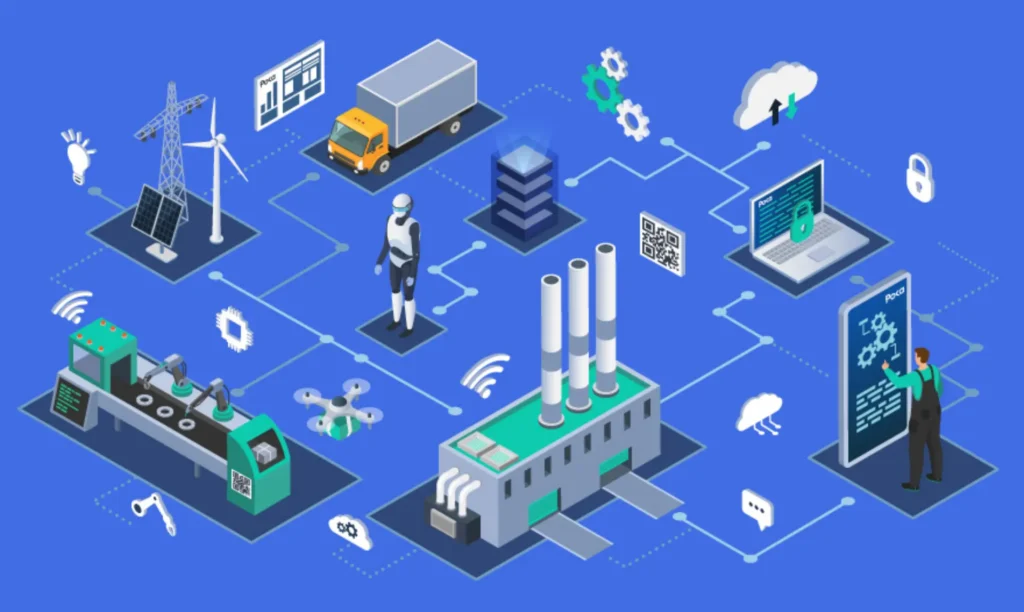
The manufacturing industry is experiencing a digital transformation that is reshaping how industry leaders operate. To stay competitive, manufacturers must complement their advanced machinery and processes with a connected workforce, powered by real-time data and digital solutions.
With Industry 5.0 ushering in a new wave of technologies like artificial intelligence (AI), the Internet of Things (IoT), and big data analytics, connected worker solutions are becoming increasingly essential for staying competitive in today’s manufacturing landscape. These solutions do more than digitize operations; they empower workers to be more efficient, adaptable and informed. A connected worker platform like Poka can transform workflows by making real-time information accessible to employees on the factory floor in the flow of work, minimizing errors and boosting operational efficiency in manufacturing.
According to McKinsey & Company, empowering employees with Connected Worker solutions can improve operational efficiency and boost productivity by 20-30%. Choosing the right solution is crucial for manufacturers aiming to stay competitive in today’s fast-paced environment.
Key Features of an Effective Connected Worker Solution
An effective connected worker solution is essential for optimizing manufacturing operations in today’s digitally driven landscape. By providing frontline workers with real-time access to knowledge, communication tools, and analytics, these platforms ensure that employees are empowered to perform their tasks efficiently and safely.
A truly effective solution goes beyond just connecting workers to machines; it integrates features like skills management, issue tracking, and digital work instructions, fostering continuous improvement across the production line and beyond. Such systems enable seamless collaboration between human expertise and digital tools, creating smarter, more agile manufacturing environments that boost productivity and reduce downtime.
A Comprehensive Solution – A “Single Pane of Glass” for Connected Workers
An effective connected worker solution offers a “single pane of glass” experience, where all critical functions are accessible from one centralized hub. By bringing together these essential elements, manufacturers can ensure that they have immediate access to the most up-to-date information. This unified approach streamlines processes, reduces time spent switching between multiple tools and enhances overall efficiency, allowing employees to focus on performing their tasks effectively.
Below are the seven core features that define an effective connected worker platform, detailing why each is crucial for modern manufacturing environments:
1. Knowledge Management: In manufacturing, access to up-to-date information is critical. A connected worker solution with Knowledge Management capabilities ensures that workers can instantly access digital work instructions, training content and standard operating procedures (SOPs) from their mobile devices directly on the factory floor.
This accessibility minimizes downtime, reduces errors and supports a culture of continuous learning where workers can reference documentation autonomously, on-the-go and without leaving their stations. By reducing time spent searching for information, companies can improve standardization across shifts, ensuring everyone follows the same processes to standard.
2. Skills Management: Modern manufacturers need to make it easy for employees to access critical information, at the point and location of need. A scan of a QR code at a workstation can help employees find the answer they need quickly – either as a refresher on something they’ve learned before or a new task they’re being asked to complete. Having training content readily available on the production floor will enable employees to quickly reference information when needed, leading to improved performance and retention. And a skills matrix offers critical visibility to supervisors who need to plan shifts and make sure their workers’ skills are up to code and certification if necessary.
3. Communication: Effective communication across shifts and departments is crucial in manufacturing environments. Tools like Poka’s Factory Feed allow workers to share information, report issues and collaborate across shifts seamlessly. By enabling transparent, real-time communication, employees can resolve issues faster, share insights and collectively contribute to continuous improvement. Communication tools also help break down silos between management and workers, encouraging collaboration across all levels.
4. Digital Forms & Checklists: Digital forms and checklists streamline routine tasks, ensuring that work is completed to standard and that safety protocols are followed consistently. By digitizing these documents, workers can complete and submit them in real-time, providing management with up-to-date insights into compliance and performance.
This approach ensures adherence to standard operating procedures, improving operational efficiency and workforce productivity. Digitized checklists also reduce the likelihood of human error, improving safety and product quality.
5. Issues Management: A robust issues management system is vital for identifying and resolving problems quickly. Poka’s solution provides a platform for workers to report issues as they occur, allowing for immediate action and resolution.
The digital kanban board and task center simplify the issue management process by making it easier to track problems, assign tasks and ensure resolutions are documented and shared. By linking issues with root causes and solutions, companies can foster continuous improvement, leading to reduced downtime and improved overall efficiency.
6. Reporting & Analytics: Access to comprehensive reporting and analytics is essential for making data-driven decisions. With Poka Analytics, managers can gain valuable insights into daily operations, helping them identify bottlenecks, inefficiencies and areas for improvement.
This data visibility ensures that management can respond quickly to emerging trends and make informed decisions to optimize operations. By analyzing connected worker data, companies can improve decision-making and boost productivity.
7. Industrial AI: Industrial Artificial Intelligence (AI) plays a key role in optimizing workflows and improving efficiency. Poka’s solution leverages AI to convert SOPs and checklists into standardized digital work instructions, automating processes and reducing human error.
AI can also automatically translate content into different languages, ensuring that all workers have access to the necessary information in their native language, further streamlining operations.
Comprehensive Features that Drive Continuous Improvement
In addition to having individual features, the integration of these tools into a seamless platform is vital for driving continuous improvement. An integrated platform ensures that all elements work together – work instructions tie directly to skills management programs, checklists support the correct execution of tasks and issues management helps improve work instructions. This cohesive integration drives greater adoption and supports a sustainable culture of continuous improvement (CI).
Many connected worker platforms operate with standalone modules, but Poka is designed to function as a comprehensive, integrated solution that is designed to mirror the classic factory setup at the plant, production line, workstation and equipment level. By ensuring that all features work in harmony, Poka helps manufacturers unlock the full potential of their workforce while improving operational efficiency.
Case in point: L’Oréal uses Poka’s knowledge management platform to streamline its global operations. With centralized work instructions, L’Oréal increased its operational efficiency, reduced training times and minimized errors.
Seamless Integration with Existing Systems
A connected worker platform should enhance, not replace, your existing digital factory ecosystem. For any manufacturer, adopting a new solution is about augmenting current processes to fill gaps, not starting from scratch.
1. Integrates with Existing Software & Hardware
A robust connected worker platform should seamlessly integrate with the tools you already have in place. By offering flexible APIs and integration capabilities, the platform ensures manufacturers can bridge gaps between existing systems and close data silos that hinder operational visibility.
For Instance, Poka provides integration capabilities that allow manufacturers to continue leveraging their ERP and MES systems without disruption. Instead of duplicating data, Poka connects systems of record with real-time, on-the-ground insights, improving decision-making and driving faster responses to operational issues.
2. Integrates with Daily Operations
Beyond software integration, a connected worker platform should be naturally integrated into the daily workflow of the factory floor. Solutions like Poka use mobile devices and tablets with built-in QR code scanners, making it easy for workers to pull up relevant work instructions or checklists – when and where they need them.
This streamlines access to the right information at the right time, minimizing disruptions to operations and ensuring that the platform fits naturally into existing routines.
3. Efficient & Effective Onboarding
A connected worker platform should also provide efficient onboarding, minimizing the time it takes to become proficient with the tool. User-friendly interfaces, photo and video tutorials and clear guidance help workers quickly get up to speed, regardless of their technical background.
The easier and more intuitive the platform is, the quicker workers will realize its benefits and embrace its capabilities, further driving adoption.
4. Quick to Value Realization
The platform should demonstrate its value rapidly. By delivering quick wins in terms of enhanced productivity, communication and operational efficiency, manufacturers can see the return on investment (ROI) early in the adoption process.
Improved workflows, better data sharing, and faster issue resolution are some immediate benefits that an effective connected worker platform like Poka offers, leading to measurable improvements in downtime, quality and workforce productivity.
By providing seamless integration with both hardware and software, supporting daily workflows, and delivering rapid benefits, the connected worker platform ensures that businesses can maximize the value of their existing infrastructure while pushing operational efficiency to new heights.
User-Friendly Design for Maximum Adaptation
Implementing new technology can be challenging if employees are resistant to change. This is particularly true in manufacturing, where any disruption to workflows can negatively affect productivity. To drive widespread adoption of a connected worker solution, the platform must feature a user-friendly design that is intuitive and accessible for workers across all levels of technical expertise.
Poka’s intuitive design takes inspiration from familiar social media platforms, which reduces the learning curve and encourages use across the entire organization. The platform simplifies complex processes, ensuring that workers can quickly access the information they need, whether it’s digital work instructions, training content or real-time updates.
The ability to interact with the platform on mobile devices, such as tablets and smartphones, whether as an Android app, iOS app or through a browser, means that critical information is always just a few taps away, empowering workers to perform tasks efficiently without leaving their stations.
In environments where time is critical, such as manufacturing, the ability to access data and instructions instantly can have a significant impact on production timelines, error reduction and worker safety.
Engineered for Enterprise-Scale Success
1. Start Small
Manufacturers often begin with a limited implementation of a connected worker platform, typically focusing on a single production line or plant. This allows them to fine-tune processes, assess immediate impact and make necessary adjustments. By starting small, companies can pilot the solution, understand its full potential and ensure alignment with their specific operational needs before expanding further. It provides a controlled environment to test the platform’s effectiveness without disrupting large-scale operations.
2. Global Expansion
Once the platform has been optimized for a single facility, it can be scaled across the organization, connecting multiple plants in different locations. By adopting unified standards, manufacturers can ensure that best practices, quality control and operational procedures are consistent across all sites. This ensures smoother transitions when expanding operations to new regions and enables global manufacturing networks to operate efficiently under one system.
3. Consistency and Predictability
A connected worker platform like Poka helps manufacturers maintain consistency across locations by centralizing information and workflows. Best practices, digital work instructions and safety protocols can be shared across the entire network, ensuring that every site follows the same standards, leading to more predictable outcomes. This consistency minimizes errors, boosts operational efficiency and ensures that products meet the same quality benchmarks, no matter where they’re produced.
4. Global Collaboration
By connecting teams across locations, a connected worker platform fosters collaboration between different sites. Operators, supervisors and management from plants around the world can share insights, offer feedback and collaborate on problem-solving in real-time. It breaks down communication barriers, allowing teams to address localized challenges while benefiting from global knowledge sharing. This connected approach empowers teams to work together seamlessly despite geographical distances.
5. Multi-Platform Capability
Poka’s multi-platform compatibility ensures that the platform is accessible to users across various devices, including iOS, Android and web-based applications. This flexibility allows frontline workers, managers, and administrators to interact with the system from their preferred device, whether in the plant, in the office or on the go. The broad compatibility ensures that all team members can contribute to and benefit from the connected worker platform, driving company-wide engagement
6. Emerging Technologies
The future of manufacturing technology is rapidly evolving, and Poka is designed to incorporate cutting-edge solutions such as augmented reality (AR) and wearables like Apple VisionPro. These technologies enhance hands-on training by providing immersive, visual experiences for operators, making it easier to learn and follow work instructions. Additionally, they can help boost productivity by overlaying information onto real-world environments, ensuring that workers can access relevant data without interrupting their workflow.
7. Security & Compliance
As manufacturers scale connected worker platforms across regions, data security and regulatory compliance become critical. Poka ensures robust cybersecurity protocols, including encryption and authentication to protect sensitive operational data. Additionally, Poka’s real-time monitoring through the Poka Status page allows manufacturers to track uptime and platform performance, offering peace of mind and transparency.
Real-World Impact: Case Studies of Poka’s Connected Worker Platform
Several global manufacturers have already seen significant results from using Poka’s connected worker platform. Below are examples of how Poka has transformed operations at leading companies:
- L’Oréal: By leveraging Poka’s knowledge management tools, L’Oréal improved its global operations by centralizing work instructions and training materials. This helped reduce errors and optimize production processes.
- Premier Foods: Poka’s digital checklists and real-time issue tracking have enabled Premier Foods to enhance safety measures, reduce errors, and streamline daily operations.
Conclusion: The Right Connected Worker Solution For Your Business
In today’s rapidly changing manufacturing landscape, selecting a connected worker platform that drives productivity and operational efficiency is crucial. A solution like Poka offers integrated features designed to support continuous improvement, while also scaling effortlessly with your business needs. It fits seamlessly into existing systems, providing a flexible and comprehensive approach to optimizing operations and empowering your workforce for long-term growth.