





Published on November 27, 2023
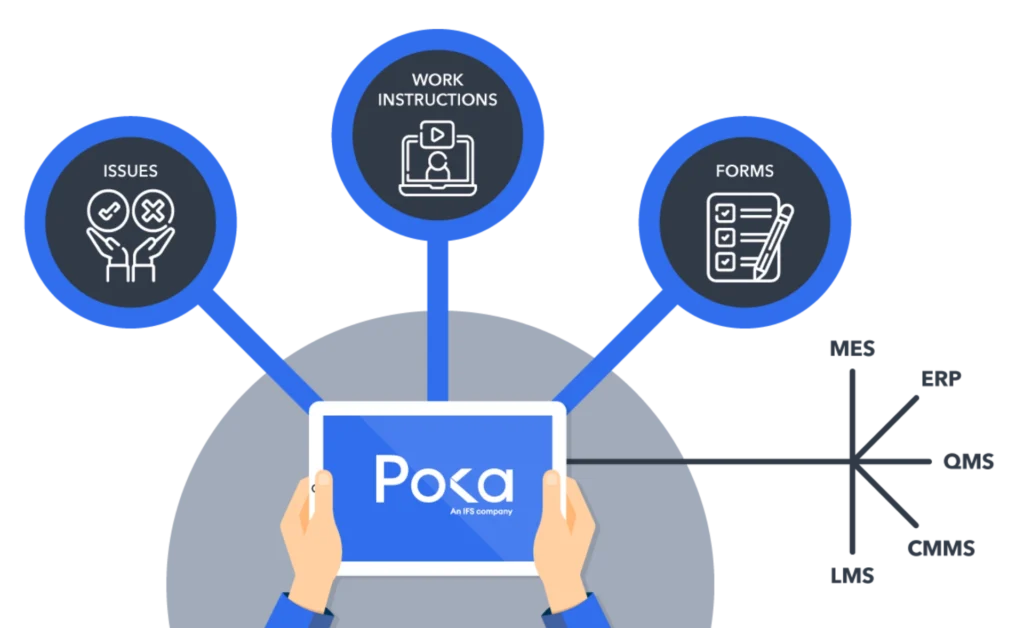
Why should you consider integration? Integrating Poka with your core systems ensures data and critical information aren’t siloed in the plant and can flow to adjoining systems. It eliminates duplication of effort, and unlocks real-time visibility into your operations.
Your systems of record are purpose-built for the departments that use them every day. Maintenance uses a Computerized Maintenance Management System (CMMS), the quality team relies on a Quality Management System (QMS) to ensure compliance, and the corporate HR teams have a Learning Management System (LMS). But frontline workers are rarely given access to these systems – it wouldn’t be practical or economical to do so. Enter Poka. Similar to those core systems, Poka is built for frontline workers and supports their performance, development and productivity. When Poka is integrated with the rest of your digital operations, the gaps in your data and digital workflows are closed, giving management and other departments better visibility into production.
Integration also helps you avoid the tedious manual duplication of work when, for example, transferring data to a CMMS or ERP system. And the ability to have real-time data visibility? That’s a game-changer, allowing you to monitor and access crucial information at your own pace.
It’s important to understand that Poka isn’t here to replace your existing systems. Instead, it’s designed to complement and enhance your current ecosystem. By doing so, Poka becomes a valuable addition, seamlessly integrating into your workflows and making them more efficient and productive.
How Do Integrations Work, Exactly?
The most common method to connect Poka with other systems is using our RESTful Application Programming Interface (API). This open API features endpoints that allow connections to different types of information, such as forms, work instructions, issues, and skills. This flexibility makes virtually all use cases possible, and integration can be achieved with various systems—see our customer stories on how Tyson Foods integrated with Workday and Leclerc with SAP.
Increasingly, Poka customers are using an iPaaS with Poka’s API to facilitate integration. iPaaS environments are low/no code, which requires less development effort and ensures smoother performance without relying heavily on coding expertise. Many iPaaS systems have pre-built functions, templates, and connectors, streamlining the integration process. This means you don’t necessarily need a team of developers to create integrations.
Another method is using Microsoft Power Automate, which enables users to create workflow triggers based on events in Poka. This native integration simplifies the process and allows you to utilize Poka templates in Power Automate. Templates can help you get started without building integrations from scratch. The aim is to empower customers and make it easier for them to implement these crucial features into their ecosystem.
Integration Best Practices
Regarding best practices for integration, there are several key points to keep in mind. Firstly, it’s recommended to start integration only after you have implemented and mastered your core use cases within Poka. As your adoption of Poka matures, you will be able to identify and prioritize integration opportunities more effectively. Rushing to integrate can lead to incomplete scoping and unnecessary complications.
It is highly recommended to dedicate the right technical resources to your integration project. Beyond the initial work involved in building an integration between Poka and another system, your team will be responsible for managing, troubleshooting and upgrading that integration code as required.
Some conditions can make integration more complex. Examples of complex scenarios include integrations between systems with different firewalls or systems that do not have an internet connection. There are usually workarounds, but these situations might be more challenging.
It is a definite best practice to take advantage of the integration support offered by Poka. The integration specialists at Poka can help you scope your project, deliver API training, and provide technical support.
The integration process typically involves evaluating business needs, exploring technology possibilities, prototyping and testing, gathering feedback, and iterating. Stakeholder involvement, including business stakeholders and the IT project team, is essential for tailoring the integration to your organization’s specific requirements and ensuring successful deployment.
Integration Use Cases
We’ve already mentioned many of the most common integrations Poka factories prioritize:
- an issue posted in Poka can automatically create a work order in a CMMS
- a near-miss reported in Poka can be recorded in an EHS system
- a training program can link out to an SoP stored in a QMS.
Below are two new, innovative integration examples featuring user management and digital twins.
Streamlining User Management
Poka has introduced an integration capability for enterprises to streamline user management within the platform, making it easier to roll out a Connected Worker solution and manage a large user base. This integration seamlessly connects Poka with enterprise directories like Azure Active Directory and Okta, allowing for automated user management on a large scale. Users can create and deactivate accounts effortlessly, ensuring that user information in Poka remains synchronized with their enterprise directories. This not only saves time but also enhances compliance and security, making it an appealing solution for organizations with dynamic workforces.
In addition to user account synchronization, Poka also offers user group integration, enabling proper governance of user configurations. Users can assign roles, permissions, and content access to specific groups, facilitating content management and ensuring that these configurations remain synchronized between the enterprise directory and Poka. The ultimate goal is to simplify the lives of Poka administrators, reducing the need for manual user configuration and saving valuable time.
How Purina Enhanced Training by Integrating Poka With Matterport
Purina’s core vision is to empower every employee with the right tools for effective job performance. This commitment to user satisfaction shapes the company’s strategy, focusing on user-centric tools and technologies to avoid subpar user experiences that can hinder problem-solving in the business world.
One recent example of this is Purina’s Poka and Matterport integration, which provides employees with context-rich content. This integration allows users, especially new hires, to virtually explore factory environments while having access to content found in Poka. This immersive experience empowers them to acclimate to future workspaces, understand safety protocols, and engage with training materials. This dynamic approach provides a unique context for training materials, safety information, and maintenance instructions.
“We came up with this idea of looking at how we could take Matterport and tie it together with Poka. We wanted to provide context for the users for the information they were looking at. Now, new employees can walk around in the factory while in the safety of a classroom and access safety training content in Poka.”
– Ben Atwater, Digital Manufacturing, Senior Expert Digital Analyst, Purina
This integration enhances the onboarding and safety training process, creating a more engaging, realistic and interactive learning experience for their employees. The overwhelmingly positive feedback from new hires validates the success of this initiative in bridging the gap between digital and physical realities, ultimately fostering knowledge.
Conclusion
Integrating Poka with your digital ecosystem can revolutionize your operations. By centralizing data, reducing errors, eliminating duplication, and providing real-time visibility, Poka enhances your existing systems rather than replacing them. Integration can be achieved seamlessly through iPaaS or Power Automate, making it accessible for various tech backgrounds.
If you want to learn more about how you can integrate Poka into your digital ecosystem, talk to one of our dedicated experts today!