



Published on October 29, 2024
Discover how Industry 5.0 represents a significant evolution in the manufacturing sector, focusing on human-centric manufacturing practices.
The Rise of Human-Centric Manufacturing in Industry 5.0
Industry 5.0 represents a significant evolution in the manufacturing sector, focusing on human-centric manufacturing practices that prioritize the empowerment of workers while leveraging the latest digital technologies.
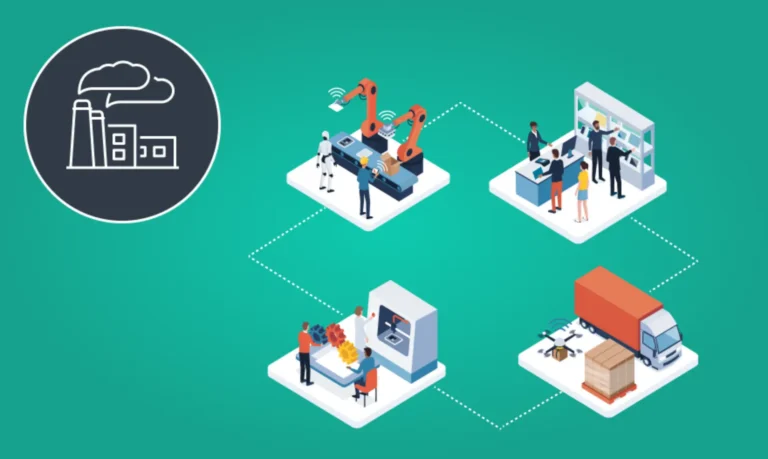
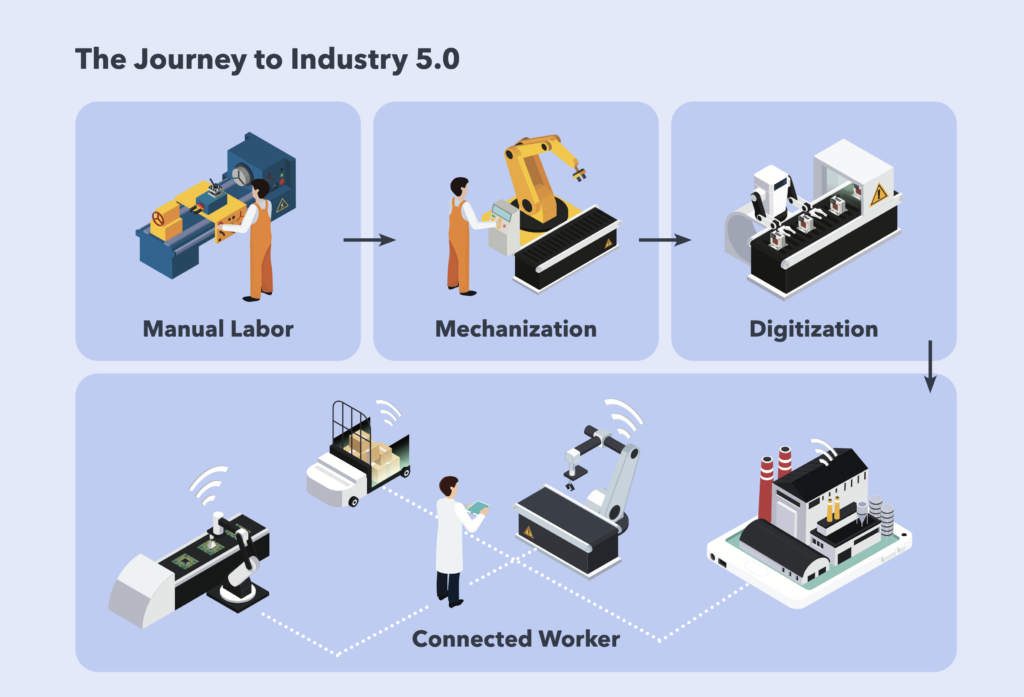
Building on the foundations established by Industry 4.0, which capitalized on automation, the Internet of Things (IoT) and data analytics to optimize operations, Industry 5.0 is ushering in a new era that pushes human creativity, strategic thought and ingenuity further within the manufacturing process.
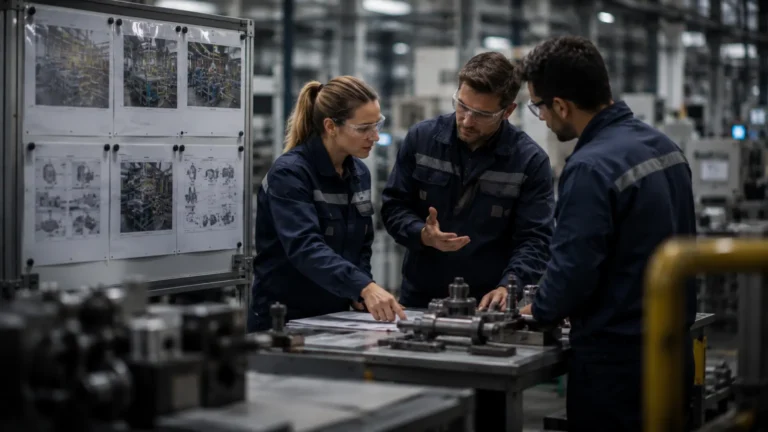
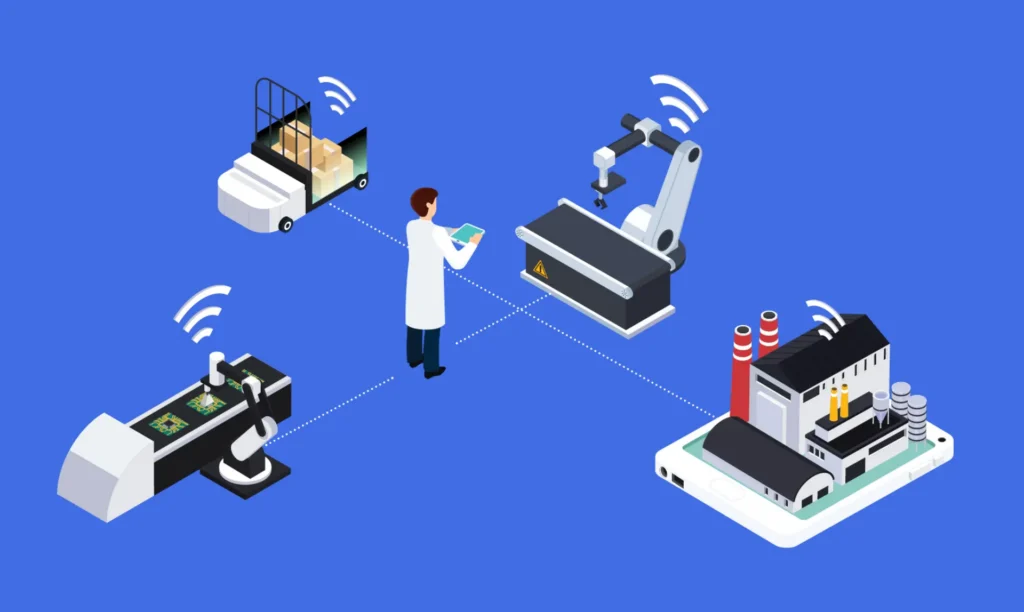
At the forefront of Industry 5.0’s transformation is the collaboration between human workers and machines – particularly using collaborative robots or cobots. These advancements create opportunities for enhanced productivity, innovation and safety while addressing pressing challenges such as the growing skilled labor shortage that is prevalent in modern manufacturing.
In addition to cobots, new digital tools are bridging the gap between human workers and machines more seamlessly than ever before. Connected worker applications, AR and VR and wearable technologies are reshaping how workers interact with machinery and production systems. These tools allow for real-time communication and data tracking and analysis that empower operators to monitor production, troubleshoot issues and make informed decisions on the go. By bringing man and machine into closer alignment, these innovations not only enhance efficiency but also enable a more adaptive, responsive and collaborative manufacturing environment.
Human and Machine Collaboration: The Center of Industry 5.0
At the center of Industry 5.0 is the belief that collaboration between humans and machines enhances the manufacturing process, rather than replacing human talent. Unlike Industry 4.0, which focused on automation and efficiency, Industry 5.0 promotes synergy – where machine systems handle dull, dangerous and dirty tasks – empowering workers to engage in creative and strategic work.
This transition not only boosts operational efficiency but also creates more fulfilling roles for frontline employees. As Alexandre Leclerc, co-founder of Poka, aptly puts it, “Any competitor can buy the same equipment and raw materials as you. What gives you a competitive edge is your people and your know-how.” This insight highlights the crucial importance of human ingenuity as a key differentiator in modern manufacturing.
By equipping workers with the right digital tools and technologies, organizations can harness worker creativity and problem-solving to drive continuous improvement and innovation on the shop floor. This collaborative approach not only leads to enhanced productivity but also fosters a sense of ownership among employees, as they play integral roles in their organization’s success.
The integration of cobots into the workplace serves as an example of this collaboration. Cobots are designed to assist humans in various tasks, ranging from assembly to material handling. Their flexibility and intelligence provide significant advantages – allowing workers to focus on higher-level cognitive work while cobots manage the tedious and labor-intensive aspects of manufacturing.
Supporting Human Potential on the Factory Floor
Industry 5.0 underscores a pivotal shift towards human empowerment. While Industry 4.0 introduced advancements such as automation, digitalization, and the rise of smart factories, it also led to a reduction in the workforce on the factory floor. The U.S. Bureau of Labor Statistics reported a 37% turnover rate in manufacturing in 2023, driven by physically demanding work, safety concerns, lower wages and limited workplace flexibility.
Consequently, the demand for skilled workers has surged, as few individuals are required to manage increasingly complex systems. Despite this growing demand, the complexity of today’s factory floor has resulted in a significant skills gap.
Industry 5.0 addresses this crucial challenge by implementing connected worker applications that are specifically designed to enhance the skill sets of frontline workers and provide managers with visibility into operations. These platforms not only facilitate continuous learning, but also create a culture where workers feel motivated to develop and grow.
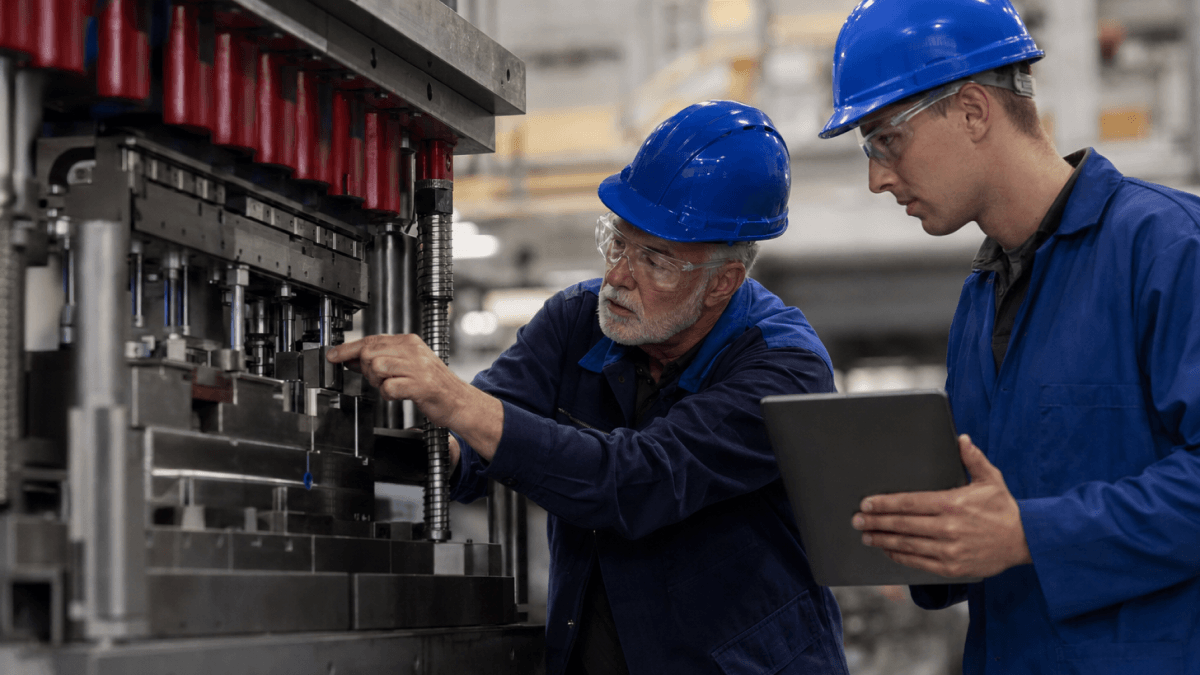
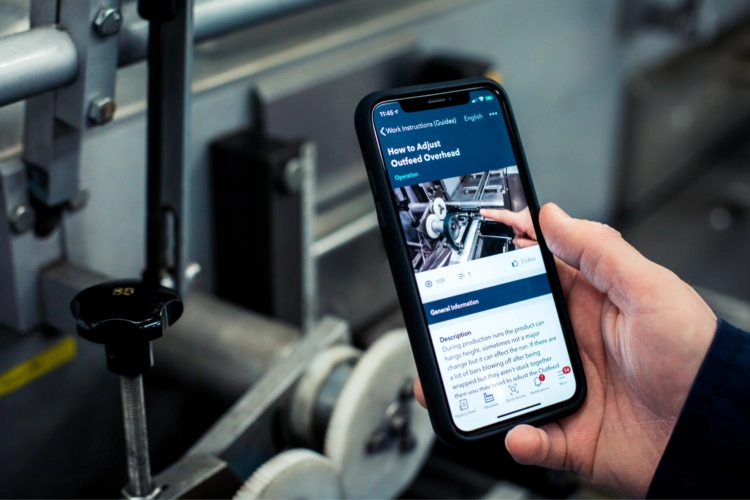
Connected worker solutions like Poka equip operators with accessible training materials, safety procedures, troubleshooting guides and real-time communication tools that are available directly at the point of need on the shop floor. By empowering employees with up-to-date knowledge and resources, organizations can support standard work, enhance efficiency and reduce the likelihood of costly errors.
Notably, companies like Bosch have reported productivity increases of up to 8% after adopting a connected worker solution, exemplifying the substantial benefits of worker empowerment through technology and training. This empowerment is essential in bridging the skills gap – ensuring that workers are equipped to take on the tasks and responsibilities that modern manufacturing demands.
Enhancing Job Appeal and Addressing Labor Shortages
One of the most significant transformations brought about by Industry 5.0 is the changing perception of manufacturing jobs. Traditionally viewed as dull, dangerous and dirty, these roles are experiencing a renaissance as dynamic opportunities for collaboration and continuous learning.
The integration of connected worker solutions makes manufacturing positions more attractive to younger generations, particularly Gen Z, who prioritize flexibility, learning opportunities and purpose-driven work.
This shift toward a more appealing manufacturing environment is crucial in addressing the ongoing labor shortage that the industry faces. Many young workers are disillusioned with traditional educational paths and monotonous work – actively seek fulfilling careers that offer growth and development.
Industry 5.0 repositions the factory floor as a modern workplace, where employees are empowered to collaborate with machines, acquire new skills and tackle complex problems that require creative problem-solving and critical thinking.
To capitalize on this transformation, manufacturers must actively promote a culture that emphasizes the value of frontline workers. This includes acknowledging the contributions of employees and implementing initiatives that prioritize employee well-being, engagement and job satisfaction.
Building a Resilient and Versatile Workforce
A connected and empowered workforce is critical for building resilience in the manufacturing industry. As companies encounter rapid technological advancements and shifting market demands, having employees who can adapt and learn new skills quickly is essential for long-term success.
Connected worker platforms offer role-specific skill management tools that help identify training gaps, prioritize certification requirements and prepare workers for the challenges ahead.
By investing in employee satisfaction and retention strategies, such as continuous learning opportunities and skills development journeys, manufacturers can mitigate turnover and cultivate a more committed workforce.
To further strengthen this culture, organizations should implement feedback mechanisms that allow employees to voice their concerns and suggestions. Conducting regular check-ins, employee surveys and focus groups can provide insights into workforce needs and preferences. The feedback loop created through these initiatives can lead to continuous improvement in workplace policies and best practices.
Empowering Workers Through Continuous Learning
Central to the connected worker model is the commitment to fostering a culture of continuous learning. In a landscape where rapid technological advancements can quickly render skills obsolete, providing frontline workers with real-time access to training and development resources is imperative. This approach enables workers to upskill and reskill more effectively.
Traditional training methods, such as shadowing, often fall short due to the constraints of time and knowledge retention. Offering direct access to educational materials at the point of need on the factory floor allows manufacturers to streamline onboarding processes and enhance overall training effectiveness, reducing the time to value for new employees.
According to research conducted by the Manufacturing Institute, a remarkable 69% of workers under the age of 25 consider training opportunities a primary factor in selecting and staying with an employer. This statistic resonates with Industry 5.0’s focus on continuous learning in manufacturing, which not only contributes to higher employee satisfaction but also plays a significant role in improving overall productivity and safety.
The Future of Manufacturing: Synergy Between Human and Machine
As we look toward the future of manufacturing, Industry 5.0 is not about replacing workers with robots; rather, it seeks to create synergy between human workers and cutting-edge technology. This collaboration enables manufacturers to achieve new levels of efficiency, productivity and innovation.
By incorporating connected worker technologies and promoting a culture of continuous learning, companies can future-proof their operations and remain competitive in the evolving landscape of smart factories. The ability to adapt to changing market demands, harness technology and leverage the full potential of the workforce will be key drivers of success in the coming years.
In conclusion, Industry 5.0 signifies a transformative shift in manufacturing, emphasizing the importance of empowering workers, addressing the skilled labor shortage and fostering collaborative partnerships between humans and machines. By embracing this human-centric approach, manufacturers can create a sustainable, resilient workforce ready to thrive in the digital age. The journey toward Industry 5.0 may be challenging, but the rewards – innovative processes, improved employee satisfaction and enhanced competitiveness – are well worth the effort.
Take the Next Step in Your Journey Towards Industry 5.0
As the manufacturing landscape evolves, implementing connected worker solutions is essential to empower your workforce and enhance productivity. To learn more about defining a connected worker solution for your organization, be sure to check out our comprehensive guide.
If you’re interested in seeing how these solutions can directly benefit your operations, we invite you to book a demo with our team.