






Published on October 7, 2025
Learn how Poka Analytics delivers real-time factory insights with pre-built dashboards, custom reporting, and IoT integration. Make better, faster decisions across your manufacturing operations.
Key Takeaways
- Pre-built dashboards simplify data analysis and make insights accessible to everyone – from operators to executives.
- Custom dashboards provide flexibility to tailor reporting to your specific KPIs and business goals.
- Real-time data visibility improves decision-making, reduces downtime and accelerates continuous improvement.
- Breaking down data silos connects insights across training, issues and performance for holistic analysis.
- Empowering teams with easy-to-use analytics tools fosters accountability and a culture of data-driven decisions.
Introduction: Why Factory Floor Insights Matter
In manufacturing, decisions are only as good as the data behind them. Leaders, managers and operators alike need accurate, timely and actionable insights to make informed choices about quality, safety and productivity. Yet many factories still rely on spreadsheets, siloed systems or delayed reporting that leaves teams reacting to problems instead of preventing them.
Data-driven insights are essential for making informed decisions and driving innovation in manufacturing – enabling companies to gain a competitive advantage through smarter, analytics-based strategies.
A Poka factory is a digital factory, with access to real-time data and unprecedented visibility into daily operations. At the heart of this transformation is Poka Analytics – a powerful reporting and analytics engine designed to help corporate leaders, plant managers, CI experts and frontline workers track KPIs, uncover production issues and measure performance. By turning raw data into meaningful insights, manufacturers can make better, faster decisions and stay competitive in today’s dynamic industrial landscape.
Best Practices for Leveraging Factory Insights
1. Start with Actionable Insight Using Pre-Built Dashboards
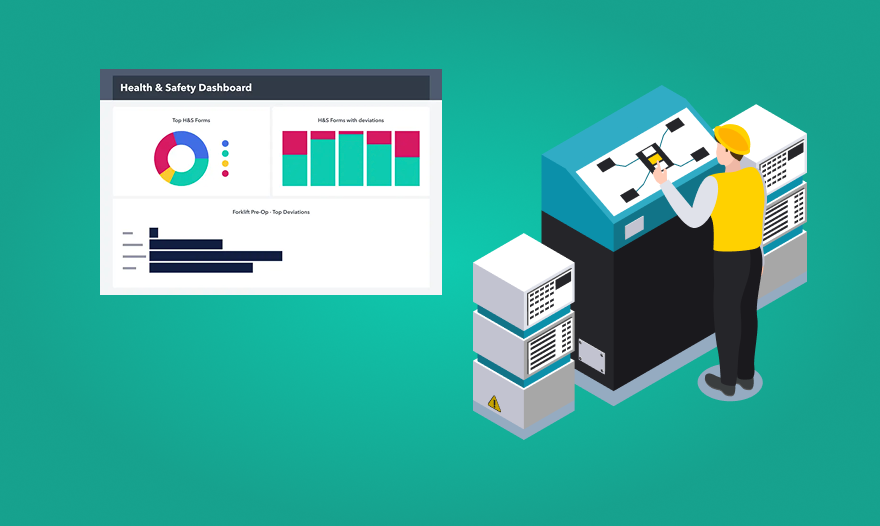
Not every user has time to build complex reports. Pre-built dashboards offer a fast, easy way to visualize data captured in Poka. They allow you to:
- Track critical KPIs across safety, quality and productivity.
- Spot production issues early before they escalate into costly downtime.
- Monitor workforce performance with clarity and transparency.
For example, operators can quickly see if production lines are hitting their hourly targets, while managers can track if safety checks are being completed on time. Pre-built dashboards make insights accessible to all necessary user types – ensuring that decisions are grounded in real-time, standardized data.
2. Build Custom Dashboards for Relevant, Targeted Reporting
When it comes to analytics, there’s no such thing as “one size fits all.” Poka’s custom dashboards give manufacturers the flexibility to:
- Create tailored reports aligned to operational and strategic goals.
- Slice and dice data across dimensions such as production line, shift or equipment type.
- Securely share dashboards across teams, plants or corporate leadership for consistent alignment.
- Monitor and optimize key metrics such as production schedules for improved planning and resource allocation.
By transforming raw data into business-specific metrics, custom dashboards empower users to focus on what matters most. For example, a CI expert can create a dashboard tracking OEE (Overall Equipment Effectiveness) trends, while a plant manager might monitor training compliance alongside defect rates to identify correlations.
3. Use Dashboards to Accelerate Continuous Improvement
Continuous improvement (CI) thrives on visibility and measurement. With Poka Analytics, teams can:
- Gain a holistic view of operations by overlaying data from issues, training and tasks.
- Identify recurring problems such as bottlenecks tied to specific machines or shifts.
- Prioritize corrective actions using Pareto analysis to target the 20% of problems causing 80% of losses.
Instead of chasing isolated fixes, Poka Analytics helps CI teams create systematic, data-driven improvements that fuel productivity, safety and quality gains. These ongoing improvements contribute to a company’s competitive advantage in the manufacturing sector by enabling faster adaptation, greater efficiency and better decision-making.
4. Empower Every Role with Data-Driven Decision-Making
Analytics shouldn’t be reserved for data specialists or corporate teams. By simplifying reporting, Poka democratizes access to insights so that:
- Operators can see their performance in real time and adjust proactively.
- Supervisors gain visibility into team-level KPIs and progress toward goals.
- Leaders benefit from enterprise-wide views for strategic planning.
When everyone has the tools to act on data, manufacturers foster a culture of accountability and empowerment where improvements are driven at every level.
Internet of Things (IoT) and Analytics in Manufacturing
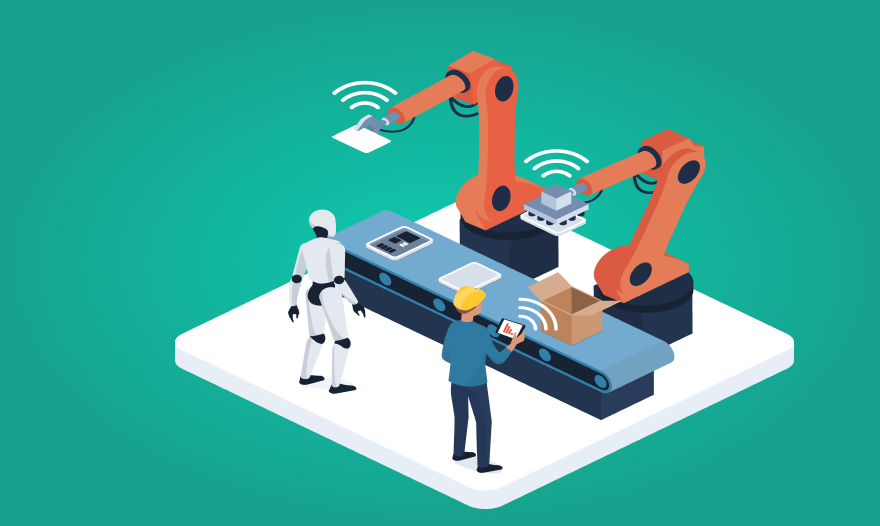
The Internet of Things (IoT) magnifies the value of analytics by delivering a constant stream of real-time data. When integrated with Poka Analytics, IoT-enabled insights allow manufacturers to:
- Monitor equipment health and predict failures before they happen through smart sensors.
- Track production flows in real time to identify bottlenecks or deviations.
- Enable digital twins that simulate operations for process optimization without disrupting live production.
Connected factories leverage cyber physical systems and the industrial internet to interconnect machinery, assets and processes – enabling seamless data exchange across the production environment. This integration generates vast amounts of big data from IoT sensors and manufacturing systems. By applying big data analytics, manufacturers gain deeper insights, optimize operations and drive smart manufacturing initiatives, supporting Industry 4.0 and Industry 5.0 goals.
For example, a predictive maintenance dashboard can alert technicians to replace a part before it fails, reducing unplanned downtime. By combining IoT with Poka Analytics, factories move from reactive to proactive problem-solving, enhancing agility and competitiveness.
Change Management and Training for Digital Adoption
The success of any analytics initiative depends on adoption. To unlock the full value of factory insights, organizations must invest in change management and training. Best practices include:
- Coaching operators on how to interpret dashboard visuals and respond effectively.
- Training managers to create and customize reports for their teams’ KPIs.
- Reinforcing a culture where data supports problem-solving, not micromanagement.
When workers see data as a tool for empowerment, not surveillance, adoption rises, trust grows and the ROI of analytics accelerates.
Top Use Cases for Factory Floor Analytics
- Downtime Reduction: Monitor equipment breakdowns in real time and prioritize repairs.
- Quality Control: Track defect rates across raw materials and finished goods, linking them to training or process gaps.
- Machine Vision for Quality Assurance: Use machine vision systems to automate quality assurance and defect detection, ensuring consistent product standards.
- Energy Use Optimization: Analyze energy use patterns to optimize consumption, reduce waste, and promote sustainability throughout the manufacturing lifecycle.
- Production Process Optimization: Leverage analytics to monitor and optimize the production process, improving efficiency, quality and sustainability.
- Manufacturing Operations Visibility: Provide end-to-end visibility into manufacturing operations, enabling better decision-making and collaboration across departments.
- Customer-Centric Analytics: Use analytics to tailor products and services, meeting individual customer needs and improving overall customer satisfaction.
- Safety Management: Visualize hazard reports, incident trends and compliance rates.
- Workforce Development: Measure training completion and correlate skills gaps to recurring issues.
- CI and Lean Initiatives: Identify waste, inefficiencies and opportunities for standardization across sites.
These use cases show how analytics drives impact across safety, quality and productivity, making it a cornerstone of digital transformation.
Common Pitfalls to Avoid
- Treating analytics as a static reporting tool instead of a driver of continuous improvement.
- Overloading teams with too many KPIs or irrelevant dashboards that dilute focus.
- Failing to connect insights across functions (e.g., training, quality, maintenance).
- Collecting data without closing the loop — insights must be acted upon to deliver value.
Avoiding these pitfalls ensures that analytics becomes a strategic asset rather than just another IT tool.
Future of Manufacturing
The future of manufacturing is being shaped by a wave of emerging trends and new technologies that promise to redefine how companies operate and compete. Additive manufacturing (3D printing) is enabling mass customization and the creation of complex, lightweight components, while digital twins provide virtual replicas of physical assets, allowing manufacturers to simulate, monitor and optimize their production processes in real time.
Advanced analytics and machine learning algorithms are transforming the way manufacturers analyze data, uncovering actionable insights that drive smarter decision making and continuous improvement. By leveraging real time data from IoT sensors and integrating it with cloud computing platforms, companies can achieve seamless integration across their operations, from the shop floor to the supply chain. This connectivity not only enhances operational efficiency and quality assurance but also reduces equipment downtime and waste.
As the fourth industrial revolution (Industry 4.0) continues to evolve, manufacturers are increasingly adopting digital technology such as augmented reality and artificial intelligence to enhance operations, improve training and support quality control. The importance of robust supply chains and agile business processes is also growing, as companies strive to meet customer demands and adapt to market changes with greater speed and flexibility.
Looking ahead, the fifth industrial revolution (Industry 5.0) is poised to bring even more significant changes. This new era will focus on human-centered design, sustainability and resilience – prioritizing the well-being of workers, the environment and society as a whole. Manufacturers will need to balance the adoption of cutting-edge technologies with a commitment to ethical practices and long-term value creation.
In practical terms, these advancements will impact a wide range of sectors, from automotive and aerospace to healthcare and consumer goods. For example, additive manufacturing and digital twins will enable the production of highly customized products, while advanced analytics and machine learning will drive improvements in manufacturing efficiency and quality assurance. The integration of IoT sensors and cloud computing will support predictive maintenance, reducing equipment downtime and ensuring optimal performance across the value chain.
To stay ahead in this rapidly changing landscape, companies must embrace innovation, invest in new technologies and foster a culture of continuous improvement. By doing so, manufacturers can unlock new opportunities for growth, enhance operational efficiency, and deliver superior business outcomes – ensuring their place at the forefront of the next industrial revolution.
Conclusion: From Data to Decisions
In today’s competitive manufacturing landscape, insights are the ultimate advantage. With Poka Analytics, factories can:
Capture and visualize real-time operational data.
- Build dashboards that align directly with strategic and operational priorities.
- Empower every role — from operator to executive — with actionable insights.
- Drive continuous improvement through connected, data-driven workflows.
By turning data into decisions, Poka helps manufacturers become more agile, productive, and resilient.
Ready to unlock smarter factory insights?
Book a 30-minute demo to see how Poka Analytics delivers better, faster decisions.
FAQs on Factory Analytics & Insights
Factory floor analytics are digital tools that collect and analyze real-time manufacturing data, helping teams track KPIs, spot issues, and make faster, more informed decisions.
Everyone in the organization — from operators monitoring daily performance, to CI experts driving improvements, to executives tracking strategic goals.
Pre-built dashboards provide ready-to-use visualizations for quick insights, while custom dashboards allow teams to design tailored reports aligned with their specific KPIs and workflows.
By providing real-time visibility, predictive insights, and early alerts, analytics help teams address issues before they escalate into major disruptions.
Yes. Poka Analytics can leverage IoT sensor data for predictive maintenance, process optimization, and enhanced visibility into equipment health.