






Published on March 31, 2023
SKU proliferation is here to stay. Improving output reliability of packaging lines by minimizing “waste events” is one of the best ways to increase efficiency.
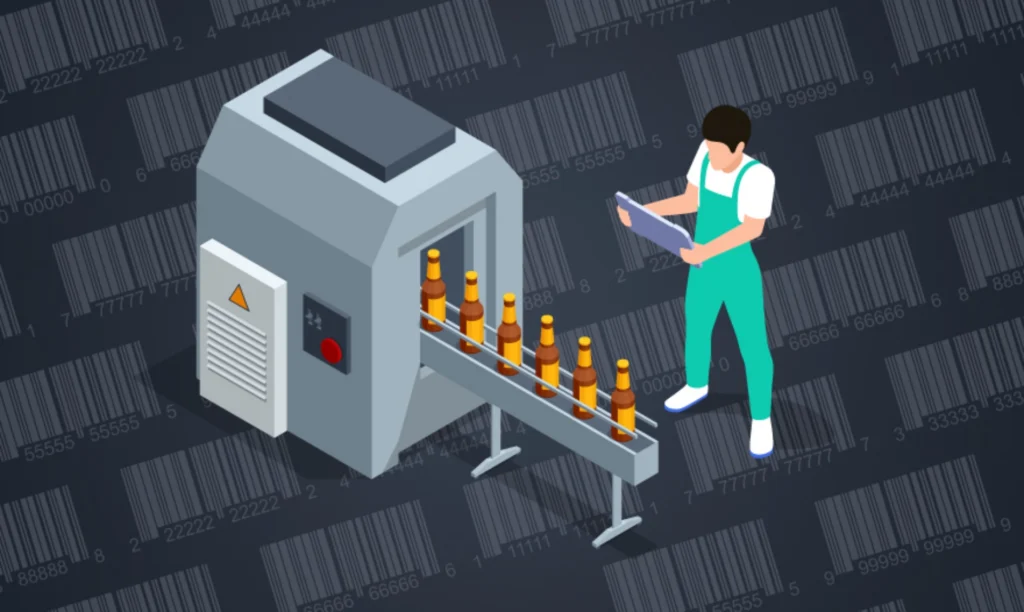
A pre-pandemic survey of CPG companies found a 42% increase in expected new SKUs. And this is before COVID-19’s online shopping boom caused a ballooning of new packaging needed to meet e-commerce stores’ requirements.
Considering the proliferation of SKUs, demand for just-in-time delivery, the requirement of first-rate quality, and consumers’ preference for more sustainable packaging – the challenges facing the packaging industry are daunting.
To a certain extent, SKU proliferation is here to stay. As we’ll explore further in this article, efficiency can be improved in four steps but many manufacturers are trying to leapfrog over improving output reliability without minimizing ‘waste events’, causing them to ultimately stumble in their efforts.
What is the Path to Packaging Efficiency?
The path to improving efficiency is a four-step process.
- Your journey starts with product quality. If you’ve maximized output volume but product doesn’t meet quality specifications, it goes without saying you’ll miss your efficiency target. Your first order of business is to get process control organized so that you produce consistent quality output.
- Once consistent product quality is achieved, your focus shifts to improving output reliability. Put another way, reducing output variability. You have to be able to hit your production goals time and time again, with fewer surprises derailing efficiency. Critical variables must be defined, measured and controlled as much as possible.
- Once you’ve mastered quality and reliability, it’s time to crank up output speed by increasing equipment speed to improve productivity. Producing more output per unit of time increases profits by reducing variable costs per item.
- And lastly, only after product quality, output reliability and speed have become key capabilities should you go after agility – meaning that you’re able to respond in real-time to unforecasted demand shifts.
In simpler terms: efficiency can be achieved by doing it right, and doing it consistently, quickly, and responsively.
Maintaining or Increasing Efficiency
Having the flexibility to produce the range of primary and secondary packaging consumers demand is critical to maintaining optimal manufacturing costs. But balancing flexibility while maintaining production efficiency means waste in any form – whether that’s product quality, downtime, energy, etc – has to be kept in check.
Your forecast looks great but reality sets in once the production run begins. Any shortfall to plan costs time and money. This diagram demonstrates how incremental deviations from human or mechanical sources can add up over a shift to lower efficiency.
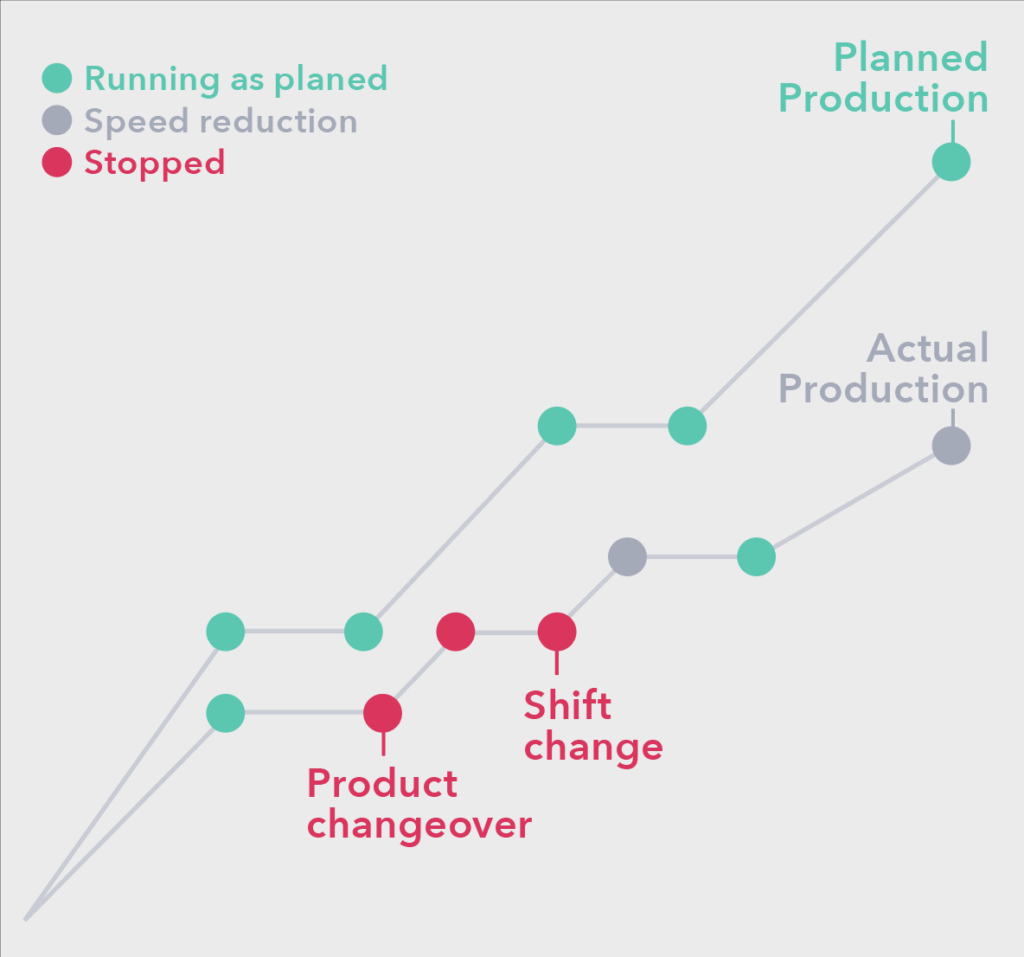
This example is for a single line; multiply this across numerous packaging lines and the negative impact on planned efficiency only grows.
Enter The Connected Worker
New equipment and technology can help. It can improve aspects of quality, reliability, speed and agility, but will still require human support to ensure these benefits are realized. If your workers are not at their best, the capital investment may not bring the full planned return.
How Can We Get the Best From Each Worker?
Apps like Poka are being used by an increasing number of packaging manufacturers to boost operator productivity, efficiency and knowledge. Poka combines knowledge management, daily operations management and communication so frontline workers are able to overcome output bottlenecks by minimizing line stoppages, whatever the reason.
Setup, startup, operations, maintenance, cleaning, troubleshooting, changeover, shutdown:
The common factor through all is the people who make it happen. Here are three ways a Connected Worker app like Poka can help operators address not only waste events, but elevate productivity to improve efficiency by:
- Minimizing stoppages, such as supercharging changeovers
- Optimizing Equipment Effectiveness by empowering operators with unhampered access to knowledge
- Proactively sharing training content so workers can hit the ground running with new equipment, to avoid a temporary production slump
1. A Changeover Supported by a Connected Worker App
Let’s walk through an example to highlight how an inflection point from the production efficiency graph above might be tackled with the help of a Connected Worker app.
Operators at a cutting station midway through a production line read a news post advising the next SKU to be produced. With that heads-up, they have the opportunity to quickly scan the work instructions for the product as it relates to their machine. They can see any news posts or issues raised, and get a fast review of any troubleshoots that have impacted production in the past. With this refresher, they are confident that when the changeover occurs, they’re ready.
Pulling up the digital checklist for the changeover, they begin ensuring that materials are at hand; whether dies, tools or input materials. As they check off items tracking their progress, their supervisor can see what’s up, accessing it in real-time from anywhere in the plant. When there is no upstream or/downstream communication, higher downtimes can result with poor SMED performance as well.
During the changeover, they make the appropriate adjustments to the machine and controls. Once the work is done, the checklist is marked as complete and the line is up and running.
As the first packaging products are run through the process, any deviations can be noted. Identified solutions can be incorporated as possible adjustments to work instructions, which further adds to the factory’s knowledge base. Each work instruction iteration gets closer to root cause solutions.
Having this consistent cyclical approach of effective communication, active use of knowledge, and attention to skill development, eventually becomes routine for operators. It’s made possible through a robust Connected Worker platform. Poka provides that end-to-end coverage, connecting workers and integrating with other essential systems like CMMS to ensure that you are giving your workforce the best possible support and development package of tools.
2. Optimizing OEE by Providing a Path to Best Worker Performance
Regardless of the age of the machinery, improving the performance of workers will improve OEE results. Unless it’s a completely new plant, new machines will be living next to older equipment, so optimizing all is essential.
The best workers are defined by getting results based on their knowledge, skills and, to some degree, engagement. It’s important to provide a path for all workers to get to their “best” level of performance.
The first step might be to ensure that they have access to all the knowledge they need. It should go beyond just having work instructions created for each process. They should be living documents, available to everyone on the floor. That means having the work instructions quickly accessible at the workstation. In Poka, this is done with a QR code scan.
And supervisors should use the instructions as reference points to ensure adherence to standards. Checklists are a good way to be sure this occurs.
As processes continually improve, work instructions should be updated and all workers, rookie and experienced, should be tasked with reviewing and understanding them. Newer operators, brought in with access to digital tools, should be aligned right away. Experienced operators should be encouraged to review, comment and contribute to standards to not only get engagement but ensure adoption. In Poka, users are notified when new work instructions are updated and viewing reports give status visibility to supervisors.
Engaging workers has been mentioned several times. It’s important for performance and also for retention. Poka’s Connected Worker platform provides the opportunity for each worker to communicate and raise issues. It requires work instruction review, checklist completions and skills endorsements with supervision attention. As a centralized hub for learning, assistance and information, operators come to rely on the app, naturally driving engagement.
3. Proactive Learning Helps Make the Most of Equipment Upgrades
Rapid progress in equipment and technology plays an important part in driving efficiencies. As investments are made to improve equipment, there are several opportunities for those involved in operating it to ensure the investment provides the best return.
One of the best examples of acquiring new machinery I’ve seen included thinking of the people and operations before the machine left the OEM. The manufacturer had both a clear vision of what kinds of information would deliver value, as well as an understanding of how the power of communication, knowledge and skills would aid in leveraging their new equipment purchase.
The plant had the opportunity to send a couple of maintenance engineers to the OEM prior to delivery. This time, they came equipped with iPads for recording purposes. With the strong support of the OEM engineers, they were able to capture work instructions, troubleshooting and maintenance details with video, pictures and documentation to share with everyone at the home plant. Additionally, they
They were able to share all of this information with the team on the line where the new machinery was to be installed. While nothing beats having hands on the actual machine, it still certainly went faster and more smoothly having everyone up to speed and familiar with what to expect.
They also documented the installation with videos and photos and kept all that valuable reference information in work instructions tied to the maintenance department.
Having the equipment set up documented, along with the operator training and skill endorsements, helped build comfort and familiarity with the new machinery, even before it was in operation. A warm start certainly aided in getting the ball rolling so operators weren’t learning the equipment from scratch, helping production start off on the right foot.
Conclusion
Seventy percent of consumers consider the personalization of the products they buy important. On this basis, SKU proliferation will likely continue for packaging.
Though attention must be paid to equipment, technology and the capital side of the business, ensuring that all the people involved are at their best is critical. Using a Connected Worker application like Poka will help elevate performance and engage your workforce.
Optimizing OEE, and ensuring that quality is up and downtime is minimized while keeping everyone safe is important. Providing your workers with the best tools for effective communication, access to knowledge when and where they need it, and validating skills is the right path to helping manage line efficiency and improving agility in the face of ever more product variations.