







The Ultimate Guide to Standard Work for Lean Manufacturing
Welcome to Standard Work 101
In this comprehensive guide, we explore the critical role of Standard Work in building consistent, efficient and high-performing manufacturing operations. You'll gain insights into how this foundational lean practice drives quality, reduces variability and supports continuous improvement across the shop floor.
Table of Contents
What is Standard Work?
How Standard Work Supports Factory Excellence
The Challenges of Implementing Standard Work
The Benefits of Standard Work
How to Support Standard Work in Manufacturing
Connected Worker Platforms for Standard Work
Additional Standard Work Resources
Frequently Asked Questions About Standard Work
1. The Definition of Standard Work
Standard work is a lean manufacturing principle that defines the best-known method for consistently performing a task or process. Standard Work documents the most efficient, safe and high-quality way to complete a job, ensuring consistency across operators and shifts. Manufacturing thrives on consistency. Without a structured approach to work, variability creeps in, leading to inefficiencies, quality issues and unnecessary waste.
At its core, Standard Work is more than just documentation; it’s a system for defining, maintaining and continuously improving workplace processes. Standardized work is the basis for any improvement.
By implementing Standard Work, lean manufacturers establish predictability—reducing waste, improving efficiency and ensuring high-quality output. More importantly, it provides a foundation for continuous improvement (Kaizen). Without clearly defined processes, there’s no baseline for measuring progress or identifying areas for enhancement.
Think of Standard Work as the centerline of operational excellence—a benchmark that keeps teams aligned while allowing for innovation. When workers follow a documented, optimized process, they not only work smarter but also contribute to the ongoing refinement of those standards. This creates a culture of improvement where efficiency isn’t just maintained—it evolves.
In the modern lean manufacturing landscape, where agility and precision are critical, Standard Work is not optional—it’s essential. It’s the first step toward building a workforce that is skilled, adaptable, resilient and ready for the future.
2. How Standard Work Supports Lean Manufacturing Principles
Lean manufacturing is built on the idea of maximizing value while minimizing waste, and Standard Work plays a critical role in this process. By establishing a best-practice approach to every task, manufacturers reduce variability, enhance quality and create a stable foundation for continuous improvement. Without Standard Work, there is no true baseline for measuring progress or identifying areas for optimization—making it nearly impossible to implement lasting improvements.
In a lean environment, Standard Work is more than a static document—it is a living, evolving process that must be consistently followed and refined. This aligns with the PDCA (Plan-Do-Check-Act) cycle, where organizations systematically improve their operations by documenting the best method, executing it, monitoring results and refining the process.
The Importance of Leader Standard Work
The effectiveness of Standard Work relies on full adoption across an organization, from frontline workers to leadership. According to the Nemoto Principle, "Without standards, there can be no improvement."
This means that everyone—from operators on the shop floor to supervisors and plant managers—must adhere to and support Standard Work. But what is Leader Standard Work?
Leader Standard Work ensures that supervisors and managers follow structured routines for coaching employees, auditing adherence and driving continuous improvement. When leadership actively participates in Standard Work, it reinforces its importance and fosters a culture of accountability.
Standard Work as a Process, Not Just Documentation
To truly benefit from Standard Work, manufacturers must shift their mindset from treating it as a one-time initiative to an ongoing, iterative process. The following steps create a sustainable, standards-based approach:
Document the Standard – Capture the best-known way to complete a task, incorporating input from frontline workers.
Train Employees – Ensure every worker is trained to execute the standard correctly.
Inspect for Adherence – Use job aids, checklists and audits to confirm that tasks are performed to the standard.
Identify and Solve Problems – Gather feedback, report deviations and analyze root causes of inconsistencies.
Update and Improve – Integrate new insights into updated Standard Work and repeat the cycle.
By treating Standard Work as a dynamic system, manufacturers can ensure that best practices don’t just remain theoretical—they become embedded into everyday operations, driving efficiency and long-term success.
3. Challenges of Implementing and Maintaining Standard Work
For all its benefits, Standard Work remains one of the most elusive promises of lean manufacturing. Many companies struggle to implement and sustain it, not because they doubt its value, but because execution is difficult. From worker resistance to outdated documentation, common obstacles can stall progress before Standard Work has a chance to deliver real impact.
The Risk of Tribal Knowledge and Standard Drift
One of the most persistent challenges in sustaining Standard Work is what happens quietly over time. A worker may be trained on the standard process on day one, but as they gain experience, they often discover shortcuts or develop personal tweaks to improve efficiency.
Over time, these adaptations—while often well-intentioned—become the norm for that individual. They stop referencing the official standard, and as new employees are trained by them, these unofficial methods spread.
This is the rise of tribal knowledge—unwritten, experience-based practices that deviate from the documented standard. While some of this knowledge is valuable, the issue is that it lives in silos, creating inconsistencies across shifts, teams or plants.
Without a mechanism for capturing and evaluating these evolving practices, the official standard becomes outdated and irrelevant. Worse, opportunities for broader improvement are lost, and quality, safety and efficiency can suffer.
The Training Gap: When Standard Work Fails to Stick
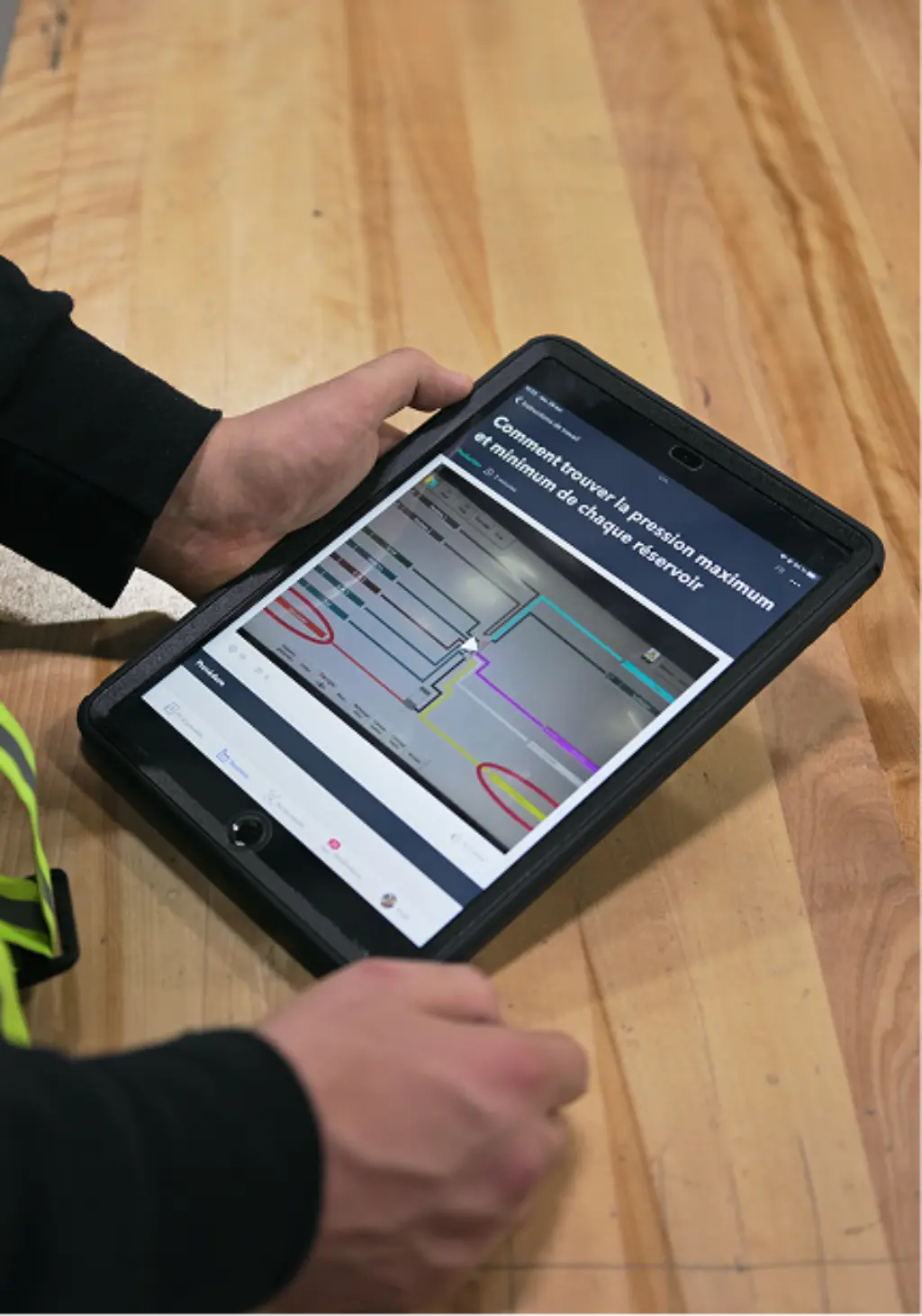
Even the most detailed Standard Work documentation is useless if employees don’t know how or why to use it. Without effective training, standard operating procedures often remain unused or forgotten on the shop floor.
A strong training strategy should not only teach workers what the standard is but also provide hands-on practice and real-time reinforcement.
Lack of Visibility: Why Worker Feedback Gets Lost
Frontline workers are the first to spot inefficiencies in daily operations, yet their insights often get lost in the system. When workers provide feedback but never see it acted upon, motivation to contribute diminishes.
To maintain engagement, manufacturers need a structured way to capture, review and integrate frontline feedback into updated Standard Work.
The Pitfalls of Paper-Based Documentation
Despite advances in technology, many manufacturers still rely on paper-based records or spreadsheets to track compliance with operational standards. Paper-based checks are cumbersome and difficult to maintain, leading to inconsistencies and version-control issues.
Without a way to ensure workers are following the most current standard, inconsistencies creep back into production.
4. The Benefits of Standard Work in Lean Manufacturing
In today’s fast-evolving manufacturing landscape, Standard Work is no longer just about consistency—it’s about adaptability. As manufacturers embrace Industry 4.0 and Industry 5.0, the role of lean Standard Work is being redefined through digital transformation, AI-supported work and connected worker solutions. These innovations are not replacing Standard Work but rather enhancing it, making it more accessible, actionable and effective in real time.

Supporting Industry 4.0 and 5.0
Industry 4.0 introduced automation, IoT and data-driven decision-making, while Industry 5.0 builds on this foundation by emphasizing human-machine collaboration and worker empowerment.
In this new digital era, Standard Work is no longer confined to static paper documents—it lives in visual work instructions, interactive training modules and real-time operational insights. This shift leads to:
- Increased Consistency – Digital documentation eliminates the variability of paper-based processes, ensuring every worker follows the best-known method.
- Enhanced Training – Standard Work becomes the foundation of on-the-job learning, with digital platforms enabling workers to quickly access instructions, refresh skills and adapt to process changes.
- Improved Safety and Compliance – Standard Work helps reduce human error, ensuring employees follow up-to-date safety protocols and regulatory requirements.
- Greater Adaptability – When processes change, updates are instantly distributed across teams, keeping everyone aligned without disruption.
Real-World Benefits of Lean Standard Work
For manufacturers, the real power of Standard Work lies in its measurable impact. Companies that successfully implement modern, digitized Standard Work report:
- Greater visibility into opportunities to improve.
- Reduction in training time for new employees, allowing them to become productive faster and decrease their time to value.
- Fewer production errors and improved product quality, leading to less rework and scrap.
- Lower operational costs by reducing process inefficiencies and eliminating wasted effort.
- Higher worker engagement, as employees gain clarity on expectations and confidence in their ability to perform tasks correctly.
As manufacturing becomes smarter and more connected, lean Standard Work is evolving from a documentation process to a dynamic system—one that not only maintains consistency but also empowers workers to contribute best practices and learnings.
The Best Way to Support Standard Work in Manufacturing
A connected worker platform transforms Standard Work from a static document into a real-time, accessible and continuously improving resource. Here’s how:
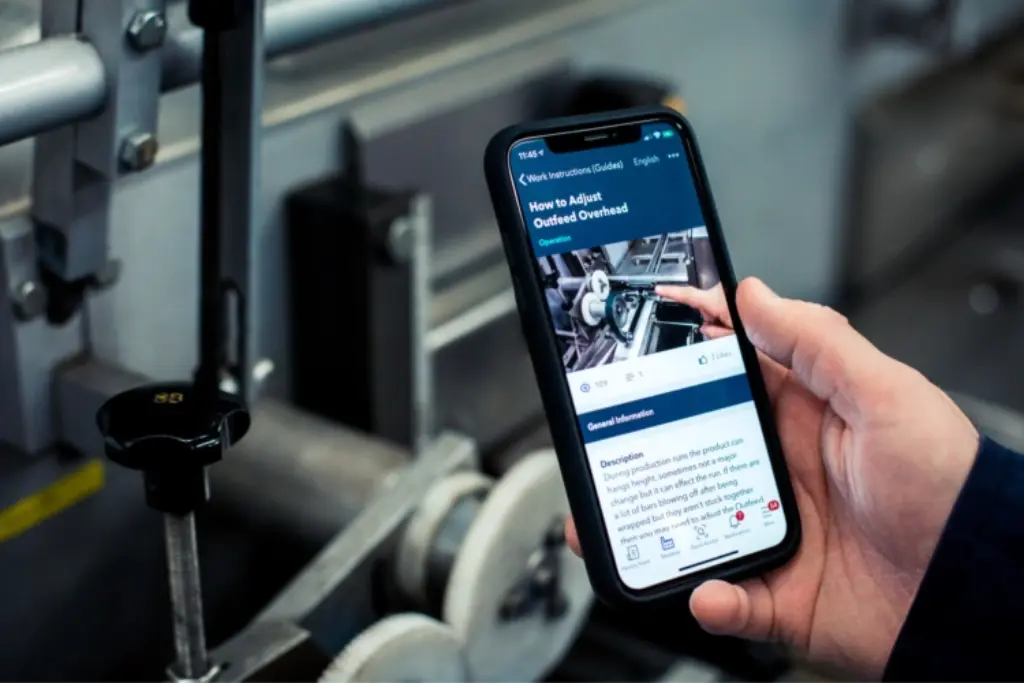
Documentation – Instead of paper-based SOPs gathering dust, digital standard work instructions make Standard Work visual, interactive and easy to access. Workers can instantly reference step-by-step guides, images and even videos to ensure consistency.
Training – Standard Work isn’t just about having documentation—it’s about ensuring workers are trained to execute tasks correctly. A connected worker platform tracks who has been trained, who needs updates and automatically notifies employees when standards change.
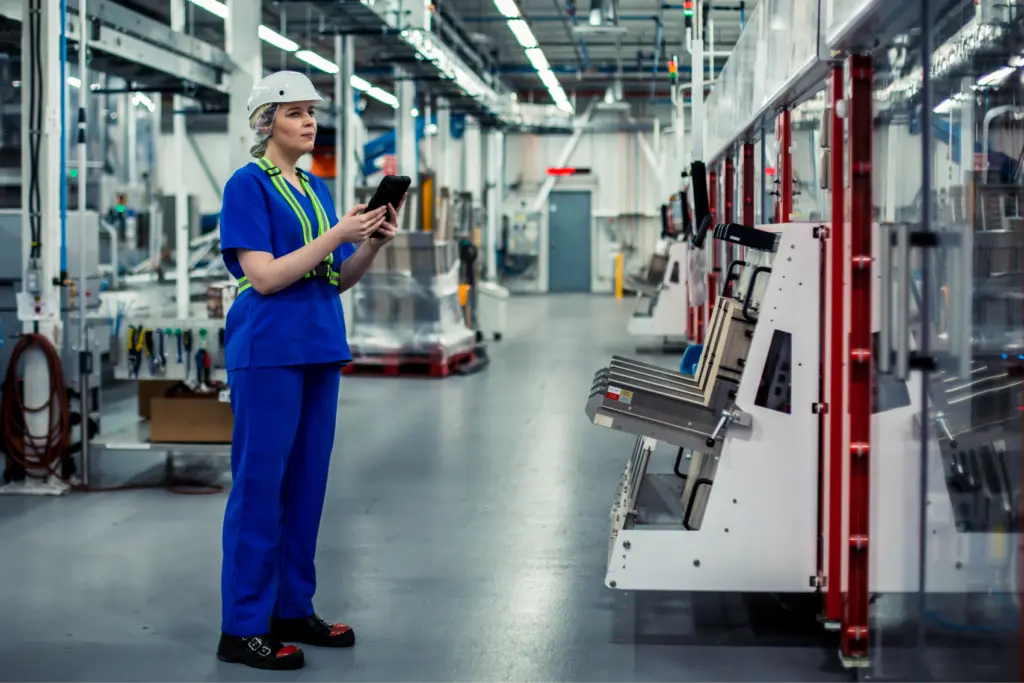
Verification – Even after training, tasks must be performed consistently. Digital forms & checklists help workers adhere to standard operating procedures while providing managers with real-time visibility into compliance.
Continuous Improvement – Manufacturing is constantly evolving, and Standard Work should evolve with it. A connected worker app captures frontline worker feedback, identifying areas for improvement which can be used to continually update standard procedures—ensuring that best practices remain relevant and effective.
Why Digital Standard Work is More Effective
Companies that move from paper-based Standard Work to a digital system see instant benefits:
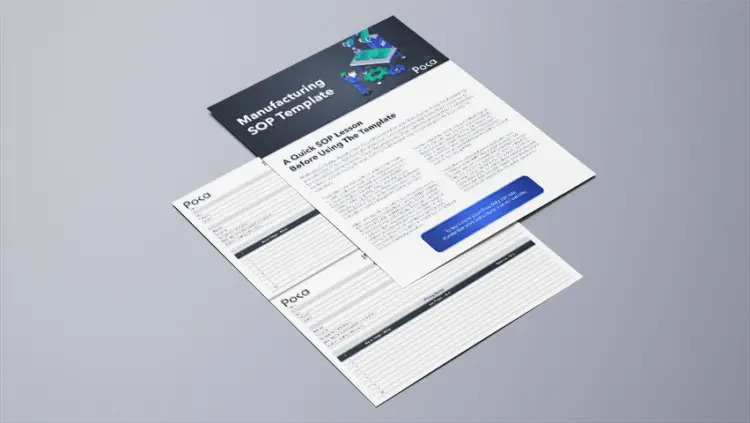
- Real-time updates – No more outdated SOPs. Digital documentation ensures that every worker has access to the latest version of Standard Work. Download Poka’s Digital SOP Template for an idea of what this looks like.
- Easier knowledge sharing – Videos, images, and interactive guides make Standard Work more engaging and reduce training time.
- Better compliance tracking – Digital tools automate skills verification and audits, making it easier to ensure workers are properly trained and following standard operating procedures.
How Poka Helps Manufacturers Improve Standard Work
Implementing Standard Work is one thing—sustaining and improving it over time is another. Many manufacturers struggle to keep standard operating procedures up to date, ensure workers follow best practices and continuously refine their processes.
Poka’s connected worker platform simplifies Standard Work implementation and evolution by making it digital, dynamic and accessible where and when it’s needed.
1. Digitize Work Instructions for Instant, Shop-Floor Access
Traditional standard work instructions often exist in binders, spreadsheets or static PDFs, making them difficult to update and access when workers need them most. With Poka, manufacturers can:
Convert paper-based SOPs into interactive digital work instructions with step-by-step visuals, videos, and contextual guidance with industrial AI.
Enable workers to scan a QR code on a machine or workstation to instantly pull up the latest digital work instructions, eliminating guesswork and ensuring consistency.
Provide multi-language support using AI-powered translation, making Standard Work more accessible for a diverse workforce.
2. Track Worker Training, Competency and Compliance
Even the best-documented Standard Work is ineffective if employees are not properly trained to follow it. Poka ensures that training is structured, tracked and continuously updated by:
Assigning training tasks so workers are notified when new standards or processes are introduced.
Providing real-time visibility into training completion rates, helping managers identify gaps and ensure compliance.
Enabling automated skill verification, where workers demonstrate proficiency before being assigned to a task, reducing errors and safety risks.
3. Capture Feedback and Improve Standard Work Dynamically
Standard Work is not meant to be static—it should evolve based on frontline insights and continuous improvement initiatives. Poka empowers manufacturers to:
Capture worker feedback in real time, ensuring that frontline observations about inefficiencies or safety concerns are recorded and addressed.
Integrate problem-solving tools that allow teams to track recurring issues and update Standard Work accordingly.
Keep Standard Work aligned with lean and continuous improvement practices, ensuring that best practices are always evolving.
4. Build a Culture of Continuous Improvement
By adopting Poka’s connected worker platform, manufacturers not only maintain consistency but also empower their workforce to contribute to continuous improvement.
With real-time access to standard work instructions, automated training tracking and built-in feedback loops, Standard Work becomes a living, evolving system—one that supports efficiency, compliance and long-term operational success.
6. How to Implement a Connected Worker App for Standard Work
Digitizing Standard Work isn’t just about replacing paper-based processes with digital files—it’s about creating a smarter, more agile system that improves efficiency, training, and continuous improvement. A connected worker app like Poka enables manufacturers to transform Standard Work into an interactive, evolving tool that adapts to the needs of both frontline workers and management. But implementation needs to be structured and phased to deliver quick wins while laying the foundation for long-term success.

Phase 1: Days to Value – Digitizing and Centralizing Standard Work
The first step in implementing a connected worker app is to make existing Standard Work easily accessible so workers can immediately reference the correct standard operating procedures without delay. This phase focuses on digitizing and organizing current documentation while introducing simple tools that streamline day-to-day operations.
Digitize existing Standard Work PDFs – Upload and organize all Standard Work documents into a centralized digital system that workers can access where and when they need it within the flow of work, like Poka.
Enable QR code scanning – Workers can scan a QR code at workstations or machines to pull up relevant standard work instructions instantly, eliminating the need to search for physical documents that can quickly become lost or outdated.
Implement digital checklists for critical tasks – Checklists ensure that every worker follows standard operating procedures correctly while also capturing real-time data on process adherence and common issues. This also provides instant visibility for managers who need to track work in real time and measure the effectiveness of standards.
By the end of this phase, manufacturers will have a single source of truth for Standard Work, reducing reliance on outdated, hard-to-maintain paper records.
Phase 2: Weeks to Value – Enhancing Standard Work with Visuals and AI
Once the foundation is in place and existing procedures are centralized and accessible, the next step is to elevate the quality and usability of Standard Work. This is where the transformation from static documentation to engaging, highly visual digital instructions takes place.
✔ Convert SOPs into step-by-step visual work instructions – Traditional SOPs are often too long, too technical, or too abstract for quick reference on the shop floor. By breaking them down into bite-sized digital instructions—enriched with photos, diagrams, and short videos—manufacturers can make Standard Work more intuitive, especially for visual learners and multilingual teams. These clearer, more digestible formats reduce ambiguity and improve retention.
✔ Leverage AI tools to streamline documentation updates – With connected worker platforms like Poka, AI-powered features can automatically convert existing SOPs, PDFs, or training videos into interactive work instructions. This significantly reduces the manual effort required to maintain documentation and ensures updates can keep pace with evolving processes.
✔ Preserve tribal knowledge before it walks out the door – One of the most valuable opportunities in this phase is to capture the deep, often undocumented expertise of senior operators—especially those approaching retirement. These team members carry years of experience and best practices that can be lost forever if not recorded. By empowering them to contribute to digital work instructions—either directly or through simple video capture—you not only improve Standard Work, but also create a legacy of knowledge for the next generation of workers.
By the end of Phase 2, your Standard Work is no longer just digital—it’s engaging, enriched with real frontline expertise, and structured in a way that’s easy to consume, update, and scale across your workforce. This sets the stage for deeper integration into training and continuous improvement programs.
Phase 3: Months to Value – Embedding Standard Work into Training and Operations
Now that Standard Work is fully digitized and optimized, it’s time to integrate it into training programs and continuous improvement efforts.
Build structured training programs around Standard Work – Ensure that all workers receive role-specific training based on the latest standards, with automated tracking of completions.
Use analytics to correlate training gaps with production inefficiencies – Identify where skill gaps impact performance, so training efforts can be focused on the most critical areas.
This phase ensures that Standard Work is not just a reference tool but an active part of workforce development.
Long-Term Success: Keeping Standard Work Dynamic
Implementing Standard Work is not a one-time project—it’s an ongoing process. To sustain its value, manufacturers must:
Continuously assess and refine standards based on worker feedback and process improvements.
Track skill development and training effectiveness to ensure employees are always equipped with the right knowledge.
Leverage real-time data to identify inefficiencies, update processes, and drive continuous improvement.
By following this phased approach, manufacturers can go from outdated, static documentation to a fully integrated, digital Standard Work system that improves efficiency, ensures compliance, and drives lasting operational excellence.
7. Additional Standard Work Resources

8. Frequently Asked Questions About Standard Work in Manufacturing
Standard Work defines the best practice for completing a task, including the sequence of steps, takt time, and standard inventory. Work instructions are a more detailed, step-by-step guide to execute the task and often serve as part of Standard Work documentation.
Standard Work is widely applicable but particularly impactful in industries like manufacturing, automotive, food and beverage, electronics, and pharmaceuticals, where consistency and quality are critical.
By reducing variability, ensuring consistency, and providing clear instructions, Standard Work minimizes errors, streamlines processes, and enhances overall quality control.
Regular reviews, worker feedback, and using tools like connected worker apps for real-time updates are key to ensuring Standard Work evolves with operational changes.
Tribal knowledge, inadequate training, and outdated documentation are common challenges. Engaging workers and leveraging digital tools can help overcome these obstacles.
Digital tools like connected worker apps enable real-time updates, easier access to standard work instructions, and integration of rich media like videos and images, making Standard Work more effective and accessible.
Yes, Standard Work can benefit businesses of all sizes by introducing consistency, reducing waste, and improving training, even in small-scale operations.
Frontline workers provide valuable insights into daily operations and are essential for creating practical and accurate Standard Work. Their feedback also ensures processes remain effective over time.
Implementation timelines vary based on the complexity of processes, company size, and readiness. Starting with a pilot project can streamline adoption and lead to faster scaling.
Poka digitizes Standard Work documentation, enables collaboration, provides real-time updates, and integrates training to make implementation and maintenance more efficient.