





How a Learning Management System Enhances Factory Training
Your Guide to Manufacturing Training with a Connected Worker App Learning Management System
In this comprehensive resource, we explore the evolving landscape of manufacturing training and how modern solutions can enhance workforce development. You’ll gain valuable insights into the challenges and best practices for effective training, from overcoming skills gaps to creating an efficient learning environment. With actionable strategies and expert tips, this guide will help you understand how a connected worker solution can streamline training processes, improve on-the-job learning, and empower your workforce to meet the demands of today’s manufacturing environment.
Table of Contents
The Current State of Manufacturing Training
The Evolution of Manufacturing Training
Current Challenges in Manufacturing Training
The Ideal Manufacturing Training Environment
Benefits of Connected Manufacturing Training
How to Implement a Connected Worker App
Additional Standard Work Resources
Frequently Asked Questions About Standard Work
1. The Current State of Manufacturing Training
Manufacturing training is the process of equipping workers with the knowledge and skills they need to safely and consistently perform their roles in production. Effective factorywide, compliance training and role-specific training is important not only for compliance reasons. A skilled workforce is safer, more productive, and causes fewer errors. And as processes and technologies evolve, becoming more complex, the importance of training only grows.
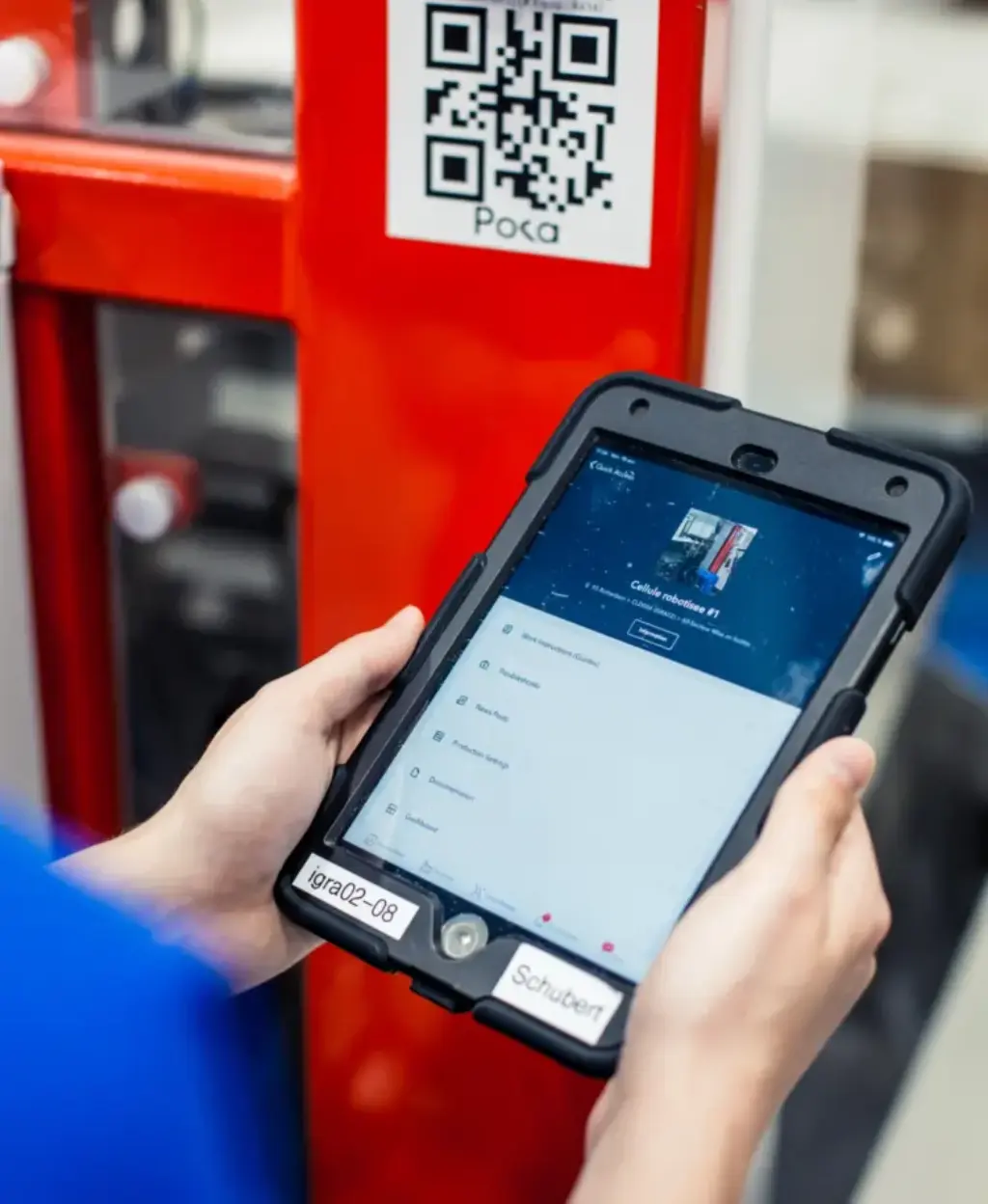
While traditional factory training methods—such as shadowing, classroom training, and written SOPs —are still widely used, research shows that there is a better way to support learning for maximum comprehension and retention, such as the 70/20/10 method. Digital transformation and a growing reliance on connected worker platforms, has made it possible to transform factory training so that workers learn continuously, and more autonomously, in the flow of work..
One of the most pressing issues amplifying the need for more efficient and effective training is the skilled labor shortage. Manufacturers across the globe are facing difficulty filling roles, chronic turnover, and as experienced workers retire, the urgency to upskill and reskill new talent has never been higher, putting greater strain on trainers and L&D teams.
The skills gap not only slows down production but also puts companies at risk of costly errors and compliance failures. To stay competitive, manufacturers need a workforce that is adaptable, competent and continuously improving.
This guide delves into the evolution of manufacturing training, the challenges companies face and how modern solutions—like connected worker platforms—are shaping the future. By understanding these dynamics, businesses can implement smarter, more effective training programs that boost productivity, enhance worker engagement and support long-term growth.
2. The Evolution of Manufacturing Learning Management
Manufacturing training has evolved significantly over the years, driven by the need for more efficient and effective ways to develop skilled workers.
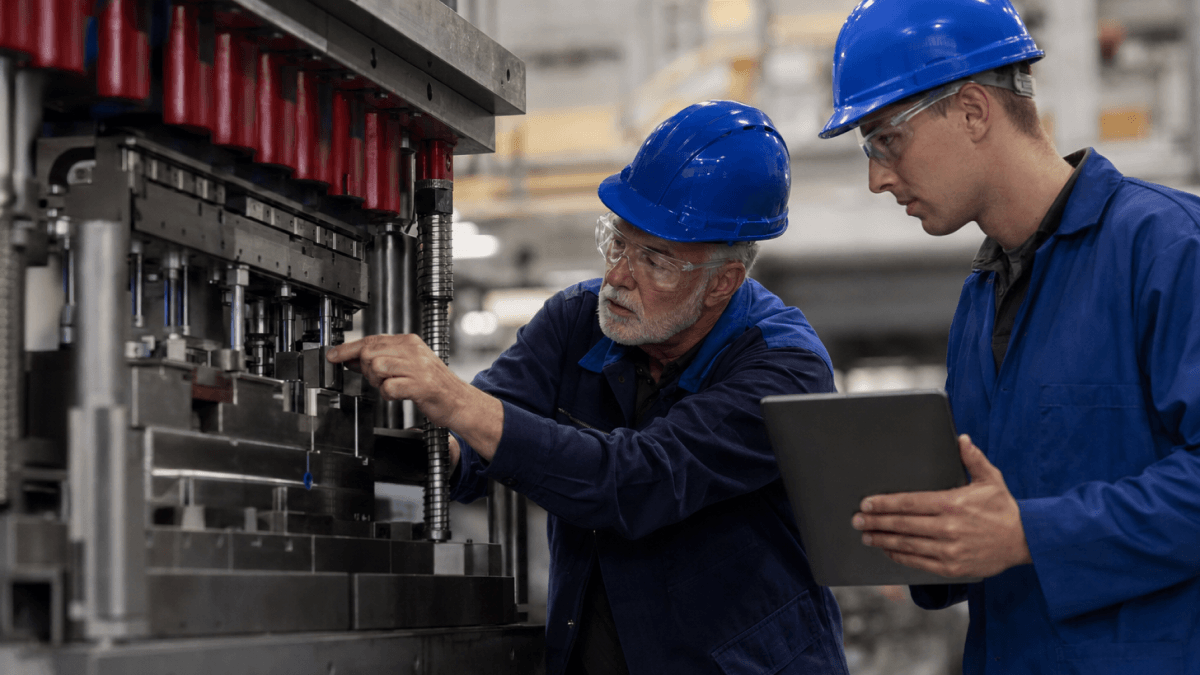
Traditionally, training in manufacturing environments was largely based on shadowing or apprenticeships. New workers learned by observing more experienced colleagues, picking up skills and techniques gradually over time. While this method has roots in centuries-old practices, it often proved inefficient and inconsistent, relying heavily on the skills and teaching abilities of the mentor.
A turning point in manufacturing training came during World War II with the development of the Training Within Industry (TWI) program. Created to quickly upskill workers and meet urgent wartime production needs, TWI introduced standardized methods for training, supervision and process improvement.
TWI is still relevant today, emphasizing consistency, safety and productivity in the training process. It laid the groundwork for many modern manufacturing training practices, particularly in lean manufacturing environments where efficiency is critical.
With our improved understanding of how adults learn, combined with new digital tools like mobile connected worker apps, we have a better way to train in factories, and the skilled labor crisis has been a major catalyst.
Modern training models like the 70:20:10 framework have gained prominence, reflecting the growing importance of informal learning and practical experience.
According to this model, 70% of learning comes from on-the-job experiences, 20% from interactions with others (such as coaching and mentorship) and 10% from formal training. This shift toward blended learning models acknowledges that continuous, real-time learning at the point of need is essential for keeping pace with evolving manufacturing technologies and processes.
3. Current Challenges in Manufacturing Training
As manufacturing evolves, the challenges of training workers effectively are becoming more pronounced. Traditional methods are falling short, and manufacturers are seeking more efficient solutions to keep up with today’s fast-paced, complex environments. Below are some of the key challenges faced in manufacturing training.
Challenge 1. Shadowing is Ineffective and Expensive
While shadowing, or learning by observing experienced workers, has long been a staple in manufacturing training, it often leads to inconsistent results. The quality of training depends heavily on the mentor, which creates variability in knowledge transfer.
Additionally, pulling experienced workers away from their tasks to train new hires is expensive and disrupts operations, making this method less viable in today’s high-demand environments.
Challenge 2. High Costs and Resource Allocation
Training is resource-intensive, involving not only the cost of materials and equipment but also significant time and attention from supervisors and skilled workers. In many cases, production must be slowed or paused to accommodate training, leading to further resource strain.
With the current landscape of skilled labor shortages, manufacturers are under pressure to accelerate training while keeping costs under control, a balancing act that is increasingly difficult to manage.
Challenge 3. Language Gaps
The diversity of today’s manufacturing workforce introduces language barriers that can hinder effective training.
With employees often speaking different languages or having varying degrees of proficiency, ensuring that training content is understood by all becomes a significant challenge.
This can lead to miscommunication, safety risks, and inefficiencies if workers are not fully grasping critical information.
Challenge 4. Tracking and Managing Skills
Many manufacturers still rely on outdated methods, such as spreadsheets or manual records, to track training progress and certifications. This manual approach requires significant time and effort from managers and administrators to keep skills records up to date, often resulting in delayed updates or overlooked training renewals.
The lack of a streamlined system makes it challenging to monitor who has been trained, who needs recertification, and where skills gaps exist. Without real-time visibility into workforce skills, manufacturers face operational inefficiencies and potential safety risks, particularly in compliance with safety or regulatory standards.
Challenge 5. Identifying and Closing Skills Gaps
Closely tied to tracking skills is the challenge of identifying and addressing skills gaps. Traditional training programs often fail to provide adequate visibility into where workers are falling short.
Without data-driven insights, manufacturers struggle to pinpoint gaps and implement targeted training solutions.
This results in inefficiencies, as unqualified workers may be assigned tasks they are not equipped to handle, leading to errors or safety risks.
Challenge 6. Keeping Training Content Up-to-Date
In a fast-evolving industry, ensuring training materials remain current is a constant challenge.
As technologies and processes change, outdated training can leave workers ill-prepared or using obsolete methods, impacting both safety and productivity.
Regular updates are necessary but time-consuming and costly, often leaving manufacturers with out-of-date content that no longer reflects the demands of the shop floor.
Challenge 7. Measuring Training Effectiveness and ROI
Manufacturers face difficulties in measuring the success of their training programs and calculating return on investment (ROI).
Without clear metrics on training effectiveness, it’s challenging to assess whether workers are retaining knowledge, improving their skills or if safety incidents are decreasing.
This lack of data makes it hard to justify training expenditures to upper management or fine-tune programs for better results.
4. The Ideal Learning Management System
In this section, we’ll explore the key components of an optimized training environment, with a focus on research-backed models and digital tools.
Overview of the 70:20:10 Learning Model
One of the most prominent frameworks for structuring modern training is the 70:20:10 model, a well-researched approach that recommends a balance between formal and informal learning:
- 70% learning from experience (on-the-job)
- 20% learning from others (peer learning)
- 10% learning through formal training (classroom or online training)
This model suggests that while formal training is still necessary, the majority of learning happens informally—through practical, hands-on experiences or peer interactions. Manufacturing environments, which require quick adaptation to changing conditions, are ideal for this type of experiential learning.
Implementing this model enables manufacturers to reduce reliance on costly, time-consuming formal training events and shift towards dynamic, real-time learning solutions at the point of need that employees can access autonomously.
1. Reduce Reliance on Formal Training Events and Shadowing
Traditional methods, such as formal training sessions and shadowing experienced workers, are both resource-intensive and inconsistent in their outcomes. The ideal training environment prioritizes autonomous, point-of-need learning—allowing workers to access training content precisely when they need it, directly on the shop floor.
- Micro-lessons: These are short, focused training segments that workers can complete in minutes, making learning more manageable and relevant to the task at hand.
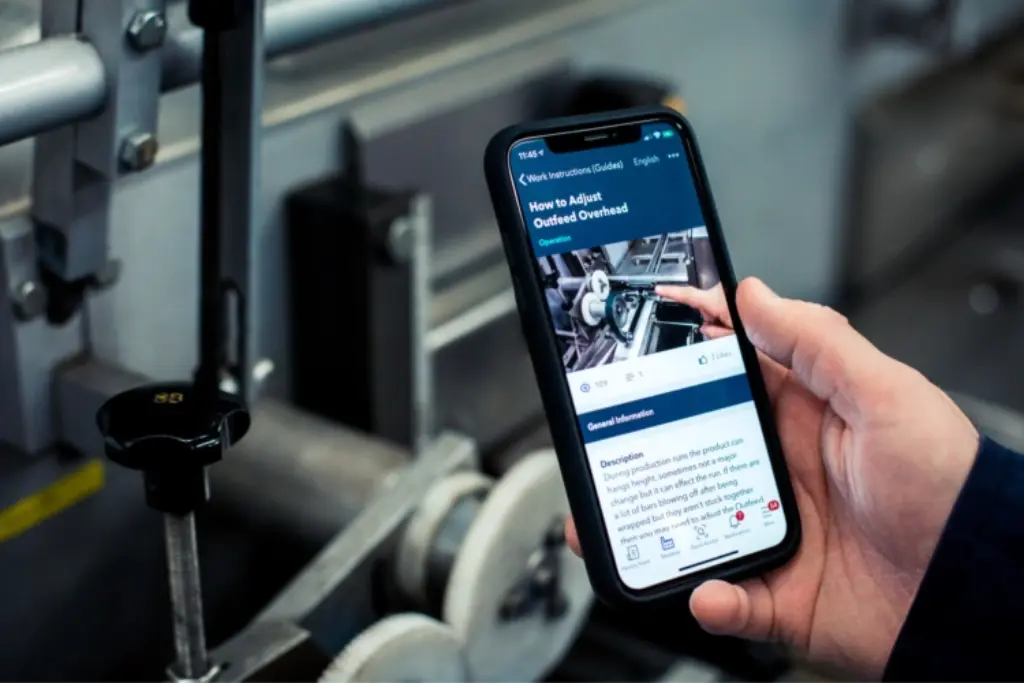
- Accessible on the shop floor: Workers can use mobile devices or tablets to pull up instructions, videos or micro-lessons, reducing downtime and eliminating the need to remove workers from production for training.
This kind of flexibility not only accelerates learning but also ensures that knowledge is retained and applied in real-time, where it matters most.
2. Make Critical Training Content More Effective: Visual and Video-Based Learning
One of the key ways to enhance learning in manufacturing is to shift away from static, text-heavy training materials. Visual and video-based learning has been proven to boost retention and engagement, particularly in environments where language barriers may exist or the training subject is highly technical.
- Visual formats: Diagrams, infographics, and step-by-step instructions make complex processes easier to understand and retain.
- Video tutorials: Demonstrating tasks via video offers a clear, repeatable way for workers to observe procedures, increasing comprehension and reducing the margin for error.
This approach is especially valuable for non-native speakers and ensures that critical safety protocols or operational instructions are communicated effectively across diverse workforces.
3. Give Team Members Visibility into Their Learning Journey
In the ideal training environment, workers are empowered to take control of their learning journey. Visibility into training progress, upcoming certifications and skills development goals enhances both accountability and motivation.
- Digital learning dashboards: These allow employees and their managers to see what training has been completed, what’s pending and what skills need to be developed next.
- Self-assessment tools: Workers can evaluate their own progress and identify areas for improvement, fostering a culture of continuous learning and development.
This transparency not only supports personal growth but also enables managers to better allocate roles based on skillsets, contributing to overall operational efficiency.
4. Empower Team Members and Their Leaders to Stay Current with Training
Training isn’t a one-time event; it’s an ongoing process, especially in an industry where technologies and standards are constantly evolving. In an ideal environment, team members and leaders are equipped with the tools to stay up-to-date with the latest training requirements and content.
- Automated reminders for recertifications: Workers are notified when they need to renew certifications or complete refresher courses, reducing administrative burdens.
- Content updates and push notifications: When training materials are revised, workers are immediately alerted to review the latest information, ensuring that they always have access to the most relevant and up-to-date content.
This continuous updating process helps manufacturers maintain compliance with industry regulations and safety standards while reducing the risk of errors due to outdated information.
5. Improve Efficiencies for the Learning & Development Team
For Learning & Development (L&D) teams, the digital transformation of training processes can result in significant efficiency gains. By digitizing core training functions, teams can reduce administrative overhead and focus on higher-value tasks.
- Digital exams and certifications: These allow for automated tracking and grading, providing an audit trail for compliance purposes.
- Automated content management: Training materials can be updated, translated and distributed automatically, ensuring that all workers have access to consistent, accurate information.
- Role-based training assignments: With digital tools, training can be automatically assigned based on the worker’s role, location or skill level, ensuring the right training reaches the right employees at the right time.
- Creating content efficiently: Content can be quickly made available in a library of work instructions and skills using generative AI to automatically convert PDF SOPs into mobile-ready work instructions, 75% faster than before.
These efficiencies not only save time but also improve the overall quality and effectiveness of training programs.
6. Integrate with Learning Management Systems (LMS)
While many manufacturers use corporate Learning Management Systems (LMS) to track and manage training, these platforms often have limitations when it comes to addressing the unique needs of manufacturing environments.
The ideal training environment integrates seamlessly with existing LMS tools while providing additional functionalities tailored to the shop floor.
- Real-time tracking and reporting: Factory-specific platforms like Poka can complement corporate LMS by providing more detailed tracking of shop-floor training activities and skill development.
- Overcoming spreadsheet reliance: Many factories still use spreadsheets to track role-specific skills and certifications. A connected worker platform digitizes and automates these processes, offering far better visibility and control.
This integration creates a holistic learning ecosystem that ensures consistency across locations and departments while maintaining the flexibility to meet factory-floor needs.
7. Immersive Training for Off-the-Floor Needs: AR/VR
Immersive technologies like Augmented Reality (AR) and Virtual Reality (VR) are becoming critical tools in manufacturing training, particularly for high-risk tasks or training new hires.
- AR/VR simulations: These tools provide a safe environment for workers to practice complex tasks, handle hazardous materials or troubleshoot equipment without the risk of injury or damage.
- Pre-factory-floor training: New hires or workers transitioning into new roles can experience realistic, immersive training before they even step foot on the shop floor, allowing them to familiarize themselves with the environment and processes.
These technologies are particularly valuable for training in safety-critical roles, enabling workers to gain hands-on experience in a risk-free setting.
5. Benefits of Connected Worker Learning Management Systems
The integration of connected worker apps into manufacturing training environments is revolutionizing how workers develop their skills and engage with learning content.
These digital solutions offer a range of benefits that improve operational efficiency, safety, quality and worker satisfaction, ultimately driving measurable improvements across key performance metrics like safety, quality, productivity and skills.

1. Skills Versatility and Coverage
One of the most significant benefits of connected worker apps is their ability to provide broad, versatile skills training. Workers can easily access training modules on-demand, covering a wide range of tasks, equipment or processes.
Micro-lessons and modular content: These apps allow employees to quickly gain the knowledge they need, regardless of their location or role, ensuring the workforce is highly adaptable and capable of handling multiple responsibilities.
Real-time access: Workers have training content available at their fingertips, enabling them to upskill or reskill efficiently as new demands arise.
This versatility ensures that skills gaps are closed faster, helping organizations remain agile and resilient in a competitive market.
2. Better Training Leads to Improvements in All SQDC Metrics
A connected worker app ensures consistent, high-quality training across the workforce, which in turn improves performance across Safety, Quality, Delivery, and Cost (SQDC) metrics. For instance, Huhtamaki experienced a 14% improvement in First Pass Yield.
Reduces inconsistencies: By standardizing training materials and ensuring all workers receive the same instruction, connected worker apps minimize variability in performance, leading to fewer errors and higher output quality.
Boosts efficiency and safety: Workers are empowered to complete tasks faster and more safely, with easy access to up-to-date procedures and checklists directly from the app.
This uniformity in training not only enhances operational excellence but also drives continuous improvement in manufacturing processes.
3. Increased Productivity
Connected worker apps like Poka ensure workers know and understand the best practice way of performing tasks. This helps to reduce downtime and increase productivity, as was the case for Kimberly Clark, who enjoyed 90% faster access to procedures
Instant access to resources: Workers no longer need to rely on supervisors or wait for formal training sessions to learn new skills or troubleshoot equipment issues. They can simply consult digital instructions, videos or diagrams whenever they need guidance.
Reduction in task time: The immediacy of digital content accelerates the learning curve and allows workers to complete tasks faster and more accurately.
This increase in speed and efficiency contributes to overall productivity gains, enabling manufacturers to meet tight production schedules without compromising quality.
4. Enhanced Workplace Safety
Workplace safety is a critical concern in manufacturing environments, and connected worker apps enhance safety by ensuring that workers are well-trained and informed about safety protocols and procedures.
Safety reminders and checklists: Apps can deliver real-time safety updates, ensuring workers are aware of potential hazards and the proper steps to mitigate risks.
Immediate access to safety content: Workers can quickly review safety procedures or refresh their knowledge of high-risk tasks, reducing the likelihood of accidents and injuries.
This proactive approach to safety training helps manufacturers maintain compliance with regulatory standards while fostering a safer workplace culture.
5. Better Quality Control and Reduced Errors
Training that is backed by a connected worker app leads to better quality control and a reduction in operational errors.
Access to step-by-step guides: Workers can easily follow digital instructions that ensure procedures are executed correctly every time, reducing the potential for mistakes.
Real-time troubleshooting: Should an issue arise, workers can consult the app for quick troubleshooting tips, preventing small issues from escalating into larger problems.
By minimizing errors and ensuring consistent adherence to quality standards, manufacturers can significantly reduce waste and improve customer satisfaction.
6. Improved Employee Engagement, Competence and Confidence
Connected worker apps are a powerful tool for enhancing employee engagement and building worker competence and confidence.
Engaging learning experiences: Interactive content, such as videos, makes learning more engaging and helps workers retain knowledge more effectively.
Competence tracking: Workers can see their progress and skill development in real-time, which increases their confidence and motivation to keep improving.
When workers feel more competent and confident, they are more likely to contribute positively to the workplace and take on new challenges. Huhtamaki saw a 7% bump in their employee survey satisfaction after implementing Poka.
7. Faster Onboarding and Faster Time to Productivity
One of the most immediate benefits of connected worker apps is the ability to accelerate onboarding and reduce the time it takes for new hires to become productive members of the workforce.
Streamlined onboarding: New workers are taught how to use Poka to learn continuously for example when they need a refresher on a skill or to solve a problem they haven’t encountered. By empowering them in this way, there is less concern to cover all possible contingencies during onboarding, and the onboarding content can be streamlined.
Faster comprehension: Visual training content speeds time to learn, helping workers to quickly get up to speed on safety protocols, equipment operations and procedures.
Fewer Scheduling Conflicts: Taking senior operators off production duties to train new hires can create significant scheduling challenges and disrupt workflows. By enabling new hires to review some training content autonomously before shadowing, the time required with an experienced trainer is reduced, minimizing scheduling conflicts and keeping production on track.
Reduced time to productivity: With faster access to key information and real-time learning tools, new hires can contribute to production much more quickly, reducing the overall cost and time associated with onboarding.
By minimizing the onboarding period, manufacturers can ensure that new hires are productive and aligned with the organization’s goals from day one. One Poka client even received a 20% boost in their onboarding survey scores.
8. Higher Employee Retention and Satisfaction
Lastly, connected worker apps have a direct impact on employee satisfaction and retention. When workers feel empowered, engaged, and competent, they are more likely to remain loyal to the company.
Continuous learning opportunities: Providing ongoing training and development opportunities through a connected worker app shows employees that the company is invested in their growth, increasing job satisfaction.
Clear career pathways: Workers can track their skills and training progress, which helps them see a clear path for advancement within the company.
This focus on employee development helps reduce turnover rates and ensures that the workforce remains highly skilled and motivated. In fact, a leading global confectionary manufacturer reduced their turnover rate by 9% after implementing Poka.
6. How to Implement Connected Manufacturing Training
Implementing a Connected Worker Solution (CWS) for manufacturing training is a strategic, collaborative process aimed at empowering teams for long-term success.
The deployment process typically follows a structured, phased approach designed to gradually build skills and capabilities, often using a methodology that ensures thorough understanding, confidence and practical application at each stage.
1. Foundation and Alignment
The implementation journey begins with a planning phase where the vendor and client establish the foundational elements needed for success. This step is critical for aligning on training goals, setting use cases and configuring the platform to support the organization’s specific processes and training requirements.
Key stakeholders are identified, and they gain access to the platform to start setting up essential structures. These initial sessions allow the client to develop an understanding of core features and workflows, helping lay a stable foundation.
The goal is to start small, focusing on a few high-impact use cases that can deliver value quickly while setting up the team for broader adoption.
2. Building Competency and Expanding Scope
With a firm foundation in place, the next phase shifts towards building on those basics. This phase involves more detailed work with the client’s project team to structure and integrate core functionalities like work instructions, skills tracking, and user roles.
Vendor support is hands-on, with regular check-ins to ensure that training materials and resources are being developed effectively. Templates and digital content, such as videos or step-by-step guides, are created to ensure that employees have clear, visual support for their tasks.
The implementation team partners with the client to validate and refine use cases, gradually expanding to address the unique needs of each plant or production line.
3. Launch and Scale
In the final stage, the focus shifts towards full deployment and end-user readiness. Trainers within the client organization receive dedicated training sessions to empower them to support end-users effectively.
This “train-the-trainer” approach ensures that frontline workers are equipped with the skills and confidence they need to use the CWS effectively. At this stage, users across the organization are trained on live features, providing a seamless transition to everyday use.
A success plan is established to ensure sustained support, including a roadmap for future growth and optimization of the CWS.
7. Additional Standard Work Resources

8. Frequently Asked Questions About Manufacturing Training
A Connected Worker solution is a digital platform that links frontline workers to the information, tools and expertise they need to perform their tasks efficiently. In manufacturing training, it improves learning by offering real-time access to training materials, skills tracking, and interactive content, like videos or step-by-step guides, directly on the shop floor. This enables continuous learning and reduces downtime from formal classroom-style training.
Poka complements existing LMS platforms by offering a practical, on-the-job training interface that integrates seamlessly with corporate LMS systems. While LMS systems are excellent for formal learning, Poka focuses on delivering micro-learning experiences and job aids at the point of need, along with digital tools to manage skills and certifications at the factory level, closing the gap between training administration and real-world application.
The 70:20:10 model emphasizes that 70% of learning happens on the job, 20% through social interaction, and 10% in formal settings. Poka supports this by enabling learning in the flow of work. Employees can access micro-lessons, collaborate with peers, and receive real-time feedback while performing tasks. It reduces reliance on formal training and promotes informal learning through practical application and peer support.
Yes. Poka accelerates onboarding by providing new hires with access to critical training materials and job-specific learning paths. Instead of waiting for scheduled training sessions, new workers can begin learning immediately, using digital tools that provide on-demand, step-by-step instructions, videos, and assessments. This helps reduce time to productivity and ensures consistent training across the organization.
Poka supports multilingual content, making it easy for organizations to create and distribute training materials in multiple languages. This is particularly useful in diverse workforces where language gaps can lead to miscommunication and errors. With Poka, workers can access training in their preferred language, improving comprehension and reducing the risks associated with language barriers.
Poka offers comprehensive tools for tracking skills, certifications, and training progress. Workers can view their learning journeys, see which skills they’ve mastered, and identify gaps they need to address. Managers can assign role-based training, monitor progress, and receive automated notifications when certifications are due for renewal, ensuring compliance and up-to-date skillsets across the workforce.
By reducing reliance on traditional, time-consuming training methods like shadowing and formal classroom sessions, Poka saves time and resources. Workers can access training materials on the job, reducing downtime. Additionally, the automation of tasks like skill tracking, certifications and exam renewals streamlines the administrative side of training, leading to significant cost reductions over time.
Absolutely. Poka supports immersive training environments using technologies like Apple Vision Pro for high-risk scenarios or for onboarding new employees. Workers can engage in simulated, risk-free environments before moving to the actual shop floor, improving safety and reducing the likelihood of errors when they start real tasks. This is particularly useful for complex machinery or hazardous operations.
Poka simplifies the process of updating and distributing training content. Digital training materials, videos and job aids can be updated centrally and pushed out to the entire workforce in real-time. This ensures that all employees have access to the most current information and that outdated, paper-based training materials are eliminated from the factory floor.
Poka provides detailed analytics on training effectiveness, skills development and worker performance. Organizations can track key performance indicators such as time to productivity, error rates and worker competency improvements. This data allows businesses to measure the impact of training initiatives on overall productivity, quality and safety, giving a clear picture of training ROI.
Yes. Poka has turnkey compliance and OEM training content available. Poka customers can request this content be made available in their library of work instructions and skills. Also, Poka has generative AI capability that can automatically convert PDF SOPs into Poka-ready work instructions. PDF to Poka WI gen AI is 75% faster than before.